


Listen to the article
The U.S. Embassy in Baghdad has issued an urgent security alert for Americans in Iraq, instructing them to shelter in place amid escalating violence following the death of Iran’s Supreme Leader Ayatollah Ali Khamenei.
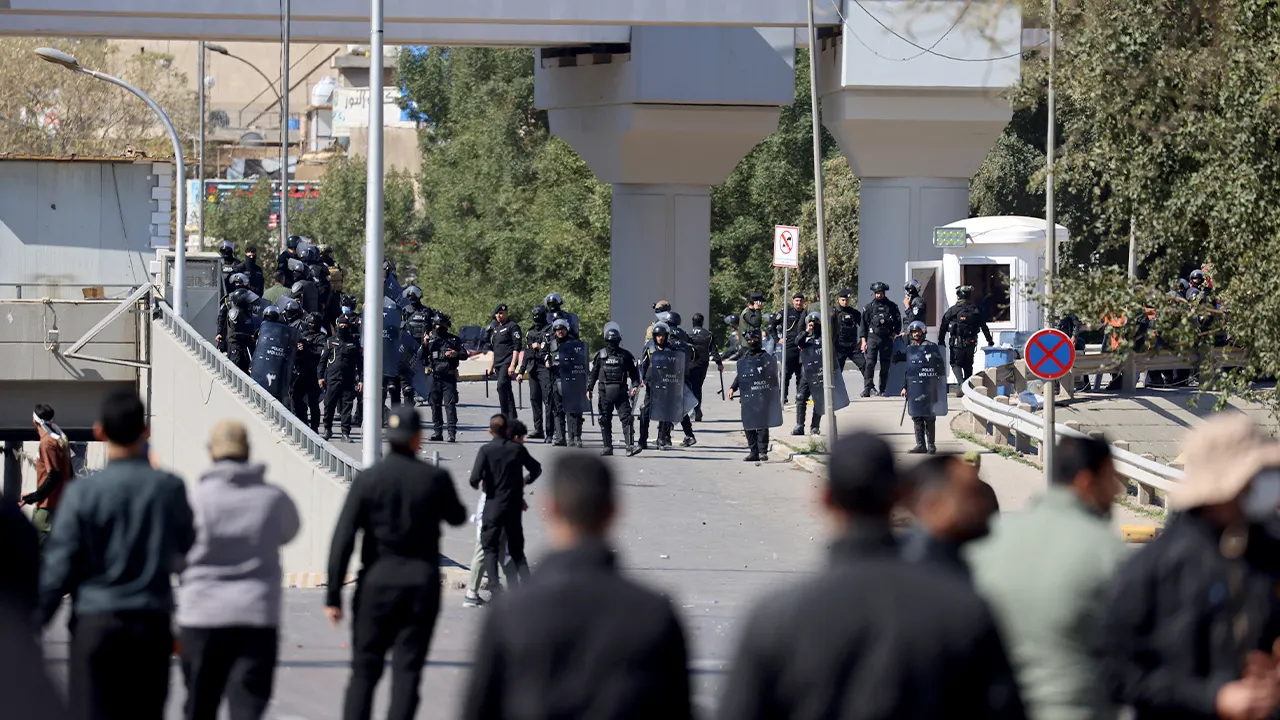
The embassy warned of heightened security threats across the country, with violent protests concentrated near Baghdad’s July 14th Bridge. In response, Iraqi authorities have closed the International Zone in central Baghdad, with limited exceptions for entry.
“Iran-aligned terrorist militias continue to pose a significant threat to public safety,” the U.S. Embassy stated on X, formerly Twitter. “Reports of missiles, drones, and rockets in Iraqi airspace continue.”
The security situation has deteriorated rapidly, forcing the U.S. Mission to suspend all consular operations, including routine services, and direct all staff to shelter in place. Officials also confirmed that Iraqi airspace is currently closed, advising travelers to contact airlines directly for updates on flight statuses.
The demonstrations in Iraq are part of a broader regional backlash against the United States following joint U.S.-Israeli airstrikes that resulted in Khamenei’s death. Protesters have gathered in significant numbers, particularly in front of the Green Zone where the U.S. Embassy is located, waving Iranian flags and carrying portraits of the deceased leader.
In the southern city of Najaf, a stronghold of Shiite influence in Iraq, hundreds have marched through the streets denouncing the killing of the Iranian leader. Similar protests have erupted across other Iraqi cities, reflecting the deep ties between Iraq’s Shiite majority and Iran.
The State Department continues to maintain its most severe travel advisory for Iraq—Level 4 “Do Not Travel”—urging Americans to avoid travel to the country for any reason. Those already in Iraq are advised to review personal security plans and consider departing when conditions allow.
This crisis occurs against the backdrop of an evolving U.S. military presence in Iraq. In January, Iraqi officials announced the formal handover of Al-Asad Air Base from U.S. forces to Iraqi control, describing it as part of a broader transition toward long-term security cooperation focused on training and advisory support rather than combat operations.
According to Iraqi officials, international coalition forces are scheduled to withdraw from their headquarters in Erbil, in northern Iraq’s Kurdistan region, by the end of September 2026 under previously agreed-upon timelines.
The current unrest threatens to further destabilize Iraq, which has struggled to maintain political stability since the 2003 U.S. invasion and subsequent withdrawal of American combat forces. Iran’s influence in Iraq has grown substantially over the past two decades, with Tehran maintaining close relationships with numerous armed groups and political factions throughout the country.
Security analysts note that the situation poses complex challenges for both the Iraqi government and U.S. interests in the region. The Iraqi government faces pressure from both its relationship with the United States and the significant influence Iran wields within its borders, particularly through militia groups that operate with varying degrees of autonomy.
For Americans in Iraq, the embassy recommends exercising increased caution, avoiding crowds, and maintaining a low profile. The suspension of consular services further complicates matters for U.S. citizens requiring assistance during this volatile period.
As regional tensions continue to escalate following the strikes against Iran and Khamenei’s death, Iraq finds itself once again caught in the crossfire of broader geopolitical conflicts, with ordinary citizens and foreign nationals alike facing uncertain security conditions.
Fact Checker
Verify the accuracy of this article using The Disinformation Commission analysis and real-time sources.

7 Comments
This is a very concerning situation in Iraq. The U.S. Embassy warnings suggest the security threats are severe and escalating. It’s critical for Americans there to follow the shelter-in-place instructions carefully.
This is a worrying development. The closure of the International Zone and Iraqi airspace will create major logistical challenges. The U.S. and its allies need to work quickly to stabilize the situation and ensure the safety of American citizens.
The security alerts from the U.S. Embassy are quite serious. With reports of missiles, drones, and rockets, the Americans in Iraq are in a very precarious position. I hope diplomatic efforts can quickly de-escalate the tensions.
This will be very unsettling for the American citizens in Iraq. I hope the embassy can ensure their safety and facilitate their departure if needed. The regional tensions appear to be boiling over in a dangerous way.
Yes, the threat from Iran-aligned militias is concerning. The embassy seems to be taking appropriate precautions, but the situation remains highly volatile. Ongoing monitoring and contingency planning will be critical.
The closure of the International Zone and Iraqi airspace is a worrying sign. This will likely disrupt travel and operations for many. Hopefully the situation can be de-escalated before it leads to further violence and instability.
Agreed. The regional backlash against the U.S. following Khamenei’s death is troubling. All sides need to exercise restraint to prevent the situation from deteriorating further.