


Listen to the article
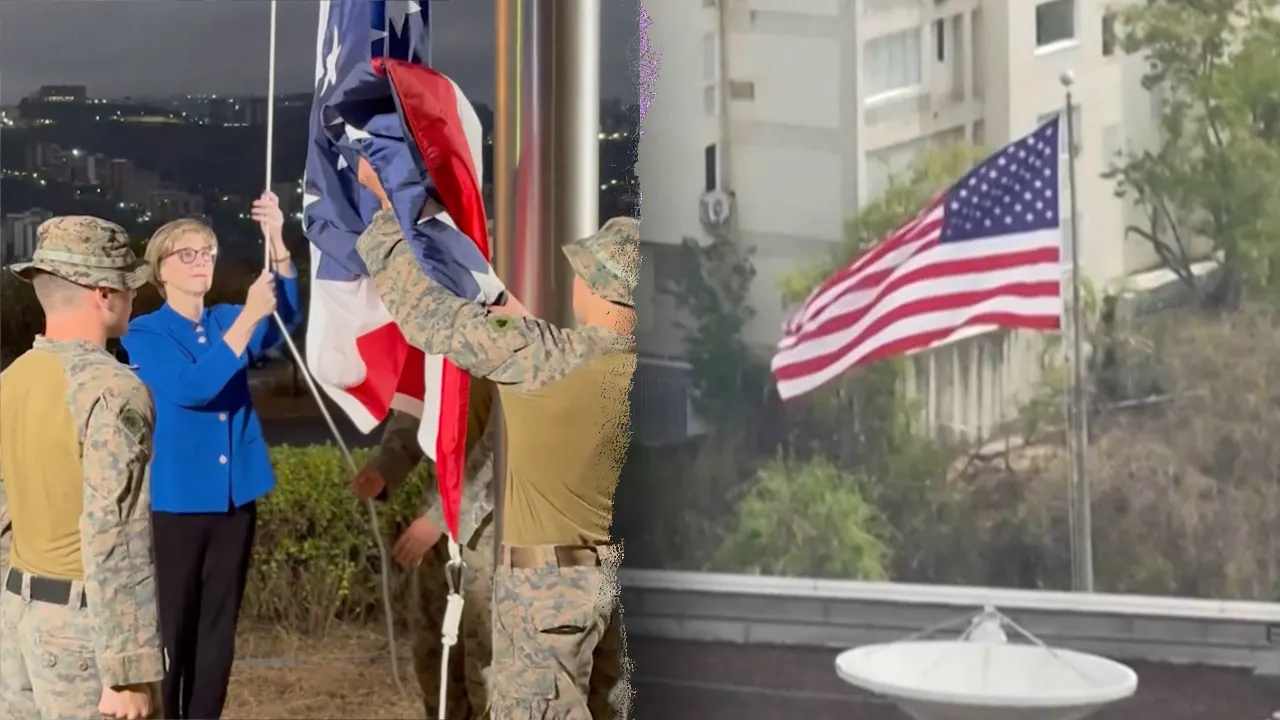
The American flag once again flies over the U.S. Embassy in Venezuela, marking a significant diplomatic milestone after a seven-year absence. The flag was raised over the Caracas compound on Saturday, though officials have not yet announced when the facility will fully reopen as renovations continue.
“A new era for U.S.-Venezuela relations has begun,” the U.S. Embassy declared on social media platform X, highlighting the symbolic importance of the moment for bilateral relations between Washington and Caracas.
The embassy had been shuttered since March 12, 2019, when diplomatic ties between the United States and Venezuela were severed amid escalating tensions between the two nations. The diplomatic breakdown occurred as the U.S. refused to recognize Nicolás Maduro’s presidency following disputed elections, instead backing opposition leader Juan Guaidó as interim president.
The flag’s return follows a dramatic shift in the political landscape. Former Venezuelan President Nicolás Maduro was captured by U.S. forces during a military operation in Caracas on January 3 of this year. After his arrest, Maduro was flown to New York, where he currently remains in federal custody.
Maduro faces serious legal troubles, including charges of narco-terrorism conspiracy, cocaine importation conspiracy, and possession of machine guns and destructive devices. His wife, Cilia Flores, has also been charged with drug trafficking and weapons offenses. Both have pleaded not guilty during their federal court appearance in New York on January 5.
For Venezuelan citizens, the sight of the American flag flying again in their capital has sparked cautious optimism. Caracas resident Alessandro Di Benedetto told The Associated Press that he observed people reacting positively to the development.
“I found several people here surprised and happy because today they raised the U.S. flag at the embassy,” he said. “This is positive; this is another step.”
The flag raising represents a potential turning point in Venezuela’s international relations after years of isolation. The South American nation has endured a prolonged economic and humanitarian crisis under Maduro’s rule, with millions of Venezuelans fleeing the country amid hyperinflation, food and medicine shortages, and political repression.
Venezuela possesses the world’s largest proven oil reserves, making it a potentially crucial energy partner. Prior to the diplomatic breakdown, Venezuela had been a significant oil supplier to the United States, but sanctions imposed by Washington severely limited this relationship. Energy analysts suggest that improved relations could eventually lead to increased oil exports to the United States, potentially helping to stabilize global energy markets.
The reopening of diplomatic channels comes as Venezuela faces continued challenges in establishing a stable political transition. Following Maduro’s capture, questions remain about the country’s leadership and the path toward democratic governance. The United States has indicated support for a peaceful transition, though the exact roadmap remains unclear.
The embassy reopening also carries regional implications. Venezuela’s crisis has destabilized much of South America, with neighboring countries like Colombia, Brazil, and Peru absorbing large numbers of Venezuelan refugees. A diplomatic thaw could potentially lead to greater regional cooperation in addressing the humanitarian situation.
While the flag’s return signals progress, diplomatic experts caution that full normalization of relations will require addressing numerous complex issues, including human rights concerns, democratic reforms, and economic recovery plans for Venezuela.
As renovations continue at the embassy compound, the raised American flag stands as a visible symbol of changing dynamics between the two nations, though the full reopening date for the diplomatic mission remains unannounced.
Fact Checker
Verify the accuracy of this article using The Disinformation Commission analysis and real-time sources.

10 Comments
Interesting to see this diplomatic milestone after years of tensions. The return of the US flag signals a potential shift in US-Venezuela relations, though much likely remains uncertain.
Yes, the flag’s return is a symbolic gesture, but the full reopening and normalization of relations will depend on ongoing negotiations and political developments.
The reopening of the US embassy in Caracas is an important step, but there are surely still many challenges and uncertainties ahead in restoring full diplomatic ties.
This is an important development, but it remains to be seen whether it will lead to a lasting improvement in US-Venezuela relations or if challenges and tensions will persist.
This is certainly an intriguing development. I wonder what the broader strategic implications might be for US engagement in the region, beyond just the bilateral US-Venezuela dynamic.
After years of hostility, the raising of the American flag over the Caracas embassy signals a potential new chapter. But the details of this diplomatic thaw will be critical to watch.
Agreed. The symbolism is notable, but the substance of any restored relations will be what truly matters in the long run.
The capture of Nicolás Maduro by US forces and his extradition to face charges in the US is a significant development that likely has major implications for the region.
Indeed, Maduro’s arrest is a game-changer. It will be crucial to see how this impacts the political landscape in Venezuela and the broader US-Venezuela relationship going forward.
The capture of Maduro is a major event, but I imagine there are still deep divisions and mistrust to overcome before the US and Venezuela can fully normalize ties.