


Listen to the article
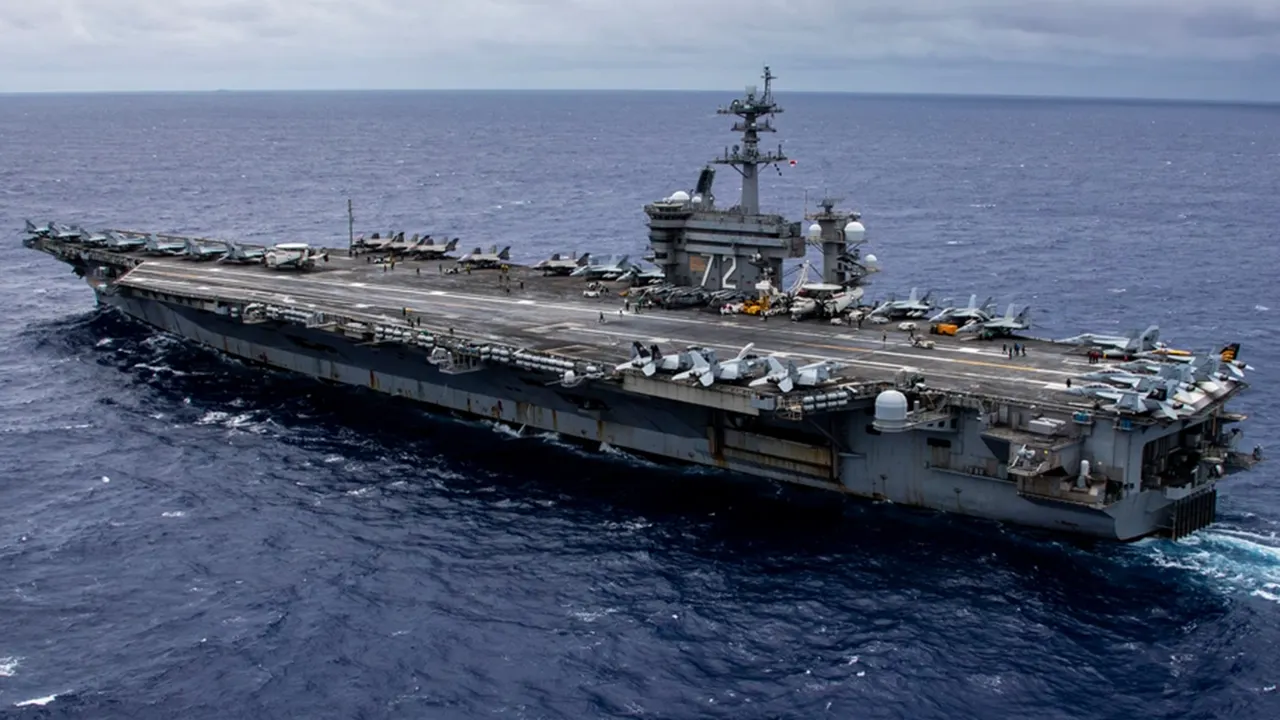
The USS Abraham Lincoln aircraft carrier has entered waters in the Indian Ocean under U.S. Central Command (CENTCOM) oversight as tensions with Iran escalate, according to a senior U.S. official.
The deployment comes amid reports that Iran’s Supreme Leader Ayatollah Ali Khamenei has gone underground, potentially signaling preparations for military action. The movement of the carrier strike group represents a significant show of force in a region where tensions have been steadily mounting.
Defense experts warn that Iran’s drone capabilities present a particular concern for U.S. naval assets. Cameron Chell, CEO of drone manufacturer Draganfly, told reporters that Iran has developed “an effective asymmetric threat against highly sophisticated military systems” by pairing “low-cost warheads with inexpensive delivery platforms.”
The senior U.S. official clarified that while the Lincoln has entered the region, the carrier is not yet positioned for potential strikes against Iran. This measured deployment appears designed to demonstrate American resolve while avoiding immediate escalation.
What makes Iran’s drone strategy especially dangerous is its approach to overwhelming defense systems. Rather than relying on sophisticated individual drones, Iran can launch massive numbers of relatively simple unmanned aerial vehicles in coordinated swarm attacks.
“If hundreds are launched in a short period of time, some are almost certain to get through,” Chell explained. “Modern defense systems were not originally designed to counter that kind of saturation attack. For U.S. surface vessels operating near Iran, warships are prime targets.”
The Pentagon has been bolstering its military posture across the Middle East in response to what officials describe as growing instability within Iran. This includes deploying a squadron of F-15 fighter jets to the region and sending C-17 transport aircraft carrying heavy equipment.
Defense analysts note that large naval vessels like the USS Abraham Lincoln present particularly vulnerable targets. “U.S. assets in the region are large, slow-moving and easily identifiable on radar, which makes them targetable,” Chell said. The carrier, at over 1,000 feet long, would be difficult to conceal from Iranian surveillance systems.
While the U.S. military and its allies have been rapidly developing counter-drone defense systems, questions remain about whether the Abraham Lincoln carrier group possesses sufficient capabilities to neutralize multiple Iranian drones flying in coordinated formations.
Iran has invested heavily in drone technology over the past decade, with its Shahed series becoming particularly notorious after being deployed by Russia in Ukraine. These relatively inexpensive drones can be produced in large numbers, allowing Iran to compensate for its lack of conventional military parity with the United States.
“Iran’s strength lies instead in these low-cost, high-volume drone systems — particularly one-way strike drones designed to fly into a target and detonate,” Chell noted, highlighting the fundamental asymmetry in the confrontation.
The situation reflects a broader shift in modern warfare, where conventional military advantages can be partially neutralized by relatively inexpensive technologies deployed in overwhelming numbers. This reality has forced military planners to reconsider traditional defensive approaches.
As the Abraham Lincoln takes position in the Indian Ocean, military analysts will be closely watching both Iran’s response and any adjustments to the carrier group’s defensive posture. The deployment represents not just a tactical move but a strategic message in an increasingly volatile region where miscalculations could have profound consequences.
Fact Checker
Verify the accuracy of this article using The Disinformation Commission analysis and real-time sources.

28 Comments
Exploration results look promising, but permitting will be the key risk.
I like the balance sheet here—less leverage than peers.
Good point. Watching costs and grades closely.
Good point. Watching costs and grades closely.
I like the balance sheet here—less leverage than peers.
Silver leverage is strong here; beta cuts both ways though.
Good point. Watching costs and grades closely.
Good point. Watching costs and grades closely.
Silver leverage is strong here; beta cuts both ways though.
Good point. Watching costs and grades closely.
Good point. Watching costs and grades closely.
If AISC keeps dropping, this becomes investable for me.
I like the balance sheet here—less leverage than peers.
Good point. Watching costs and grades closely.
I like the balance sheet here—less leverage than peers.
Good point. Watching costs and grades closely.
Interesting update on US Deploys USS Abraham Lincoln Strike Group Amid Iran Tensions. Curious how the grades will trend next quarter.
Good point. Watching costs and grades closely.
Good point. Watching costs and grades closely.
Uranium names keep pushing higher—supply still tight into 2026.
Nice to see insider buying—usually a good signal in this space.
Good point. Watching costs and grades closely.
Interesting update on US Deploys USS Abraham Lincoln Strike Group Amid Iran Tensions. Curious how the grades will trend next quarter.
Good point. Watching costs and grades closely.
Good point. Watching costs and grades closely.
Nice to see insider buying—usually a good signal in this space.
Good point. Watching costs and grades closely.
Production mix shifting toward World might help margins if metals stay firm.