


Listen to the article
U.S. Troops Arrive in Nigeria to Combat Islamist Militants in West Africa
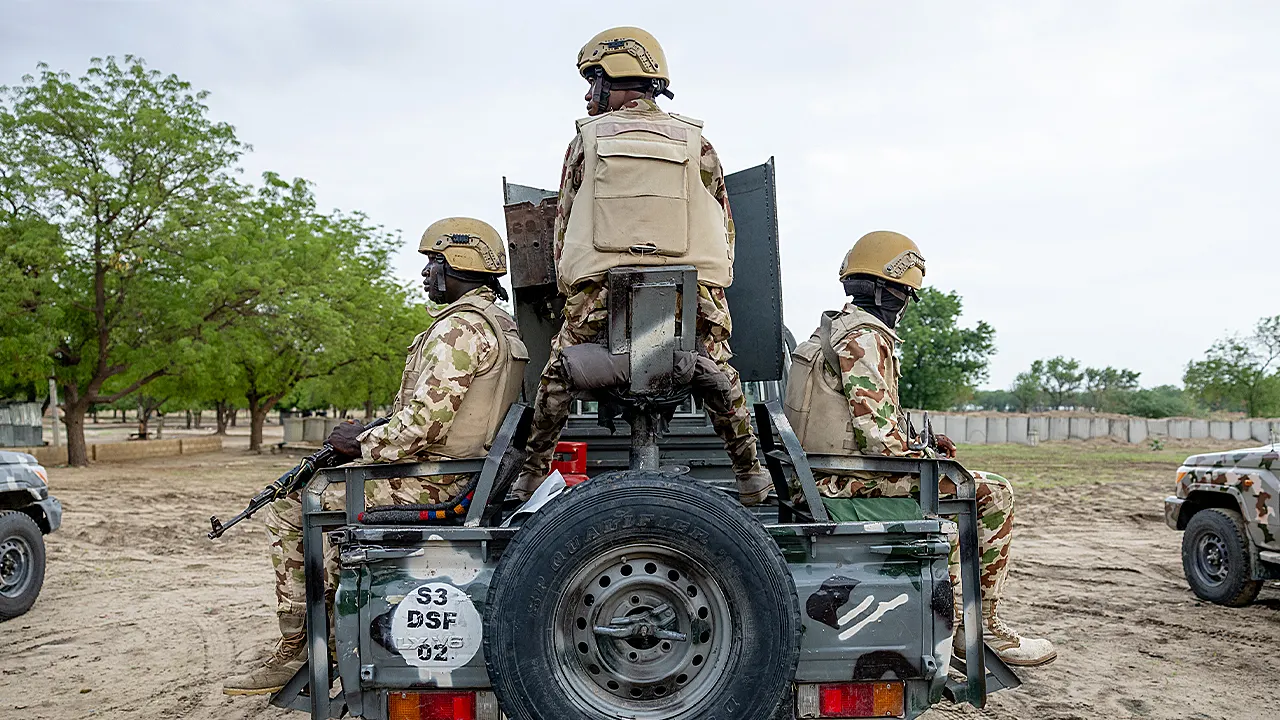
Approximately 100 U.S. military personnel landed in Nigeria on Monday, marking the first phase of a security cooperation mission to help local forces battle Islamic extremists and other armed groups in the region. The deployment, which will eventually total around 200 troops, comes at the explicit request of the Nigerian government.
The American forces will provide training, technical support, and intelligence sharing capabilities to Nigerian military units confronting a growing security crisis across the country’s northern regions. According to the Nigerian military, an additional 100 U.S. personnel are expected to arrive in the coming weeks.
U.S. Army Lt. Gen. John W. Brennan, deputy commander of U.S. Africa Command (AFRICOM), met with Nigerian officials upon arrival to reinforce military-to-military ties between the two nations. This deployment represents a significant expansion of security cooperation between Washington and Abuja.
The mission primarily targets Islamist extremist groups such as Boko Haram and the Islamic State West Africa Province (ISWAP), both of which have carried out deadly attacks throughout northern Nigeria and the broader Lake Chad Basin region. These groups have been responsible for thousands of civilian deaths and mass displacements across the region over the past decade.
The U.S. contingent includes intelligence analysts, advisers, and trainers who will work alongside Nigerian forces to improve their counterterrorism capabilities. This deployment follows recent high-level meetings between AFRICOM officials and Nigerian leadership aimed at strengthening bilateral security relationships.
On February 8, Nigerian President Bola Tinubu hosted a high-level U.S. delegation led by AFRICOM commander Gen. Dagvin Anderson at the State House in Abuja. The meeting included senior officials from Nigeria’s military, security, and intelligence agencies and centered on expanding intelligence sharing and operational coordination against terrorist threats.
Monday’s troop arrival signals a warming of relations between Washington and Abuja following previous tensions over religious violence and civilian protection issues. President Donald Trump had previously criticized Nigeria for what he described as failures to protect Christian communities from what he characterized as genocide, citing attacks by extremist groups and armed bandits operating in the country’s northern regions.
The improving security cooperation was highlighted on December 25 when Trump ordered airstrikes targeting Islamic State militants in Nigeria’s northwestern Sokoto State. AFRICOM conducted these operations in coordination with Nigerian authorities against targets they identified as Islamic State terrorists.
“The United States launched a powerful and deadly strike against ISIS Terrorist Scum in Northwest Nigeria, who have been targeting and viciously killing, primarily, innocent Christians, at levels not seen for many years, and even Centuries!” Trump stated on his Truth Social platform at the time.
Nigeria faces complex security challenges beyond just religious extremism. Criminal organizations, often referred to locally as “bandits,” operate across the country’s northwest, engaging in kidnapping, cattle rustling, and village raids. Meanwhile, intercommunal tensions between farmers and herders have intensified in recent years, further destabilizing parts of Nigeria’s Middle Belt region.
The U.S. deployment represents Washington’s increasing security focus on West Africa, a region that has seen growing instability as jihadist groups expand their operational territory. Beyond Nigeria, neighboring countries including Niger, Mali, and Burkina Faso have struggled to contain similar threats, with some experiencing military coups partly justified by security failures.
Security analysts note that this mission reflects a shift toward capacity building rather than direct combat operations in America’s counterterrorism strategy in Africa. The approach emphasizes strengthening local partners’ abilities to combat extremism rather than maintaining a large U.S. military footprint on the continent.
Fact Checker
Verify the accuracy of this article using The Disinformation Commission analysis and real-time sources.

16 Comments
The decision to send additional U.S. troops to Nigeria highlights the gravity of the security challenges faced in West Africa. Providing training and intelligence support could be a valuable contribution.
It will be crucial for the U.S. and Nigerian militaries to work closely together to disrupt the activities of Boko Haram and ISWAP.
This deployment represents a significant escalation of U.S. involvement in the region. While the goal is to assist the Nigerian forces, the potential for unintended consequences should be carefully considered.
I hope this mission can achieve tangible results in weakening the militant groups without causing further instability in the region.
The U.S. deployment to Nigeria is a clear indication of the growing security threats in West Africa. Strengthening the capabilities of the Nigerian military is a necessary step, but the long-term sustainability of this approach remains to be seen.
It will be important to monitor the progress of this mission and ensure that the U.S. support aligns with the needs and priorities of the Nigerian government.
This is a concerning development as the militant threat in West Africa continues to grow. Providing training and intelligence support to the Nigerian military could help them tackle these extremist groups more effectively.
Let’s hope this deployment can help turn the tide against Boko Haram and ISWAP. The situation has been dire for too long.
While the U.S. deployment to Nigeria is understandable given the regional security concerns, the potential for mission creep and unintended consequences should not be overlooked. Careful coordination with local authorities will be crucial.
The success of this mission will depend on the ability of the U.S. and Nigerian forces to work together effectively and maintain a clear, achievable set of objectives.
While the U.S. military presence in Nigeria is aimed at assisting the local forces, it will be important to monitor the situation closely to ensure this deployment does not further escalate tensions in the region.
Counterterrorism efforts require a delicate balance. I hope this mission can achieve its objectives without causing unintended consequences.
The U.S. deployment to Nigeria shows the strategic importance of the region. Combating Islamic militancy in West Africa is crucial for regional stability and security.
I’m curious to see how this mission unfolds and what impact the U.S. forces can have on the ground.
The deployment of U.S. troops to Nigeria is a significant development in the ongoing fight against Islamist militants in West Africa. It remains to be seen how this mission will unfold and what impact it will have on the regional security landscape.
I’m curious to see how this deployment will be received by the local population and whether it will contribute to a lasting solution to the security challenges in the region.