


Listen to the article
A U.S. human rights group has documented nearly 4,000 deaths in Iran’s recent protest crackdown, marking the deadliest period of civil unrest since the 1979 revolution.
The Human Rights Activists News Agency (HRANA) on Sunday raised its verified death toll to at least 3,919 people killed during widespread demonstrations across Iran, a significant increase from their previous count of 3,308 casualties. The agency also reported that 24,669 protesters have been arrested in the government’s response to the unrest.
HRANA has established a reputation for accurate reporting through its extensive network of activists inside Iran who verify each reported fatality. The Associated Press has not been able to independently confirm these figures.
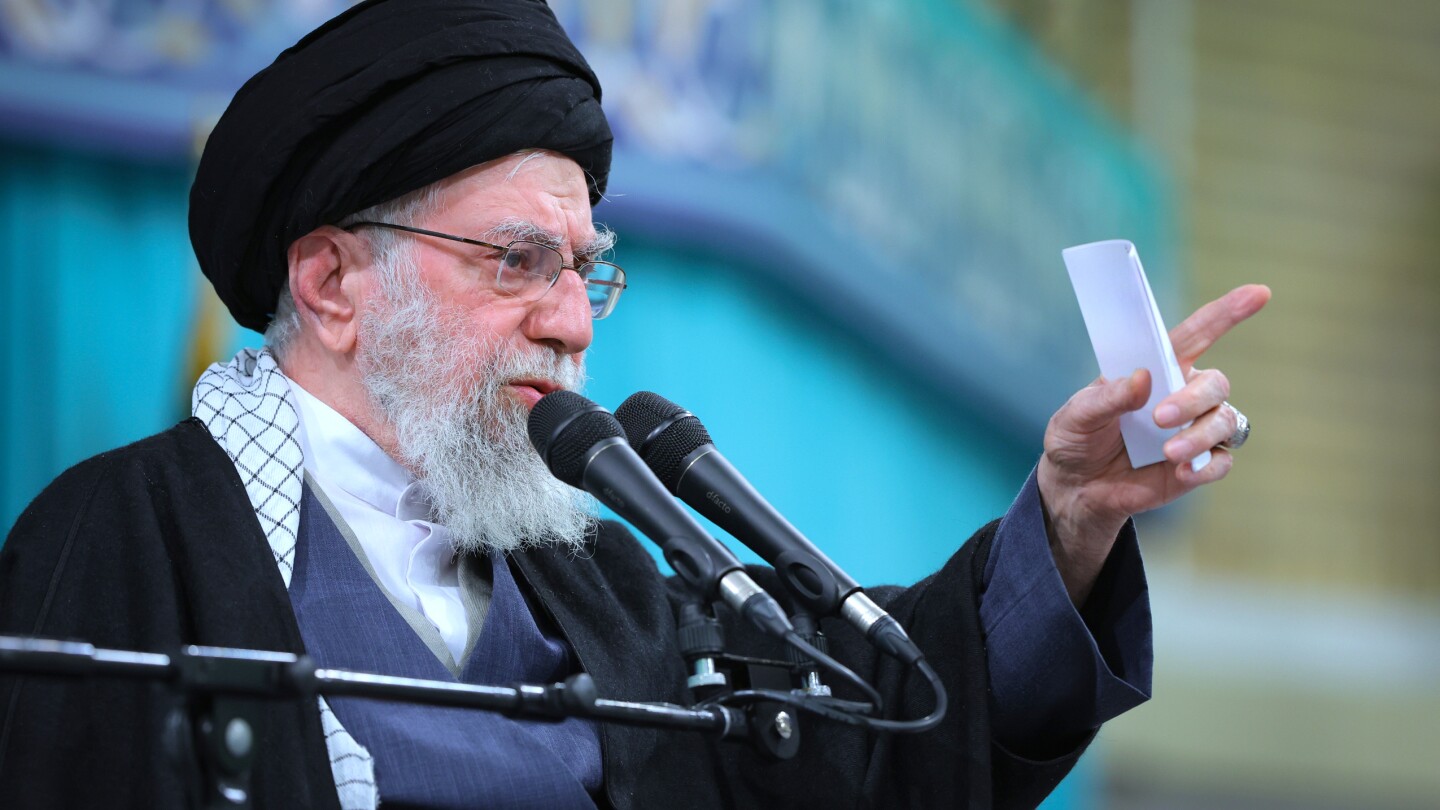
The protests, which began December 28 over economic grievances, quickly evolved into broader anti-government demonstrations that faced a brutal response from authorities. Iranian officials have not provided a clear official death toll, though Supreme Leader Ayatollah Ali Khamenei made a rare acknowledgment on Saturday that “several thousand” people had died during the protests.
Khamenei blamed the United States for the casualties, describing protesters as “foot soldiers” of America. This accusation aligns with Iran’s consistent narrative that foreign powers, particularly the U.S. and Israel, are responsible for stoking domestic unrest.
The situation has intensified already strained U.S.-Iran relations. President Donald Trump had previously threatened military action against Tehran if Iranian authorities used deadly force against demonstrators. “Help is on the way,” Trump had told protesters, warning Iranian officials that his administration would “act accordingly” if killings continued or if detained protesters were executed.
More recently, however, Trump has adopted a more conciliatory tone, noting that Iranian officials had “canceled the hanging of over 800 people” and expressing respect for that decision.
Iranian President Masoud Pezeshkian defended his government’s position on Sunday, writing on social platform X that “longstanding enmity and inhumane sanctions” imposed by the U.S. and its allies were responsible for hardships faced by Iranians. Pezeshkian warned that “any aggression against the Supreme Leader of our country is tantamount to all-out war against the Iranian nation.”
There are signs that international pressure may be having some effect. The family of Erfan Soltani, a 26-year-old detained protester, reported Sunday that his planned execution had been postponed. Somayeh, a 45-year-old relative living abroad, told the AP that Soltani’s family had been informed his execution would take place Wednesday, but the sentence was delayed when they arrived at the prison in Karaj, northwest of Tehran.
“I ask everyone to help in securing Erfan’s freedom,” Somayeh pleaded in a video message.
The verbal confrontation between Iranian and American leaders continued over the weekend, with Khamenei labeling Trump a “criminal” for supporting the rallies. Trump responded in a Politico interview Saturday, calling for an end to Khamenei’s nearly 40-year rule and describing him as “a sick man who should run his country properly and stop killing people.”
While the streets of Iran have returned to an uneasy calm with no protests reported in recent days, resistance continues in other forms. Some Iranians have resorted to chanting anti-Khamenei slogans from their windows at night, with these chants echoing through neighborhoods in Tehran, Shiraz, and Isfahan, according to witnesses.
The Iranian government has maintained a near-total internet blackout since January 8, though very limited connectivity briefly returned on Saturday. By Sunday, some online services like Google began functioning again, but users reported they could only access domestic websites, while email services remained blocked—a common tactic used by the regime to prevent organization of protests and limit information flowing into and out of the country.
The death toll from these protests represents the most significant challenge to the Islamic Republic’s authority in decades, surpassing casualties from all previous periods of unrest since the 1979 revolution that established the current regime.
Fact Checker
Verify the accuracy of this article using The Disinformation Commission analysis and real-time sources.

10 Comments
The mining and commodities sectors in Iran are likely facing significant headwinds given the unrest. Investors will need to carefully monitor the situation and assess any potential impacts on global supply and demand.
Agreed. Disruptions to Iranian mineral and energy production could have ripple effects throughout global markets. Prudent risk assessment will be critical for companies and investors.
Tragic to see the loss of life during these protests. While the verified death toll is staggering, the truth is often hard to determine in such volatile situations. I hope the authorities and protesters can find a peaceful resolution soon.
Agreed. Verifying facts amid the chaos is crucial. Independent monitoring and reporting will be key to understanding the full scale of the human toll.
The mining and energy sectors in Iran are likely facing significant uncertainty and disruption due to the ongoing protests. Investors will need to closely monitor the situation and its potential impacts on global commodity markets.
Absolutely. Disruptions to Iranian production could have far-reaching consequences, especially for critical minerals and energy resources. Careful analysis will be essential going forward.
Tragic news from Iran. While the reported death toll is horrific, I would urge caution in accepting the figures at face value. Verifying the facts on the ground is extremely challenging in such a volatile environment.
This is a tragic and complex situation. While the reported death toll is alarming, I would encourage further verification and nuanced analysis before drawing conclusions. Geopolitical instability often muddies the facts on the ground.
The mining and energy sectors in Iran will likely face further disruption and uncertainty given the ongoing unrest. Investors will be watching closely to see how the situation develops and impacts commodity markets.
Absolutely. The protests have the potential to disrupt energy and mineral production, which could lead to supply chain issues and price volatility globally.