


Listen to the article
The State Department announced Tuesday that it has barred five European leaders from entering the United States, accusing them of pressuring American technology companies to censor or suppress U.S. viewpoints. This move represents a significant escalation in the Trump administration’s campaign against what it perceives as foreign influence over online speech in America.
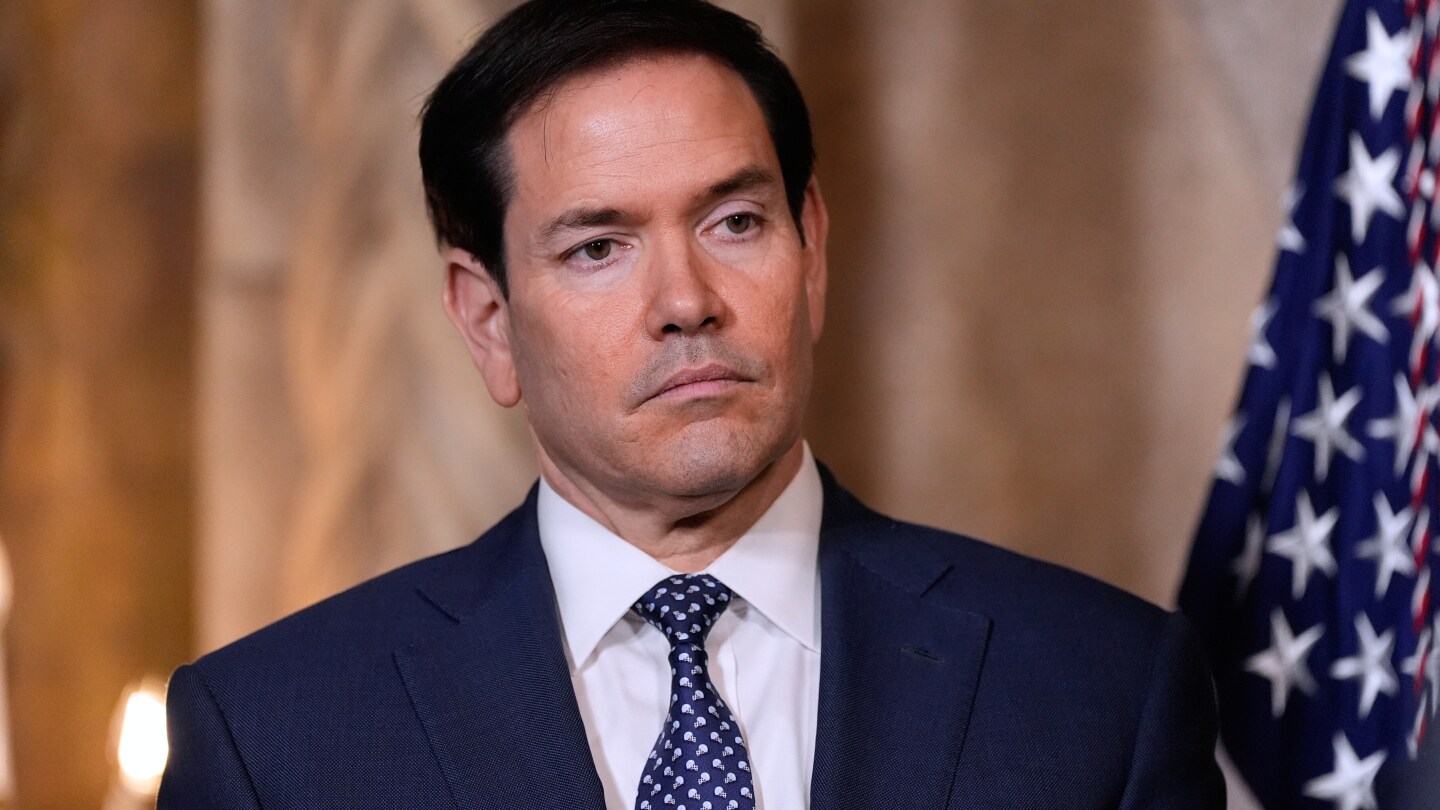
Secretary of State Marco Rubio characterized the Europeans as “radical” activists who lead “weaponized” non-governmental organizations. “For far too long, ideologues in Europe have led organized efforts to coerce American platforms to punish American viewpoints they oppose,” Rubio stated on social media platform X. “The Trump Administration will no longer tolerate these egregious acts of extraterritorial censorship.”
The visa restrictions fall under a new policy announced in May designed to block entry for foreigners deemed responsible for censoring protected speech within the United States. According to Rubio, these individuals have advanced foreign government censorship campaigns that created “potentially serious adverse foreign policy consequences” for the U.S.
Sarah Rogers, Under Secretary of State for Public Diplomacy, identified the five Europeans in a series of social media posts. The list includes prominent figures involved in digital content moderation and anti-hate campaigns: Imran Ahmed, Chief Executive of the Centre for Countering Digital Hate; Josephine Ballon and Anna-Lena von Hodenberg, leaders of the German organization HateAid; Clare Melford, who leads the Global Disinformation Index; and former EU Commissioner Thierry Breton.
Rogers described Breton, a French business executive and former finance minister, as the “mastermind” behind the European Union’s Digital Services Act (DSA). This legislation imposes strict requirements on internet platforms to keep users safe online, including flagging harmful or illegal content such as hate speech. The Under Secretary specifically referenced Breton’s warning to tech billionaire Elon Musk about the “amplification of harmful content” during Musk’s livestream interview with then-presidential candidate Donald Trump in August 2024.
Responding to the U.S. action, Breton noted on X that all 27 EU member states had voted for the DSA in 2022, adding cryptically: “To our American friends: ‘Censorship isn’t where you think it is.'”
French Foreign Minister Jean-Noël Barrot condemned the visa restrictions, defending the DSA as a measure to ensure that “what is illegal offline is also illegal online.” He emphasized that the legislation “has absolutely no extraterritorial reach and in no way concerns the United States.”
HateAid co-CEOs Ballon and von Hodenberg issued a joint statement calling the move “an act of repression by a government that is increasingly disregarding the rule of law and trying to silence its critics by any means necessary.”
The practical implementation of these restrictions may vary, as most Europeans typically enter the U.S. under the Visa Waiver Program, which doesn’t require a formal visa but does involve an online application processed by the Department of Homeland Security. According to a U.S. official speaking anonymously, it’s possible that these five individuals have already been flagged in the system.
This action against European digital policy leaders represents just one facet of the Trump administration’s broader immigration policy shifts. Other recent visa restriction policies have targeted visitors from certain African and Middle Eastern countries and the Palestinian Authority. Some foreign visitors may now be required to post financial bonds when applying for U.S. visas.
The move highlights growing tensions between the United States and Europe over digital governance, online speech, and the regulation of major technology platforms. While European regulators have pursued increasingly stringent content moderation requirements through legislation like the DSA, the current U.S. administration has framed such efforts as foreign censorship that threatens American speech rights and tech companies’ autonomy.
Fact Checker
Verify the accuracy of this article using The Disinformation Commission analysis and real-time sources.

11 Comments
Interesting move by the US government. While I understand the desire to protect American viewpoints, I worry this could escalate tensions and set a precedent for retaliatory measures. Diplomacy and mutual understanding seem crucial here.
I agree, diplomacy is key. Unilateral actions like this can backfire and undermine broader cooperation. Hopefully the US and Europe can find a constructive way forward on this sensitive issue.
Hmm, this seems like a heavy-handed approach by the US. While I understand the desire to protect American viewpoints, barring European leaders feels like an overreaction. De-escalation and dialogue would be a better path forward in my opinion.
I agree, this could easily spiral out of control. Both sides need to lower the temperature and find a way to address these concerns through constructive diplomacy rather than unilateral actions.
This is a concerning development. Free speech should be protected, not censored. I hope the US can find a diplomatic solution that respects the sovereignty of all nations while upholding core democratic values.
You raise a good point. Balancing national interests and free speech can be tricky, but censorship should always be a last resort. I’m curious to see how this situation plays out.
Hmm, this is a thorny situation. I can understand both sides’ perspectives, but unilateral moves like this don’t seem constructive. Hopefully the US and Europe can find a way to address these concerns through open dialogue and a spirit of compromise.
The details here are murky, but the principle of free speech is an important one. I hope the US and Europe can work through this in a way that upholds democratic values without resorting to tit-for-tat measures that could damage broader cooperation.
This raises complex questions about national sovereignty, free speech, and the role of technology platforms. I’m curious to learn more about the specific allegations and whether there are any verifiable examples of the ‘censorship’ claimed by the US.
Good point. The details here will be important. Accusations of censorship can be tricky to substantiate, especially across borders. A more transparent process would help build confidence in the US position.
This is a complex issue without easy answers. While I’m sympathetic to the US desire to protect free speech, I worry these types of actions could backfire and make the problem worse. Diplomacy and finding common ground seem crucial here.