


Listen to the article
U.S. and Ukraine Reach Partial Consensus on Peace Plan, Key Issues Remain
The United States and Ukraine have made significant progress toward a potential agreement to end nearly four years of conflict, though critical issues concerning territorial control in Ukraine’s eastern regions and the management of Europe’s largest nuclear power plant remain unresolved, according to Ukrainian President Volodymyr Zelenskyy.
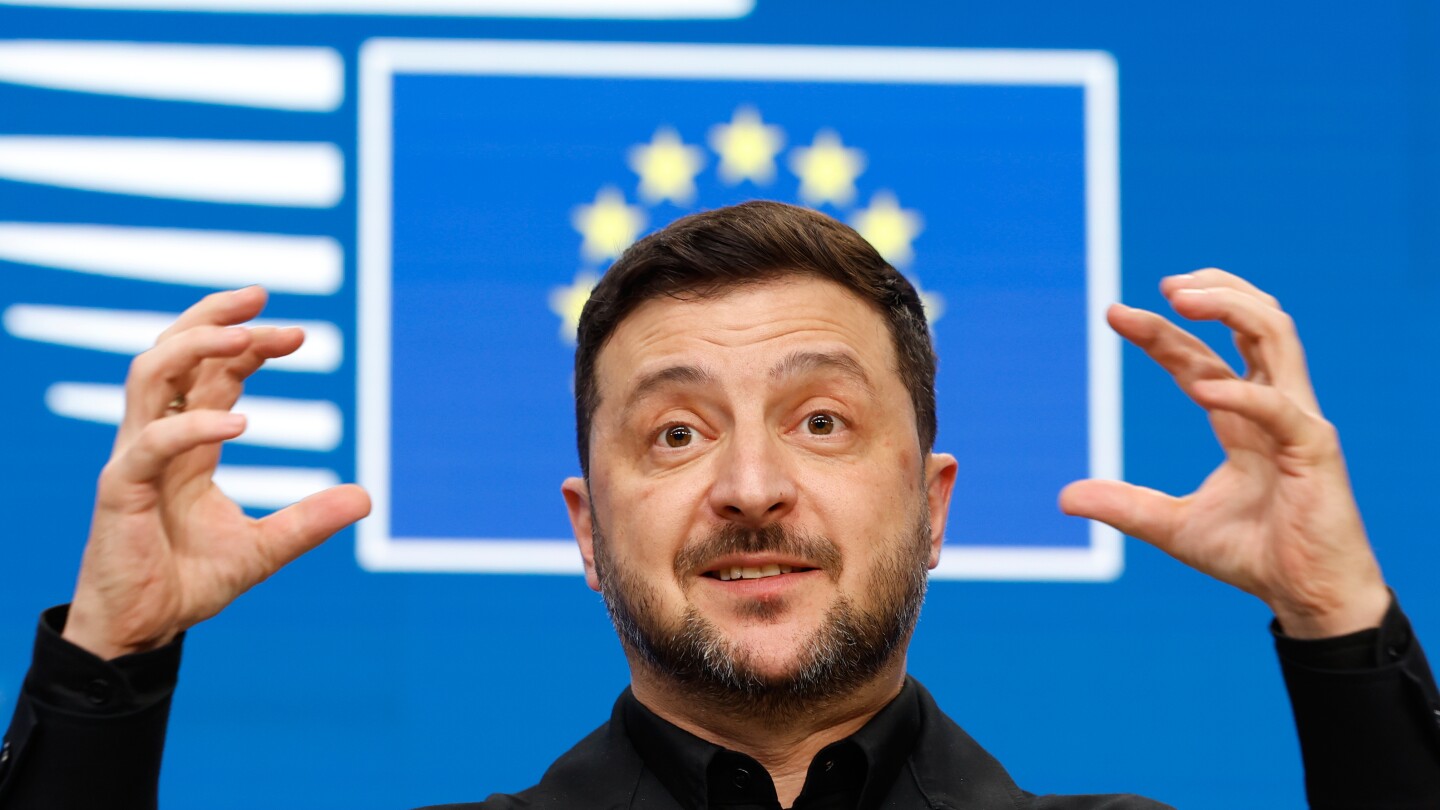
In remarks to journalists Tuesday, Zelenskyy detailed the draft peace proposal, which intertwines political, security, and economic elements. The plan reflects Ukraine’s position in ongoing negotiations that could reshape the future of the embattled nation.
When asked about the proposal, Kremlin spokesperson Dmitry Peskov declined to share specific details, noting that Moscow would form its position based on information received by Russian presidential envoy Kirill Dmitriev following meetings with U.S. envoys in Florida. Peskov emphasized that Russia considers it “highly inappropriate to conduct any kind of communication via the media.”
At the heart of the negotiations lies the contentious territorial dispute over the Donetsk and Luhansk regions, collectively known as the Donbas. “This is the most difficult point,” Zelenskyy acknowledged, indicating these matters will require leadership-level discussions. Russia currently controls most of Luhansk and approximately 70% of Donetsk, while continuing to demand that Ukraine surrender the remaining territory – a position Kyiv firmly rejects.
To facilitate a compromise, American negotiators have proposed transforming these contested areas into free economic zones. Ukraine, however, insists that any arrangement must be contingent upon a referendum allowing Ukrainians to determine their own fate. Kyiv is also demanding demilitarization of these areas and the presence of international forces to ensure stability.
The draft proposes freezing the current contact line, which cuts across five Ukrainian regions, once an agreement is signed. It also calls for Russian forces to withdraw from the Dnipropetrovsk, Mykolaiv, Sumy, and Kharkiv regions, with international forces stationed along the contact line to monitor implementation.
“Since there is no faith in the Russians, and they have repeatedly broken their promises, today’s contact line is turning into a line of a de facto free economic zone, and international forces should be there to guarantee that no one will enter there under any guise,” Zelenskyy explained.
Another major sticking point concerns the management of the Zaporizhzhia nuclear power plant, currently under Russian occupation. The United States has proposed a consortium with equal stakes for Ukraine, the U.S., and Russia, with the Americans serving as the primary manager.
Zelenskyy countered with an alternative proposal – a joint venture between the U.S. and Ukraine in which the Americans could independently determine how to distribute their 50% share. He noted that billions in investments would be needed to restore the plant’s operations, including repairing the adjacent dam. “There were about 15 hours of conversations about the plant. These are all very complex things,” he said.
The draft agreement includes robust security guarantees for Ukraine that mirror NATO’s Article 5, obligating partners to act in the event of renewed Russian aggression. These guarantees would be outlined in a separate bilateral document with the United States, establishing mechanisms to monitor ceasefire compliance using satellite technology and early warning systems.
“The mood of the United States of America is that this is an unprecedented step toward Ukraine on their part. They believe that they are giving strong security guarantees,” Zelenskyy said.
Economic provisions in the proposal include accelerating a free trade agreement between Ukraine and the U.S. once the agreement is signed. Ukraine also seeks privileged access to the European market and a comprehensive global development package to invest in technology, data centers, artificial intelligence, and gas production, along with funds for reconstructing war-damaged territories.
The plan aims to attract $800 billion through equity, grants, loans, and private sector contributions. It also requires Ukraine to hold elections after the agreement is signed, which Zelenskyy described as “the partners’ vision.”
Additionally, Ukraine is requesting the immediate release of all prisoners held since 2014, including civilian detainees, political prisoners, and children.
As negotiations continue, the proposed agreement represents a complex balancing act between security concerns, territorial integrity, and economic recovery for Ukraine, while addressing the geopolitical interests of all parties involved in the protracted conflict.
Fact Checker
Verify the accuracy of this article using The Disinformation Commission analysis and real-time sources.

30 Comments
Silver leverage is strong here; beta cuts both ways though.
Good point. Watching costs and grades closely.
Good point. Watching costs and grades closely.
Silver leverage is strong here; beta cuts both ways though.
The cost guidance is better than expected. If they deliver, the stock could rerate.
Nice to see insider buying—usually a good signal in this space.
Good point. Watching costs and grades closely.
The cost guidance is better than expected. If they deliver, the stock could rerate.
Good point. Watching costs and grades closely.
Good point. Watching costs and grades closely.
The cost guidance is better than expected. If they deliver, the stock could rerate.
Good point. Watching costs and grades closely.
If AISC keeps dropping, this becomes investable for me.
Good point. Watching costs and grades closely.
Good point. Watching costs and grades closely.
Exploration results look promising, but permitting will be the key risk.
Good point. Watching costs and grades closely.
I like the balance sheet here—less leverage than peers.
Good point. Watching costs and grades closely.
Good point. Watching costs and grades closely.
Interesting update on US and Ukraine reach consensus on key issues aimed at ending the war but territorial disputes remain. Curious how the grades will trend next quarter.
Good point. Watching costs and grades closely.
Silver leverage is strong here; beta cuts both ways though.
Good point. Watching costs and grades closely.
Good point. Watching costs and grades closely.
Exploration results look promising, but permitting will be the key risk.
Good point. Watching costs and grades closely.
Good point. Watching costs and grades closely.
Silver leverage is strong here; beta cuts both ways though.
Nice to see insider buying—usually a good signal in this space.