


Listen to the article
The United States and Russia have agreed to reestablish high-level military dialogue for the first time in more than four years, signaling a potential thaw in relations since President Donald Trump returned to office with promises to end the war in Ukraine.
The military communication channel, which was suspended in late 2021 amid rising tensions before Russia’s full-scale invasion of Ukraine, will provide “consistent military-to-military contact as the parties continue to work towards a lasting peace,” according to a statement from the U.S. European Command.
The agreement emerged from a meeting between senior Russian and American military officials in Abu Dhabi, United Arab Emirates, where U.S. Gen. Alexus Grynkewich, commander of U.S. and NATO forces in Europe, was present. The talks between American, Russian, and Ukrainian officials on ending the war entered their second day.
The resumption of the military hotline represents an effort to prevent dangerous incidents between Russian and U.S. forces. In March 2023, the U.S. military reported ditching an Air Force MQ-9 Reaper drone in the Black Sea after Russian fighter jets dumped fuel on it and struck its propeller while flying in international airspace. Moscow denied the collision, claiming the drone crashed during a sharp maneuver.
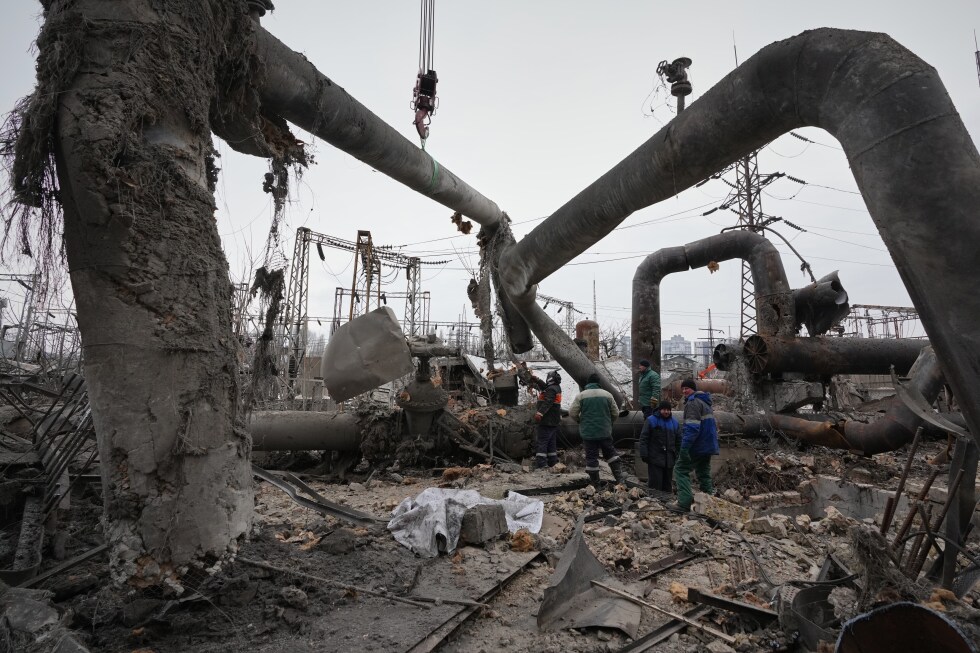
The military dialogue comes at a time when Moscow has been escalating attacks on Ukraine’s power grid, apparently attempting to weaken civilian morale, while hostilities continue along the 1,000-kilometer front line in eastern and southern Ukraine.
NATO members have expressed growing concern about Russian intrusions into allied airspace. In September, Russian drones flew into Poland’s airspace, prompting NATO aircraft to intercept and shoot down some of the devices—marking the first direct encounter between NATO and Russian forces since the full-scale invasion. Later that month, NATO jets escorted three Russian warplanes out of Estonia’s airspace.
The Abu Dhabi talks included delegations from Moscow and Kyiv alongside U.S. special envoy Steve Witkoff and Trump’s son-in-law Jared Kushner, according to Rustem Umerov, Ukraine’s National Security and Defense Council chief. This follows similar discussions in the same location last month as the Trump administration attempts to guide both nations toward a settlement.
While officials have not disclosed details about progress in the negotiations, a prisoner exchange did take place following Thursday’s talks. Russia’s Defense Ministry said 157 Russian servicemen and three Russian nationals captured during Ukraine’s incursion into Russia’s Kursk region were returned. Ukrainian officials confirmed that 150 Ukrainian servicemen and seven civilians were released from Russian captivity.
Ukrainian human rights ombudsman Dmytro Lubinets noted that among the Ukrainian servicemembers who returned, 18 had been “illegally sentenced by Russia.” He added that “overall, those released are in a difficult psychological condition, and some are critically underweight.”
In a sobering revelation, Ukrainian President Volodymyr Zelenskyy disclosed that 55,000 Ukrainian troops have died since Russia’s invasion began, an increase from the 46,000 figure he cited in early 2025. Zelenskyy emphasized that Ukraine needs security guarantees from the U.S. and Europe to deter any future Russian attacks.
Human Rights Watch reported a 31% increase in Ukrainian civilian casualties in the past year. According to the United Nations Human Rights Monitoring Mission in Ukraine, nearly 15,000 Ukrainian civilians have been killed and more than 40,000 wounded since the war began.
In other developments, Ukrainian Economic Minister Mykhailo Fedorov announced that Russian troops have lost access to Starlink satellite internet terminals on the front line after Ukraine requested that Elon Musk’s SpaceX deny Russia use of the service. According to Fedorov’s adviser, this has disrupted Russian command-and-control capabilities and drone navigation, halting assaults in many sectors.
Meanwhile, Polish Prime Minister Donald Tusk, during a visit to Kyiv, agreed with Zelenskyy to develop joint production of ammunition. Zelenskyy said Poland plans to increase supplies of liquefied natural gas to Ukraine, and the countries are exploring a potential exchange of weaponry, with Ukraine possibly receiving Polish MiG fighter jets while Warsaw receives Ukrainian drones.
Overnight attacks continued, with Russia firing 183 drones and two ballistic missiles at Ukraine, according to the Ukrainian air force. Three people were injured. The Russian Defense Ministry claimed its air defenses downed 95 Ukrainian drones over several regions, the Azov Sea, and Crimea, which Russia illegally annexed in 2014.
Fact Checker
Verify the accuracy of this article using The Disinformation Commission analysis and real-time sources.

14 Comments
I’m curious to see how this military dialogue evolves and whether it can help break the current diplomatic deadlock over Ukraine. Open communication is necessary, but real progress will require political will on all sides.
That’s an insightful observation. Maintaining open channels is important, but ultimately the political leadership on both sides will need to show flexibility and compromise to find a solution.
This is an interesting development after the tensions of the past few years. Reestablishing military communication lines could help prevent miscalculations and keep the situation from escalating further. It’s a small but important step towards diplomacy and de-escalation.
You’re right, this open channel could be crucial to avoiding unintended clashes. Though the war in Ukraine remains a major point of contention, maintaining dialogue is essential.
From the perspective of mining and commodity markets, any easing of tensions between the US and Russia could have positive implications. Stable military communication lines could help prevent supply chain disruptions and market volatility caused by geopolitical conflicts.
That’s a good point. Restoring this military dialogue could provide more certainty and stability for critical commodity industries that have been impacted by the Ukraine war.
The resumption of the military hotline is a positive sign, but the underlying issues fueling the conflict in Ukraine remain unresolved. Sustained diplomacy and compromise will be needed on all sides to find a lasting peaceful solution.
Exactly. Rebuilding trust and communication is the first step, but the real challenge will be translating that into concrete progress on the ground in Ukraine.
This is a welcome development, but the road ahead remains long and fraught with challenges. Rebuilding trust and finding a path to peace in Ukraine will require sustained, good-faith negotiations on complex issues. Cautious optimism is warranted, but significant obstacles remain.
Well said. While this is a positive first step, the underlying tensions and grievances run deep. Continued diplomacy and compromise will be essential to making meaningful progress.
While this is an encouraging step, I remain cautiously optimistic. The underlying issues driving the conflict in Ukraine are deeply entrenched, and it will take significant political will on all sides to find a lasting solution. Sustained diplomacy and compromise will be essential.
I agree. Reestablishing military communication is important, but the real test will be whether it leads to tangible progress on the diplomatic front to end the war in Ukraine.
From an energy and commodities perspective, the Russia-Ukraine war has had significant global impacts, disrupting supply chains for key resources like oil, natural gas, and minerals. Any steps towards de-escalation could help stabilize those vital markets.
Good point. Restoring some military dialogue may help ease tensions and provide more certainty for energy and commodity producers and consumers worldwide.