


Listen to the article
The United States and Israel faced off with Iran at an emergency United Nations Security Council meeting Saturday, as global powers urged restraint following a series of military strikes that have pushed the Middle East closer to widespread conflict.
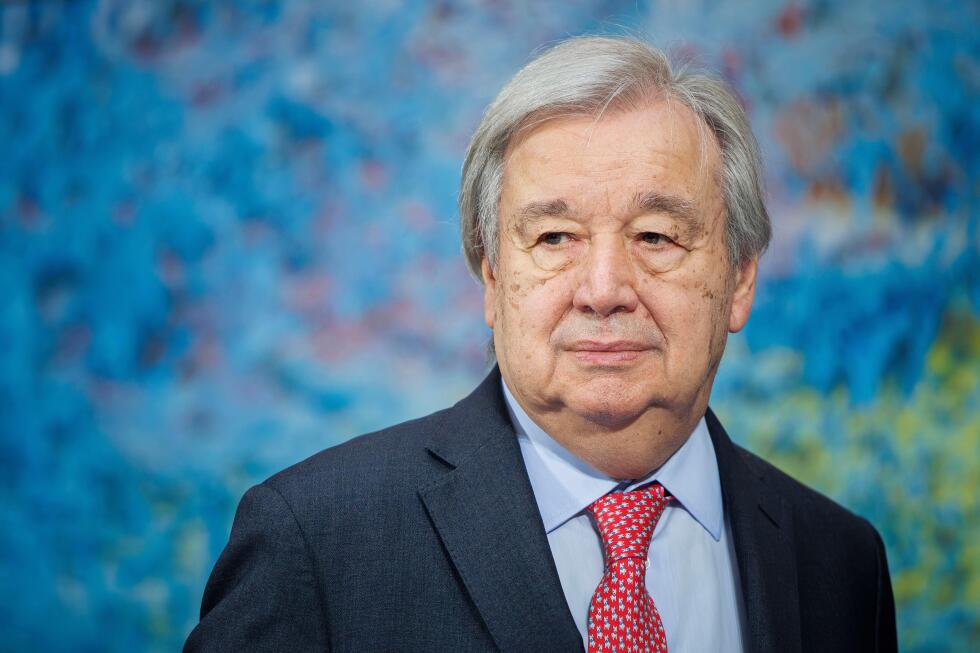
UN Secretary-General António Guterres delivered a stark warning to council members, emphasizing that all efforts must focus on preventing further escalation. “The alternative is a potential wider conflict with grave consequences for civilians and regional stability,” Guterres cautioned.
The emergency session was convened amid heightened tensions after U.S. and Israeli airstrikes on Iranian targets, which Guterres explicitly characterized as violations of international law and the UN Charter. He also condemned Iran’s earlier retaliatory attacks that violated the sovereignty of multiple Gulf states, including Bahrain, Iraq, Jordan, Kuwait, Qatar, Saudi Arabia, and the United Arab Emirates.
U.S. Ambassador to the UN Mike Waltz defended American military action as lawful and necessary. “Iran cannot have a nuclear weapon,” Waltz insisted. “That principle is not a matter of politics. It’s a matter of global security. And to that end, the United States is taking lawful actions.”
Israel’s UN Ambassador Danny Danon similarly justified the strikes as essential to counter what Israel perceives as an existential threat. “We are stopping extremism before it becomes unstoppable,” Danon told the council. “We will ensure that no radical regime armed with nuclear weapons and ballistic missiles can threaten our people or the entire world.”
Iran’s Ambassador Amir Saeid Iravani condemned the attacks, claiming they killed and injured hundreds of Iranian civilians—actions he described as war crimes. Iravani criticized the Security Council for failing to act on what he called “warmongering statements” from the United States in recent weeks.
“The issue before the council is straightforward: whether any member state may, including a permanent member of this council, through the use of force, coercion or aggression, determine the political future or system of another state or impose control over its affairs,” Iravani said.
Notably, during his remarks, Iravani did not address President Donald Trump’s statement claiming Supreme Leader Ayatollah Ali Khamenei had been killed in the strikes, though Iranian state media later confirmed his death. The assassination of Iran’s second supreme leader, who had no designated successor, significantly raises the potential for prolonged conflict given Tehran’s vows of retaliation.
The session featured an unusual direct exchange between the U.S. and Iranian ambassadors. After Waltz responded to Iranian claims about violations of international law, Iravani warned: “I advise to the representative of the United States to be polite. It will be better for yourself and the country you represent.”
Waltz immediately fired back: “This representative sits here, in this body, representing a regime that has killed tens of thousands of its own people, and imprisoned many more, simply for wanting freedom from your entire tyranny.”
Other Security Council members weighed in on the crisis, with Russia’s Ambassador Vassily Nebenzia forcefully condemning the U.S.-Israeli airstrikes. “We demand that the United States and Israel immediately cease their aggressive actions,” Nebenzia said. “We insist on the immediate resumption of political and diplomatic settlement efforts…based on international law, mutual respect and a balance of interests.”
China’s Ambassador Fu Cong expressed concern about “the sudden escalation of regional tensions” and supported Russia’s call for diplomatic negotiations.
Maged Abdelaziz, permanent observer of the 22-nation Arab League, pointed out what he characterized as Israel’s hypocrisy in justifying its military action as preventing Iran from acquiring nuclear weapons. The former Egyptian ambassador noted that Israel has consistently refused to subject its own nuclear facilities to inspection by the UN’s nuclear watchdog.
The meeting was requested by five council members: Bahrain (representing Arab states), France, Russia, China, and Colombia.
In a separate joint statement, the leaders of Britain, France, and Germany called for renewed U.S.-Iranian talks on Tehran’s nuclear program. The three European powers, all signatories to the 2015 nuclear deal that Trump abandoned in 2018, urged Iranian leaders to pursue negotiated solutions while asserting that “ultimately, the Iranian people must be allowed to determine their future.”
The Security Council meeting took place on the United Kingdom’s final day holding the council presidency, with the United States set to assume the rotating position for the month of March—a transition that could further complicate the diplomatic response to the crisis.
Fact Checker
Verify the accuracy of this article using The Disinformation Commission analysis and real-time sources.

7 Comments
As a neutral observer, I’m troubled by the reports of violations of international law and infringements on national sovereignty. All sides need to recommit to the principles of the UN Charter and find a negotiated path forward.
This situation is deeply concerning and the stakes are high. I hope the key players can set aside their differences, engage in good-faith negotiations, and find a peaceful resolution that addresses the legitimate security concerns of all parties.
While the security concerns raised are understandable, military action often leads to unintended consequences. I wonder if there are alternative strategies, such as renewed diplomatic efforts or targeted sanctions, that could help resolve this crisis without further violence.
The reports of violations of international law and infringements on national sovereignty are very troubling. All sides need to demonstrate a genuine commitment to the principles of the UN Charter and find a negotiated path forward that respects the sovereignty and territorial integrity of the countries involved.
The threats of nuclear proliferation and wider regional conflict are extremely serious. I hope the key players can set aside their differences, engage in constructive dialogue, and work towards de-escalation and a diplomatic solution.
This is a complex geopolitical issue with high stakes for regional and global stability. I hope the UN and its member states can find a way to facilitate dialogue, build trust, and pursue a peaceful resolution that addresses the core concerns of all parties.
This is a complex and concerning situation. Diplomatic efforts to reduce tensions and prevent further escalation must be the priority. All parties should exercise maximum restraint and focus on finding a peaceful resolution.