


Listen to the article
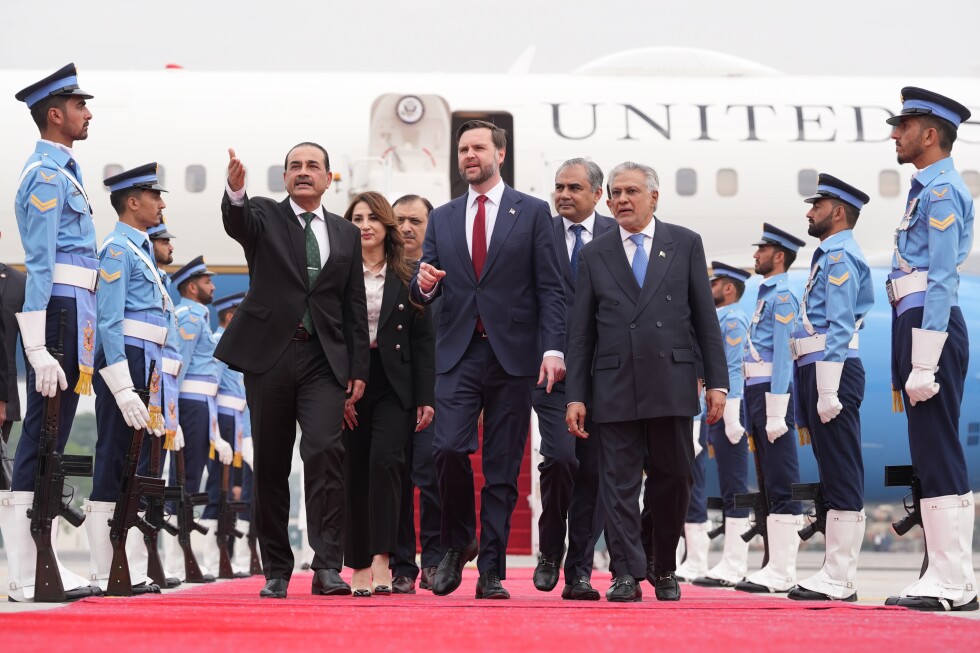
U.S. and Iranian delegations held separate meetings with Pakistan’s Prime Minister Shehbaz Sharif on Saturday as efforts to stabilize a fragile ceasefire continued amid ongoing violence in Lebanon. The high-stakes diplomatic engagement in Islamabad brought Vice President JD Vance leading the American team and Parliament Speaker Mohammad Bagher Qalibaf heading the Iranian contingent.
Despite the diplomatic push, Israel maintained its military operations in Lebanon, with the Lebanese state-run news agency reporting at least three people killed in Israeli strikes on Saturday. This continued aggression has complicated negotiations, as Iran has explicitly conditioned talks on a pause to the fighting in Lebanon.
The conflict has exacted a devastating toll across the region, claiming approximately 3,000 lives in Iran, nearly 2,000 in Lebanon, 23 in Israel, and more than a dozen in Gulf Arab states. Beyond the human cost, the war has severely disrupted global energy markets by effectively shutting down the Persian Gulf, sending energy prices soaring and causing widespread infrastructure damage across six countries.
In Tehran, citizens expressed cautious optimism about the negotiations. Resident Shahab Banitaba voiced skepticism about American reliability in upholding any potential agreement, telling The Associated Press: “If we get concrete and final results, there is still a chance that the deal falls through.”
The atmosphere surrounding the talks has been tense, with both sides attempting to project strength. President Donald Trump repeatedly claimed Iran had “no cards” to negotiate with and accused Tehran of using the Strait of Hormuz, a critical pathway for global energy supplies, as a tool for “extortion.”
Security in Islamabad was extraordinarily tight, with roads sealed and authorities urging residents to remain indoors, giving the usually bustling Pakistani capital the appearance of being under curfew.
Vice President Vance had expressed optimism about the talks a day earlier but warned Iran against attempting to manipulate the negotiations. “If they’re going to try and play us, then they’re going to find that the negotiating team is not that receptive,” Vance stated.
Iranian Foreign Minister Abbas Araghchi, part of Iran’s delegation in Pakistan, emphasized that Tehran was entering negotiations with “deep distrust,” stemming from previous strikes against Iran during earlier rounds of talks. He asserted that Iran remained ready to retaliate if attacked again.
Separate from the Pakistan talks, negotiations between Israel and Lebanon are scheduled to begin Tuesday in Washington, according to Lebanese President Joseph Aoun’s office. Israel is pushing for the Lebanese government to take responsibility for disarming Hezbollah, similar to provisions outlined in a November 2024 ceasefire agreement. However, questions remain about whether Lebanon’s army possesses the capability to establish control over arms or confiscate weapons from the militant group, which has withstood efforts to curtail its power for decades.
A major point of contention threatening to derail the current ceasefire is Israel’s insistence that the truce with Iran does not extend to its operations against Hezbollah, which entered the conflict in support of Iran when the war began on February 28. On the day the truce was announced, Israel conducted intense airstrikes on Beirut, resulting in over 300 fatalities—the deadliest day in Lebanon since the conflict started, according to the Lebanese Health Ministry. President Trump reportedly asked Israeli Prime Minister Benjamin Netanyahu to reduce the intensity of these strikes.
The closure of the Strait of Hormuz by Iran has proven to be its most significant strategic advantage in the war. Commercial shipping through the strait has virtually ceased, blocking the passage of oil, natural gas, and fertilizer. This disruption has driven the price of Brent crude, the international benchmark for oil prices, to approximately $97 per barrel—an increase of more than 30% since the war began.
Before the conflict, roughly one-fifth of the world’s traded oil passed through the strait daily on more than 100 vessels, much of it destined for Asian markets. Since the ceasefire took effect, only 12 ships have been recorded traversing the waterway. Iran has proposed charging vessels passing through the strait as part of a peace settlement, but this suggestion has been widely rejected by the United States and neighboring countries, including Oman.
Fact Checker
Verify the accuracy of this article using The Disinformation Commission analysis and real-time sources.

11 Comments
It’s positive to see cautious optimism from citizens in Tehran about the prospect of these peace talks. A successful outcome could have far-reaching implications for the region.
Agreed, the ripple effects of this conflict on global energy markets underscores the need for a comprehensive, sustainable solution.
Curious to see how the talks progress and whether a durable ceasefire and political settlement can be achieved. The human and economic costs of this conflict have been immense.
Agreed, a successful outcome could pave the way for much-needed regional stability and economic recovery.
The involvement of mediators like Pakistan’s Prime Minister suggests a sincere effort to find common ground. Let’s hope the parties can put aside differences and prioritize peace.
The high-level diplomatic engagement in Islamabad demonstrates the seriousness with which all sides are approaching these negotiations. Careful balancing of interests will be crucial.
The continued Israeli military operations in Lebanon are certainly complicating the negotiations. Iran’s condition of a ceasefire pause seems reasonable given the devastating impact on civilians.
This conflict has already taken a heavy human toll across the region. Glad to see the US and Iran coming together with mediators to try and find a diplomatic solution.
Stabilizing the energy markets would be a major priority given the widespread disruption. Careful diplomacy will be needed to balance the interests of all sides.
Interesting to see diplomatic efforts to stabilize the ceasefire in Lebanon. Hopefully the talks can lead to a lasting peace and resolution to the ongoing violence and disruption to global energy markets.
A delicate situation for sure, with so many complex regional dynamics at play. Crucial that all parties engage constructively.