


Listen to the article
US Intensifies Military Campaign Against Islamist Terrorists in Somalia to Prevent Homeland Attacks
The United States has dramatically escalated its counterterrorism operations in Somalia, launching a surge of airstrikes against Islamic State and al Qaeda-affiliated militants to neutralize threats against the American homeland. According to Lt. Gen. John Brennan, the second highest-ranking officer at U.S. Africa Command (AFRICOM), these operations aim to disrupt terrorist networks that actively plot attacks against the United States and Europe.
“There’s ISIS-inspired threats. They plot against the United States homeland as well as Europe. So that’s kind of the nexus of the threat,” said Brennan, a former U.S. Special Forces leader with extensive combat experience in Iraq, Syria, and Afghanistan.
The military campaign represents a significant strategic shift, with Somalia emerging as a critical front in global counterterrorism efforts. In 2025, AFRICOM conducted 124 airstrikes against ISIS-Somalia and al-Shabab targets—twelve times the number carried out under the previous administration in 2024. This aggressive tempo has continued into 2026, with 26 strikes executed in January alone, already surpassing the total for all of 2024.
“When you give a terrorist organization that has resourcing like ISIS time and space to plot and plan, those ISIS and terrorist-led attacks can happen. If they’re on the run, and they’re constantly worried about surviving, they can’t be as effective at planning and plotting,” Brennan explained.
The escalation reflects growing concern about Somalia’s status as what the State Department previously characterized as a “terrorist safe haven.” Of particular concern is the presence of Abdulqadir Mumin, identified as the current ISIS caliph, who operates from Somalia’s Golis Mountains region.
“The caliph—absolute leader—of the global ISIS network, Abdulqadir Mumin, is a Somali, and he is in the Somali Golis Mountains along with a lot of his key leaders. And from that location they direct terrorist activities, not just across Africa. He is directing global ISIS operations that go to the Far East, Europe and the U.S.,” Brennan revealed.
When asked if U.S. forces are actively hunting Mumin, Brennan confirmed: “Yes, absolutely. We want to make sure he has no safe space anywhere. History has shown that the ISIS caliph ends up getting killed by us at some point.” He added that Mumin is the fourth ISIS supreme leader, following predecessors like Abu Bakr al-Baghdadi, who was killed by U.S. forces in Syria.
The counterterrorism campaign has yielded significant territorial gains against ISIS-Somalia, particularly in Puntland, an autonomous state in northeastern Somalia. “We’ve taken large swathes of terrain back—our partners have,” Brennan said. “About well over half the territory that ISIS Somalia once maintained up in Puntland is now under the control of the Puntland Defense Forces.”
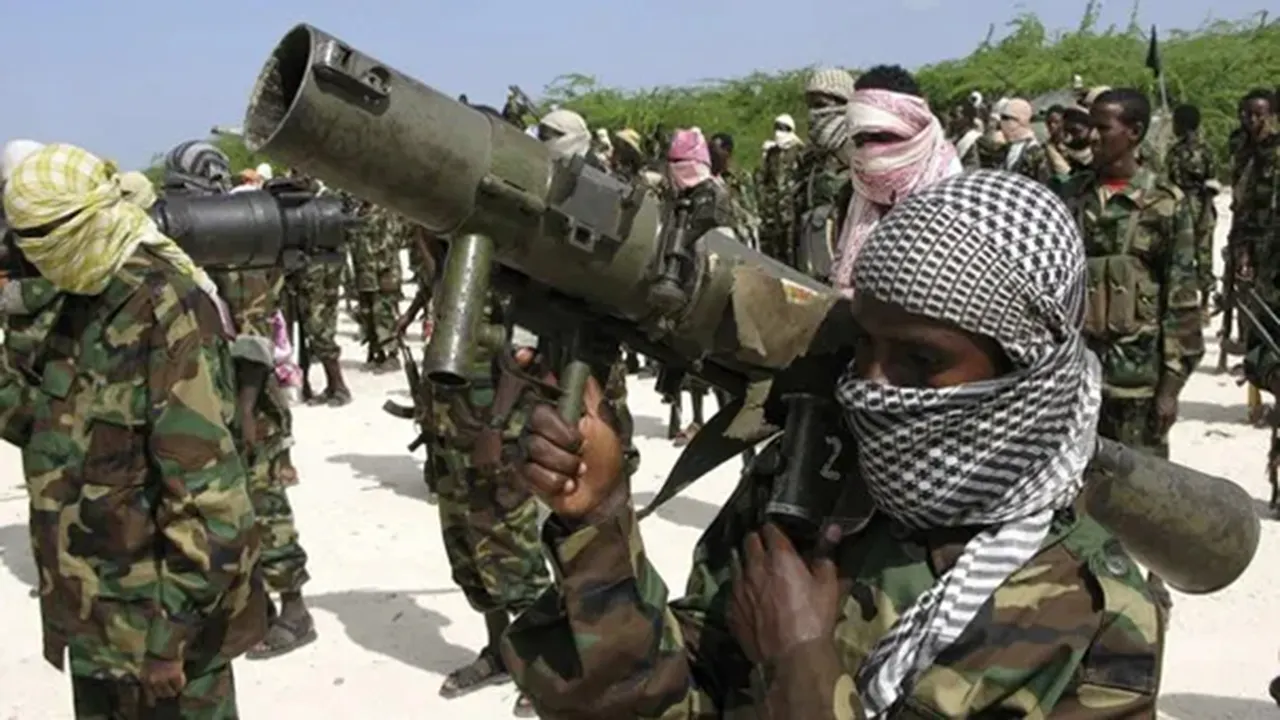
However, the situation remains complex with al-Shabab, al Qaeda’s local affiliate, posing a persistent threat in southern Somalia. “In the south you have al Shabab, and that threat has definitely morphed over the last year or so, as they are coordinating with the Houthis,” Brennan noted. “Al Shabab is, I think, the strongest, largest, most well-financed part of the al Qaeda global franchise and their desire is to take over Mogadishu and turn Somalia into an al Qaeda caliphate.”
The U.S. approach in Somalia increasingly emphasizes “remote advise and assist” operations, with American forces providing advanced intelligence capabilities, occasional transport via helicopters, and air support to Somali troops conducting ground operations. “We’ve given them tools that allow them to see what the ISR aircraft are seeing. We can show them things on a moving map that they’re carrying on their chest,” Brennan explained.
Ambassador Robert Scott, a senior career diplomat serving as deputy to the commander for civil-military engagement with AFRICOM, highlighted the importance of regional partnerships in the counterterrorism effort. “Not only Kenya and Ethiopia and Uganda, but also Somaliland, Puntland especially, also Jubaland. So finding partners who are willing to engage in the fight against both ISIS and al Shabab. I think it’s been very effective.”
Beyond security objectives, U.S. officials see potential economic benefits from improved stability in Somalia. “There’s natural resources in Somalia that, because of the security situation, the Somalis have not benefited from,” Brennan said. “Now the Somalis are realizing they may have critical minerals. There’s LNG (liquified natural gas) off the coast of Mogadishu, so that our biggest weapon system, if you will, from an African perspective, is our private sector economy.”
As the campaign continues, President Trump’s message remains clear. Referring to Somalia in February 2025, he posted on social media: “The message to ISIS and all others who would attack Americans is that ‘WE WILL FIND YOU, AND WE WILL KILL YOU!'”
Fact Checker
Verify the accuracy of this article using The Disinformation Commission analysis and real-time sources.

7 Comments
The military’s aggressive tempo of airstrikes in Somalia is a clear sign of how serious the threat is. With over 100 strikes in 2025, it seems AFRICOM is taking a strong stance to tackle the ISIS and al-Qaeda presence in the region.
Interesting to see the US ramp up counterterrorism efforts in Somalia to address the ISIS and al-Qaeda threat. Homeland security is a top priority, so these airstrikes seem like a necessary step to neutralize the terrorist networks plotting attacks.
From a homeland security perspective, these airstrikes in Somalia make sense. Targeting the terrorist networks that are plotting against the US and Europe is an important part of the counterterrorism strategy.
Agreed, disrupting the terrorist infrastructure in Somalia is crucial to prevent attacks on the US and its allies. The increased military activity in the region reflects the high priority of this threat.
The surge in airstrikes against ISIS and al-Shabab in Somalia is a significant strategic shift. It reflects the growing importance of this region in global counterterrorism efforts, especially with the threats against the US and Europe.
I agree, the military campaign in Somalia is crucial to disrupt the terrorist groups actively plotting attacks. Preventing homeland attacks has to be the top concern.
The US is clearly taking the threat from ISIS-Somalia and al-Shabab very seriously, with a significant ramp-up in airstrikes over the past couple of years. Protecting the homeland has to be the top priority in these counterterrorism efforts.