


Listen to the article
In a week of diplomatic maneuvering across Asia, multiple nations forged closer ties in what analysts see as a direct response to growing global uncertainty, particularly surrounding potential shifts in U.S. foreign policy.
The flurry of agreements began Tuesday in New Delhi, where the European Union and India finalized a major free trade accord after years of stalled negotiations. The comprehensive deal addresses everything from textiles to pharmaceuticals and will significantly reduce India’s traditionally high tariffs on European wine and automobiles.
“This partnership will strengthen stability in the international system,” said Indian Prime Minister Narendra Modi during the signing ceremony, pointedly adding that the agreement comes at a time of “turmoil in the global order.”
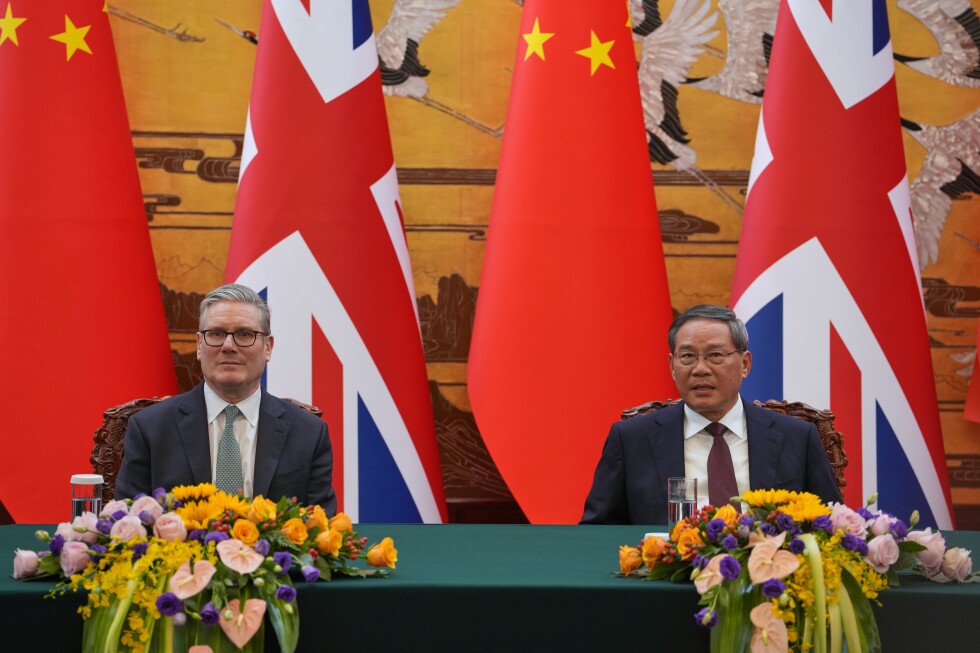
Thursday saw two additional significant diplomatic developments. In Beijing, the United Kingdom and China issued a joint declaration calling for a “long-term, stable, and comprehensive strategic partnership” between their nations. The carefully chosen language—emphasizing “long-term” and “stable”—signals a desire to insulate their relationship from external disruptions.
British Prime Minister Keir Starmer emphasized the importance of working with China to maintain global stability “during challenging times for the world,” while Chinese President Xi Jinping characterized the international situation as “complex and ever-changing.”
Meanwhile, in Hanoi, Vietnam and the European Union formally upgraded their relationship to a “comprehensive strategic partnership.” This diplomatic classification now places Vietnam on equal footing with major powers like the United States, China, and Russia in terms of its relationship with the EU.
European Council President António Costa, speaking at the Vietnamese capital, delivered perhaps the most direct assessment of the motivations behind these agreements: “At a moment when the international rules-based order is under threat from multiple sides, we need to stand side by side as reliable and predictable partners.”
While former President Donald Trump was rarely mentioned by name in these discussions, his impact looms large over the diplomatic landscape. His previous administration’s unpredictable approach to international relations and willingness to upend longstanding agreements has clearly accelerated efforts by nations to diversify their diplomatic and economic relationships.
From a purely economic perspective, Trump’s aggressive use of import tariffs during his first term sent many countries searching for new markets to reduce their dependency on American consumers. The uncertainty surrounding his potential return to office appears to be accelerating this trend.
More broadly, these agreements reflect growing concern about the stability of post-Cold War international systems and institutions. Many of these structures have been foundational to global governance since World War II, but now appear increasingly vulnerable to disruption.
Regional experts note that these diplomatic maneuvers don’t necessarily signal an anti-American alignment. Rather, they represent pragmatic hedging strategies as nations prepare for potential volatility in U.S. foreign policy. By strengthening ties with each other, these countries create alternative networks of support should existing arrangements become unreliable.
The timing of these three major diplomatic developments within a single week is unlikely to be coincidental. As election day approaches in the United States, nations are accelerating efforts to position themselves advantageously regardless of the outcome.
For the European Union in particular, the strategy appears to be one of diversification—strengthening ties across Asia with both democratic partners like India and with more complex relationships like those with Vietnam and China.
As global uncertainty grows, the diplomatic language emerging from these agreements emphasizes stability, predictability, and long-term commitment—precisely the qualities that many international partners fear may be in short supply in the coming years.
Fact Checker
Verify the accuracy of this article using The Disinformation Commission analysis and real-time sources.

12 Comments
The article highlights the geopolitical complexities at play, with nations seeking to create more stability and predictability amidst global uncertainty. I’m curious to see how these new partnerships evolve over time.
Absolutely. These developments could have far-reaching implications, especially for sectors like mining and energy that are closely tied to global trade and investment flows.
These developments could have significant implications for the energy and mining sectors, especially as countries look to secure supply chains for critical minerals. It will be interesting to see how this plays out.
Good observation. Increased regional cooperation on trade and investment could impact the flow of resources and the competitiveness of different players in the mining and energy industries.
This article highlights the complex geopolitical dynamics at play. Strengthening Asia-Europe ties seems like a prudent response to potential shifts in US foreign policy under the Trump administration.
Agreed. It’s a pragmatic approach to hedge against unpredictable changes in the global order. Diversifying economic and diplomatic partnerships makes a lot of sense.
Interesting to see these efforts to strengthen ties between Asia and Europe amidst global uncertainty. Curious to see how the trade deals and diplomatic agreements play out in practice.
Yes, it’s a strategic move to create more stability and predictability in international relations. The focus on long-term partnerships is noteworthy.
It’s noteworthy that the article points to Trump as an unmentioned but common denominator in these efforts. Strengthening regional ties seems like a prudent hedge against potential policy shifts in the US.
Absolutely. Diversifying economic and diplomatic relationships is a smart strategy given the unpredictability of the current global environment.
The trade deals and diplomatic agreements mentioned here could have interesting implications for the mining and commodities sectors. I wonder how this will impact the flow of materials and investments across regions.
Good point. Stronger Asia-Europe ties could open up new avenues for resource trade and investment, especially in critical minerals like lithium, cobalt, and rare earths.