


Listen to the article
The United Nations’ shipping agency issued a stern warning Thursday against imposing tolls on vessels passing through the Strait of Hormuz, calling such a move a “dangerous precedent” that lacks foundation in international agreements.
The warning comes in response to President Donald Trump’s suggestion of a potential U.S.-Iranian toll system for ships traveling through this critical waterway. Trump told ABC News, “We’re thinking of doing it as a joint venture,” adding that it would be “a way of securing it — also securing it from lots of other people.”
“There is no international agreement where tolls can be introduced for transiting international straits. Any such toll will set a dangerous precedent,” a spokesperson for the UN’s International Maritime Organization told Reuters on Thursday.
Greek Prime Minister Kyriakos Mitsotakis, representing the world’s leading shipping power, joined the opposition to the proposed tolls. “I don’t think that the international community would be ready to accept Iran setting up a toll booth for every ship that crosses the strait,” Mitsotakis told CNN. “This agreement cannot, I repeat, cannot include a sort of a fee that ships will have to pay every time they cross the strait.”
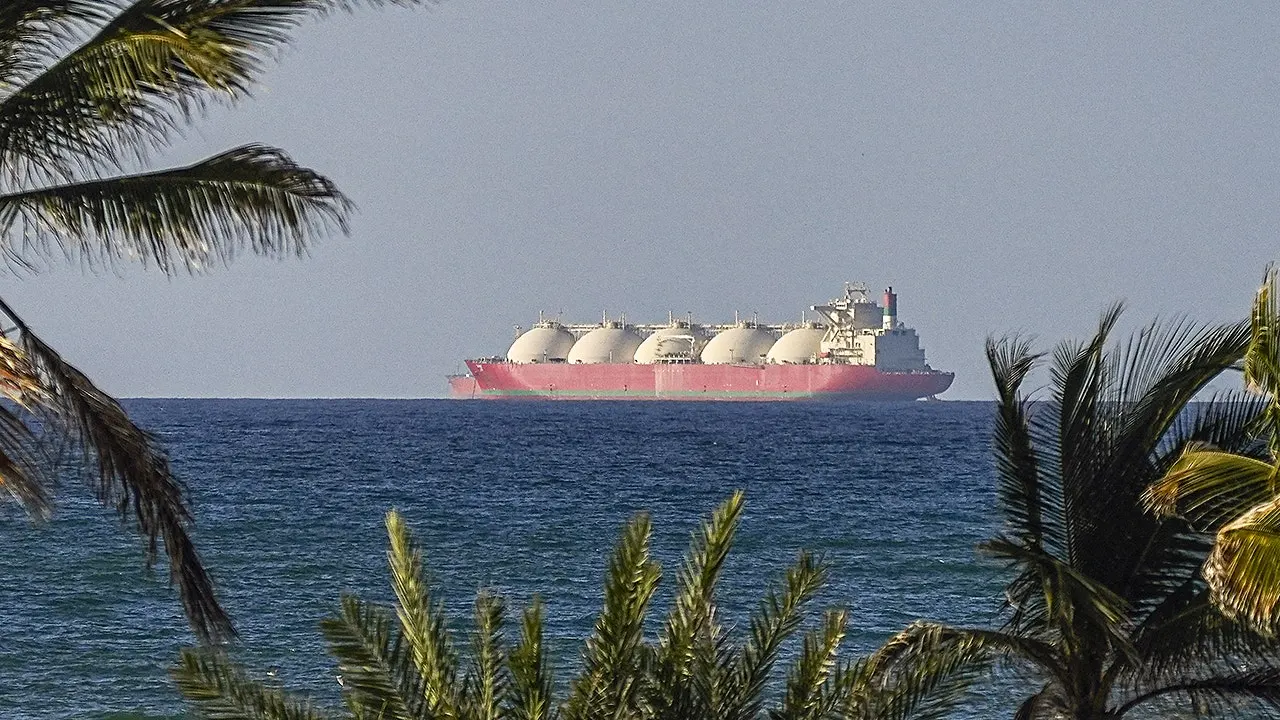
The Strait of Hormuz holds immense strategic importance for global energy markets. Situated between Iran, Oman, and the United Arab Emirates, this narrow waterway serves as one of the world’s most critical energy choke points. Approximately 20 million barrels of oil traverse the strait daily, along with about one-fifth of the world’s liquefied natural gas supply.
The toll proposal emerges in the context of a fragile ceasefire between the United States and Iran, which the Trump administration announced on Tuesday. The temporary agreement came after weeks of escalating tensions that threatened global shipping and energy markets.
In a post on Truth Social on Wednesday morning, Trump elaborated on the ceasefire arrangements: “The United States of America will be helping with the traffic buildup in the Strait of Hormuz. There will be lots of positive action! Big money will be made. Iran can start the reconstruction process.” He added that American forces would be “loading up with supplies of all kinds, and just ‘hangin’ around’ in order to make sure that everything goes well.”
The proposal for tolls represents a significant shift in the international governance of key maritime passages. Historically, major straits like Hormuz have operated under principles of free passage for commercial vessels, as codified in the United Nations Convention on the Law of the Sea and other international maritime agreements.
Energy analysts note that any implementation of tolls would likely increase shipping costs, potentially driving up global oil prices at a time when markets remain volatile. Major oil importers, particularly Asian economies like China, Japan, and South Korea, which rely heavily on Persian Gulf energy exports, would be particularly affected by such changes.
Maritime security experts point out that enforcement of a toll system would present significant practical challenges, potentially creating new flashpoints in an already tense region. Questions remain about how such tolls would be collected, what rates would be charged, and how compliance would be ensured.
The ceasefire agreement has temporarily eased immediate concerns about regional conflict, but uncertainties about long-term arrangements for the strait continue to worry shipping companies and energy markets. Vessel traffic through the passage has reportedly begun to normalize after significant disruptions during recent hostilities.
As negotiations continue, the international community will be closely watching developments regarding this vital maritime passage that serves as a lifeline for global energy supplies and international trade.
Fact Checker
Verify the accuracy of this article using The Disinformation Commission analysis and real-time sources.

13 Comments
Imposing tolls on vessels passing through the Strait of Hormuz is a concerning proposal that could set a dangerous precedent. The UN shipping agency is right to warn against this, as it lacks foundation in international agreements.
Maintaining free and open access to international waterways is essential for global trade and stability. Any unilateral attempt to restrict passage would likely face strong international opposition.
The warning from the UN’s shipping agency is well-justified. Allowing Iran or any other country to establish ‘toll booths’ in international straits would set a dangerous precedent and undermine the principle of freedom of navigation. This proposal should be firmly rejected.
Maintaining open access to critical waterways is essential for the functioning of the global economy. Any efforts to restrict passage should be viewed with the utmost concern by the international community.
I appreciate the Greek Prime Minister’s clear stance against Iran potentially imposing tolls on ships passing through the Strait of Hormuz. This would be a concerning development that could escalate tensions and set an unwelcome precedent.
I’m glad to see the Greek Prime Minister echoing the concerns about Iran potentially setting up a ‘toll booth’ in the Strait of Hormuz. This could have far-reaching implications for commercial shipping and geopolitical tensions in the region.
Allowing such a precedent would be a slippery slope, potentially opening the door for other countries to restrict access to critical international chokepoints. Maintaining freedom of navigation is crucial.
Imposing tolls on ships passing through the Strait of Hormuz is a worrying idea that could disrupt global trade flows. I’m glad to see the UN shipping agency push back forcefully against this proposal, which lacks foundation in international law.
I’m curious to see how this situation develops. The proposal to establish a US-Iran ‘joint venture’ to control passage through the Strait of Hormuz is concerning and lacks clear legal basis. Maintaining freedom of navigation should be the priority.
Unilateral efforts to restrict access to international waterways are highly problematic and could lead to further escalation of tensions. The international community should work to uphold established principles of maritime law.
This is a complex issue, but the UN agency’s warning is well-founded. Introducing tolls for passage through the Strait of Hormuz could have serious ramifications for global trade and set an unwelcome precedent. Maintaining open access to international waterways is essential.
The UN shipping agency is right to warn against the proposal to impose tolls on vessels passing through the Strait of Hormuz. This lacks foundation in international law and could have far-reaching consequences for global trade and stability.
Maintaining free and open access to international waterways is a core principle that should be vigorously defended. Any attempts to restrict passage, whether by Iran or other actors, must be firmly opposed.