


Listen to the article
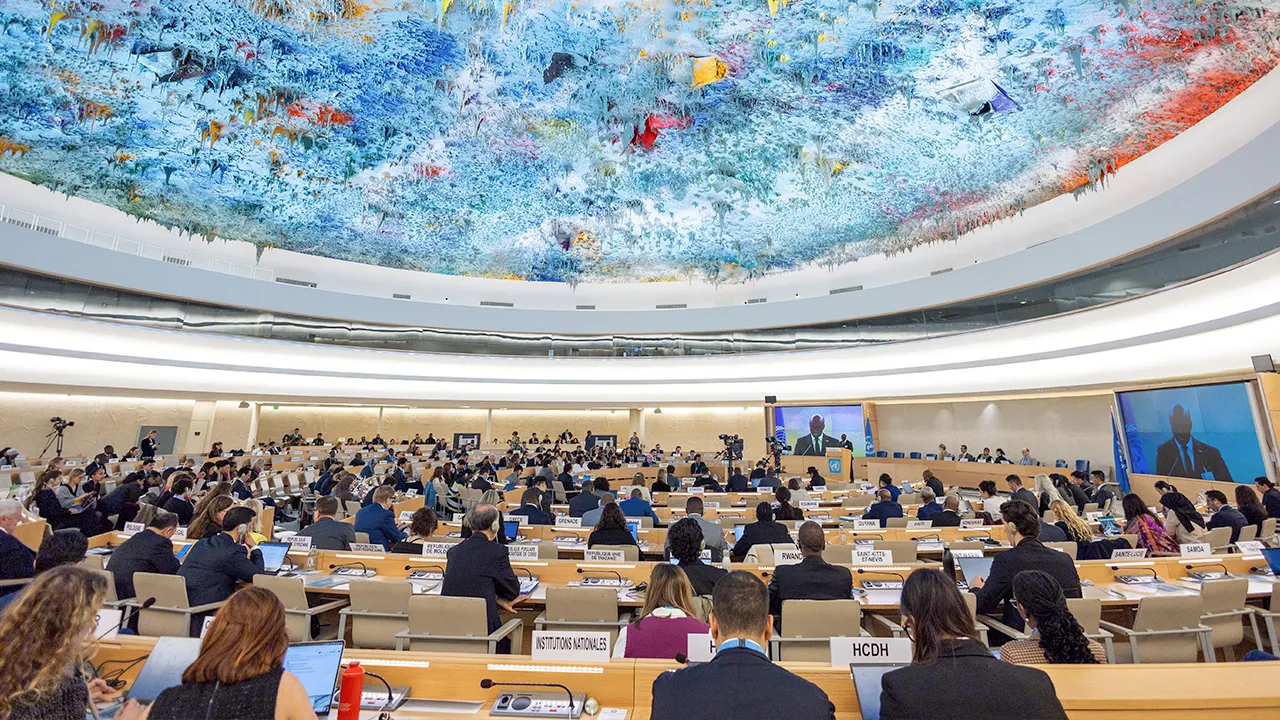
The United Nations Human Rights Council (UNHRC) abruptly terminated a video statement during a session in Geneva, Switzerland on Friday after the speaker began criticizing several UN officials, including one currently under U.S. sanctions.
Anne Bayefsky, director of the Touro Institute on Human Rights and president of Human Rights, had her 90-second allotted time cut short during what was billed as an “interactive dialogue” on human rights issues. The interruption came as Bayefsky began naming specific UN officials she accused of misconduct.
“I was the only American UN-accredited NGO with a speaking slot, and I wasn’t allowed even to conclude my 90 seconds of allotted time,” Bayefsky told Fox News Digital. “Free speech is non-existent at the UN so-called ‘Human Rights Council.'”
Among those Bayefsky criticized was Francesca Albanese, a UN special rapporteur who was sanctioned by U.S. Secretary of State Marco Rubio on July 9, 2025. When announcing the sanctions, Rubio stated that Albanese “has spewed unabashed antisemitism, expressed support for terrorism and open contempt for the United States, Israel and the West.”
The video was cut off as Bayefsky was criticizing Albanese along with Navi Pillay, former chair of the UN Independent International Commission of Inquiry on the Occupied Palestinian Territory, and Chris Sidoti, a commissioner on the same inquiry. Bayefsky also attempted to address allegations against Karim Khan, the International Criminal Court prosecutor facing sexual assault allegations, which Khan has denied.
Human Rights Council President Ambassador Sidharto Reza Suryodipuro justified the interruption by characterizing Bayefsky’s remarks as “derogatory, insulting and inflammatory” and said they “exceeded the limits of tolerance and respect within the framework of the council.”
Had her statement continued uninterrupted, Bayefsky planned to criticize UN High Commissioner for Human Rights Volker Türk’s recent report for allegedly failing to demand accountability for atrocities committed by Hamas during the October 7, 2023 attacks.
When contacted for comment, Human Rights Council Media Officer Pascal Sim told Fox News Digital that the council operates under “long-established rules” regarding acceptable language.
“Rulings regarding the form and language of interventions in the Human Rights Council are established practices that have been in place throughout the existence of the council and used by all council presidents when it comes to ensuring respect, tolerance and dignity inherent to the discussion of human rights issues,” Sim said.
Sim confirmed that while the video had been reviewed ahead of time for technical aspects like length and audio quality, speakers remain “responsible for the content of their statement.” The interruption occurred when the language was deemed to exceed “the limits of tolerance and respect.”
This marks the second time Bayefsky has been silenced by the council. Exactly one year earlier, on February 27, 2025, her video statement was cut off when she referred to “Palestinian savages” while discussing the murder of a 9-month-old baby. Then-council president Jürg Lauber interrupted, stating that “the language that’s used by the speaker cannot be tolerated.”
Bayefsky noted a stark contrast in the council’s approach, pointing out that other statements accusing Israel of genocide and ethnic cleansing were allowed to be presented in full during the same session.
The incident raises serious questions about free speech standards at the UNHRC and highlights ongoing tensions regarding the council’s approach to Middle East conflicts. Critics have long accused the UN body of maintaining double standards in its treatment of Israel compared to other nations.
The controversy occurs amid heightened international scrutiny of UN agencies and their handling of the Israel-Hamas conflict. The UN’s credibility in addressing human rights violations impartially has been increasingly questioned, particularly by American and Israeli officials who have alleged institutional bias against Israel within various UN organizations.
Meanwhile, the Trump administration has taken a hardline approach toward UN officials perceived as anti-Israel, as evidenced by the recent sanctions against Albanese, which represent a significant diplomatic rebuke to a sitting UN official.
Fact Checker
Verify the accuracy of this article using The Disinformation Commission analysis and real-time sources.

9 Comments
The UN’s decision to interrupt the speaker’s statement is troubling. While the allegations against the sanctioned official are serious, silencing criticism sets a dangerous precedent and undermines the council’s credibility as a human rights watchdog.
The interruption of the speaker’s statement raises concerns about the UN’s commitment to free speech and open dialogue on human rights issues. While the allegations against the sanctioned official are serious, silencing critics sets a concerning precedent.
Interesting situation at the UN Human Rights Council. It’s concerning to hear about the interruption of the speaker’s statement, especially when they were criticizing a UN official under US sanctions. Free speech and open dialogue should be protected, even for dissenting views.
The UN’s handling of this situation is troubling. Cutting off a speaker who was criticizing a sanctioned official, even if the allegations are serious, seems to go against the council’s mandate to promote and protect human rights.
The allegations against the UN special rapporteur Francesca Albanese are quite serious. If true, it’s understandable why the US imposed sanctions. However, cutting off the speaker’s time raises questions about transparency and accountability at the UN.
This incident highlights the complexities and tensions within the UN system. While the council is meant to be a forum for open dialogue, the apparent suppression of criticism raises questions about its impartiality and effectiveness.
This incident is a reminder of the delicate balance the UN must strike between upholding human rights and navigating geopolitical tensions. The council’s ability to facilitate open dialogue on sensitive issues is crucial, and the interruption raises worrying questions.
This incident highlights the complex geopolitical dynamics at play within the UN system. While the council is meant to uphold human rights, the ability of members to freely express criticism appears to be restricted. More clarity is needed on the reasons behind the interruption.
I’m curious to learn more about the background and context of this situation. What led to the US sanctions on the UN official, and what was the rationale for cutting short the speaker’s statement? Transparency from the UN on these matters would be helpful.