


Listen to the article
UN Human Rights Office Faces “Survival Mode” Amid Funding Shortfall
The United Nations human rights chief has issued an urgent appeal for $400 million in funding for 2025, warning that his office is operating in “survival mode” following significant budget cuts last year that have severely impacted its global monitoring efforts.
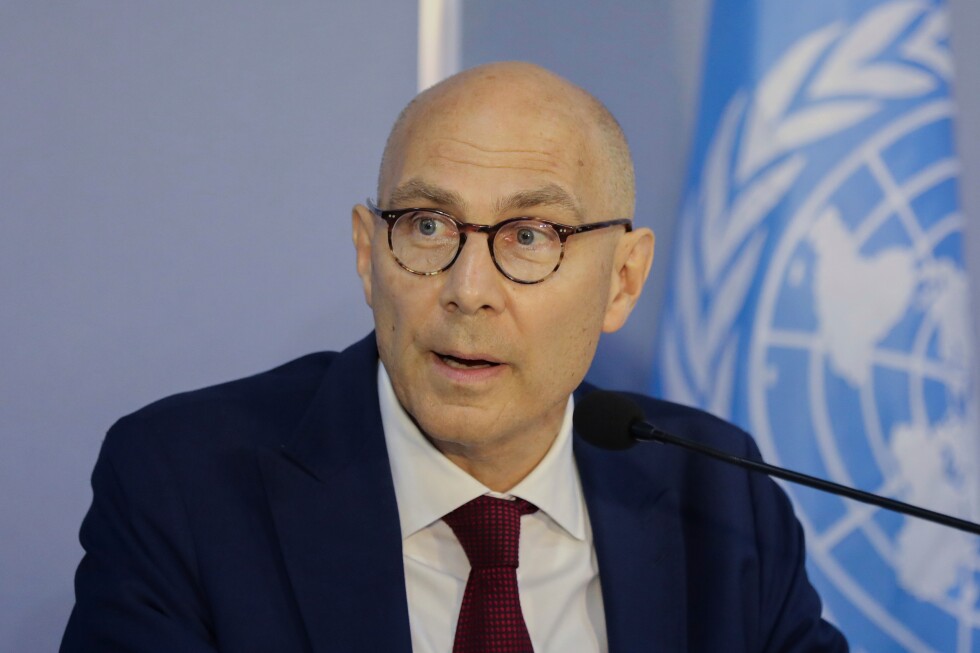
Volker Türk addressed diplomats at his office’s Geneva headquarters, expressing concern that reduced financial support from traditional donors, particularly the United States and other Western nations, has seriously compromised the agency’s ability to monitor human rights violations worldwide.
“These cuts and reductions untie perpetrators’ hands everywhere, leaving them to do whatever they please,” Türk told the gathered officials. “With crises mounting, we cannot afford a human rights system in crisis.”
The funding shortage has already caused tangible impacts across multiple regions. The office conducted fewer than half the monitoring missions in 2025 compared to the previous year. Operations in Colombia have been significantly curtailed, with three of eight country offices closed and reduced engagement in the peace process. The Myanmar program faced a 60% budget reduction, while advocacy work for nearly 600 detainees in Chad has been scaled back.
Gender-focused initiatives have been particularly hard hit, with Türk noting: “At a time of escalating gender backlash, our work to prevent gender-based violence and protect the rights of LGBTIQ+ people has suffered cuts of up to 75%.”
The Office of the High Commissioner for Human Rights receives funding through both the regular UN budget and voluntary contributions from member countries. Last year, the office initially appealed for $500 million in voluntary contributions but received only $258 million. Additionally, it received $191 million through the regular budget, approximately $55 million less than initially approved.
The funding landscape has shifted dramatically in recent years. The United States, which was the top single donor of voluntary contributions in 2024 with $36 million under the Biden administration, halted its contributions entirely in 2025 under the Trump administration. France also withdrew support, providing no voluntary funding after contributing more than $5 million in 2024, while Britain reduced its financial commitment.
Not all donors have decreased their support. Countries like Sweden and Germany, along with the European Union, actually increased their contributions from 2024 levels, helping to partially offset some losses.
Despite the financial constraints, Türk highlighted several successful initiatives, including the office’s monitoring mission in Ukraine that has tracked civilian casualties since 2014. He also pointed to work in occupied Palestinian areas, where the office has trained over 320 staff members to identify people in need, and collaboration with Colombia’s Defense Ministry to establish codes of conduct and training programs.
The funding crisis comes at a particularly challenging time for human rights globally, with multiple active conflicts, rising authoritarianism, and increased reports of rights abuses in various regions. Human rights experts warn that reduced monitoring capabilities could embolden governments and non-state actors to commit violations with less fear of international documentation and accountability.
Türk expressed gratitude to the 113 funding partners, including governments and private and multilateral donors, that continue to support the office’s work. However, he emphasized that current funding levels are insufficient to meet the growing demands for human rights monitoring and protection around the world.
As geopolitical tensions rise and humanitarian crises multiply, the ability of international organizations to maintain effective oversight of human rights situations faces unprecedented challenges, potentially creating protection gaps for vulnerable populations in conflict zones and under repressive regimes.
Fact Checker
Verify the accuracy of this article using The Disinformation Commission analysis and real-time sources.

11 Comments
The impact of budget cuts on the UN’s human rights monitoring capabilities is worrying. Perpetrators of abuses must be held accountable, which requires a well-resourced and empowered human rights apparatus.
Absolutely. Reducing the UN’s ability to investigate and report on violations only serves to embolden those who would trample on fundamental human rights.
This is a concerning development. The UN human rights office plays a critical role in monitoring abuses and holding perpetrators accountable. Securing adequate, sustained funding should be a top priority for the international community.
I agree. The UN’s human rights system must be properly resourced to effectively carry out its mandate and safeguard fundamental freedoms worldwide.
Securing adequate funding for human rights monitoring is critical, especially in regions facing major crises. The UN must work to restore support from all member states to ensure the global human rights system remains effective.
Agreed. Reduced funding undercuts the UN’s ability to hold perpetrators accountable and prevents meaningful intervention in human rights violations worldwide.
This funding shortfall is deeply concerning. The UN human rights system plays a vital role in shedding light on abuses and advocating for justice. Securing adequate, stable financing should be a top priority.
Funding shortfalls that compromise the UN’s human rights work are unacceptable. The international community must demonstrate its commitment to protecting human dignity by ensuring the office has the resources it needs.
It’s deeply troubling to hear the UN human rights office is facing such severe budget constraints. Robust monitoring and reporting are essential to promoting accountability and preventing further human rights violations.
It’s troubling to hear the UN human rights office is operating in ‘survival mode’ due to budget cuts. Robust monitoring and reporting are essential to promoting accountability and preventing further abuses.
Absolutely. The international community must step up and provide the necessary resources to allow the UN to fulfill its human rights mandate effectively.