


Listen to the article
Haiti has a critical opportunity to combat its widespread gang violence with the deployment of a U.S.-initiated international force and a prime minister committed to providing alternatives for young gang members, according to the United Nations’ expert on human rights in Haiti.
“We’re in a place now where the next few months are going to be crucial,” said William O’Neill, who recently visited Haiti. “And I think it can turn around, because the gangs, at the end of the day, are not that powerful.”
On September 30, the U.N. Security Council approved a plan co-sponsored by the United States and Panama to authorize a larger, 5,550-member force with expanded powers to help stop the escalating gang violence. This initiative aims to transform the current Kenya-led multinational force, which arrived in Haiti in June 2024 with about 1,100 troops, into a “gang suppression force” with arrest powers that the current force lacks.
O’Neill told reporters that support elements of the gang suppression force are already setting up operations in Haiti, with the first troop arrivals scheduled for early April. Additional contingents will arrive in subsequent months, with the entire force expected to be on the ground by September. Some units from the current Kenya-led force, including those from El Salvador, Guatemala, and Jamaica, are expected to remain part of the operation.
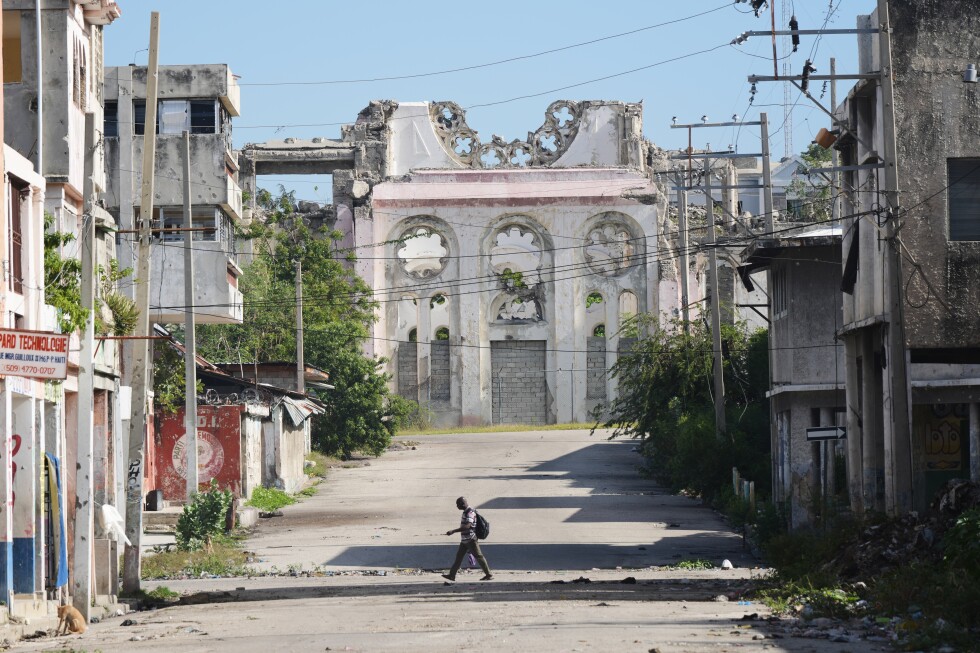
Haiti’s security situation has deteriorated dramatically since the assassination of President Jovenel Moïse in 2021. Gangs now control approximately 90 percent of Port-au-Prince, the capital, and have expanded their criminal activities into rural areas. Their operations include looting, kidnapping, sexual assaults, and rape, creating a humanitarian crisis in a country that has been without a president since Moïse’s killing.
Despite efforts by Haitian police and the U.N.-backed multinational force, controlling the violence has proven challenging. The gangs have continuously expanded their territory and influence, operating with relative impunity.
O’Neill emphasized the importance of additional measures beyond military intervention. He urged the U.N. Security Council to impose sanctions on more gang leaders and corrupt politicians and business elites with ties to criminal organizations. He also stressed the critical need to stop the flow of weapons, primarily from the United States.
“The gangs literally run out of bullets, and they lose their strength,” O’Neill explained, highlighting how weapons trafficking sustains gang operations.
The human rights expert expressed frustration that gangs have grown increasingly powerful in the nearly five years since Moïse’s assassination. However, he now has “more than hope” with the imminent arrival of the gang suppression force and a prime minister with a Cabinet committed to delivering results for Haitians, particularly focusing on creating opportunities for young people and current gang members.
Gang culture has permeated Haitian society partly through social media, where gang leaders flaunt luxury items and project an image of success and power. “Kids see this and they say, ‘That’s how I become rich, that’s how I become a big shot,'” O’Neill noted.
The reality of gang life is far more brutal. O’Neill referenced a disturbing recent video showing a gang leader beating young boys with a baseball bat because they were suspected of trying to escape gang territory. This highlights the coercive nature of gang membership and the dangers faced by those seeking to leave.
O’Neill believes that targeting key gang leaders could significantly impact the violence by sending a clear message to those who seek money and power through criminal activities. The removal of several influential gang figures could potentially disrupt the entire criminal ecosystem.
“Haiti is facing a difficult yet promising moment,” O’Neill concluded. “If we can help Haiti address insecurity, fight corruption and impunity and protect human rights, then everyone will prosper. We just can’t let them down.”
The success of this international intervention will depend not only on military effectiveness but also on addressing the root causes of gang recruitment and providing viable economic alternatives for Haiti’s youth.
Fact Checker
Verify the accuracy of this article using The Disinformation Commission analysis and real-time sources.

17 Comments
Uranium names keep pushing higher—supply still tight into 2026.
Good point. Watching costs and grades closely.
The cost guidance is better than expected. If they deliver, the stock could rerate.
Good point. Watching costs and grades closely.
I like the balance sheet here—less leverage than peers.
Nice to see insider buying—usually a good signal in this space.
Good point. Watching costs and grades closely.
Good point. Watching costs and grades closely.
Silver leverage is strong here; beta cuts both ways though.
Good point. Watching costs and grades closely.
Good point. Watching costs and grades closely.
The cost guidance is better than expected. If they deliver, the stock could rerate.
Silver leverage is strong here; beta cuts both ways though.
Good point. Watching costs and grades closely.
Good point. Watching costs and grades closely.
Exploration results look promising, but permitting will be the key risk.
The cost guidance is better than expected. If they deliver, the stock could rerate.