


Listen to the article
UN Chief Condemns International Law Violations, Wealth Inequality in Final Year Address
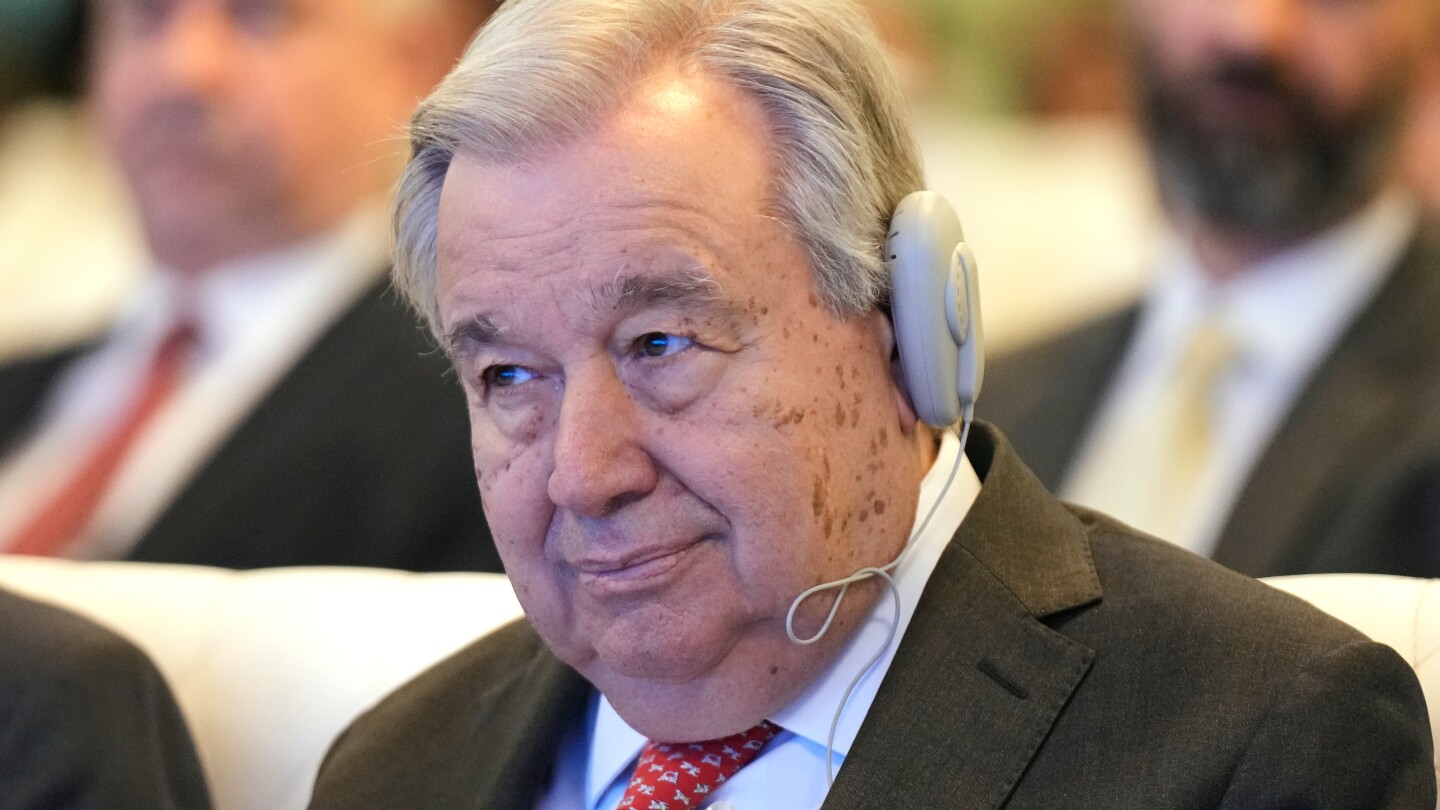
The United Nations Secretary-General Antonio Guterres delivered a scathing rebuke of global powers on Thursday, criticizing countries that violate international law and condemning the concentration of wealth among the world’s richest 1% as “morally indefensible.”
Speaking to the UN General Assembly as he enters his final year in office, Guterres painted a grim picture of a world fractured by geopolitical divides and systematic disregard for international norms. His term is set to conclude on December 31.
“Some seek to put international cooperation on deathwatch,” Guterres declared. “I can assure you: We will not give up.”
The Secretary-General expressed alarm over what he described as a world where the foundations of global cooperation are being actively undermined through “brazen violations of international law, and wholesale cuts in development and humanitarian aid.”
Guterres has consistently criticized Russia for its February 2022 invasion of Ukraine, which he views as a clear violation of the UN Charter that requires all nations to respect sovereignty and territorial integrity. However, in his address, he also took aim at the United States for its military operation in Venezuela attempting to capture President Nicolás Maduro, as well as American attacks on boats in the Caribbean and Pacific that U.S. officials claim were transporting drugs.
“When leaders run roughshod over international law — when they pick and choose which rules to follow — they are not only undermining global order, they are setting a perilous precedent,” Guterres said.
The UN chief warned that people worldwide are witnessing the erosion of international law and the dangerous consequences of impunity. He cited numerous concerning trends including “the illegal use and threat of force; attacks on civilians, humanitarian workers and UN personnel; unconstitutional changes of government; the trampling of human rights; the silencing of dissent; the plundering of resources.”
In what appeared to be another criticism directed at the Trump administration, Guterres admonished countries that fail to pay their UN dues on time. The previous U.S. administration notably withheld mandatory contributions to various UN budgets during its term.
The Secretary-General’s address placed particular emphasis on the growing wealth inequality crisis. He noted that the world’s richest 1% currently control 43% of global financial assets, a concentration of power that threatens democratic institutions and global stability.
“Increasingly, we see a world where the ultra-wealthiest and the companies they control are calling the shots like never before — wielding outsized influence over economies, information and even the rules that govern us all,” he said.
This uneven distribution of wealth has exacerbated global tensions and undermined efforts to address shared challenges such as climate change, public health emergencies, and humanitarian crises in conflict zones.
Guterres’ critique comes at a critical moment for the United Nations, which faces questions about its relevance and effectiveness in addressing contemporary global challenges. With rising nationalism and unilateralism among major powers, the institution’s ability to foster meaningful international cooperation has been increasingly strained.
As he prepares to hand over leadership of the international body, Guterres appears determined to sound the alarm about threats to the multilateral system that emerged from the ashes of World War II. His warnings reflect growing concern among international relations experts that the post-war order built around collective security and shared prosperity is under unprecedented pressure from multiple directions.
Fact Checker
Verify the accuracy of this article using The Disinformation Commission analysis and real-time sources.

9 Comments
The Secretary-General’s warning about the undermining of global cooperation is deeply concerning. In an interdependent world facing existential threats like climate change, we need more international coordination, not less. I hope world leaders heed this call to action.
Concentration of wealth among the richest 1% is indeed a moral travesty that demands urgent action. I hope the UN will redouble efforts to address inequality and ensure more equitable distribution of resources worldwide.
Agreed, extreme wealth inequality is corrosive to social cohesion and sustainable development. The UN must leverage its convening power to push for bold policies that reduce disparities and empower the most vulnerable.
While I appreciate the Secretary-General’s principled stance, I’m skeptical that his words will translate into meaningful change without concrete policy reforms and enforcement mechanisms. The UN must find ways to hold noncompliant states accountable if it hopes to uphold the international rules-based order.
That’s a fair point. The UN’s ability to enforce its resolutions remains limited, especially against powerful states. Strengthening multilateral institutions and dispute resolution mechanisms should be a priority to bolster the UN’s effectiveness.
The UN Secretary-General’s rebuke of countries flouting international law is a timely and necessary call to uphold global cooperation and justice. As the world faces compounding crises, respecting sovereignty and territorial integrity is vital for maintaining stability.
I agree, violations of international law undermine the foundations of the rules-based global order. All nations must be held accountable for their actions if we are to make progress on shared challenges.
As a mining and commodities investor, I’m curious to hear the UN’s perspective on the role of extractive industries in the global economy. How can we ensure responsible, ethical practices that benefit local communities as well as shareholders?
That’s an important question. Balancing economic development with environmental and social safeguards in mining is a complex challenge. The UN’s guidance on business and human rights could provide a useful framework for the industry to follow.