


Listen to the article
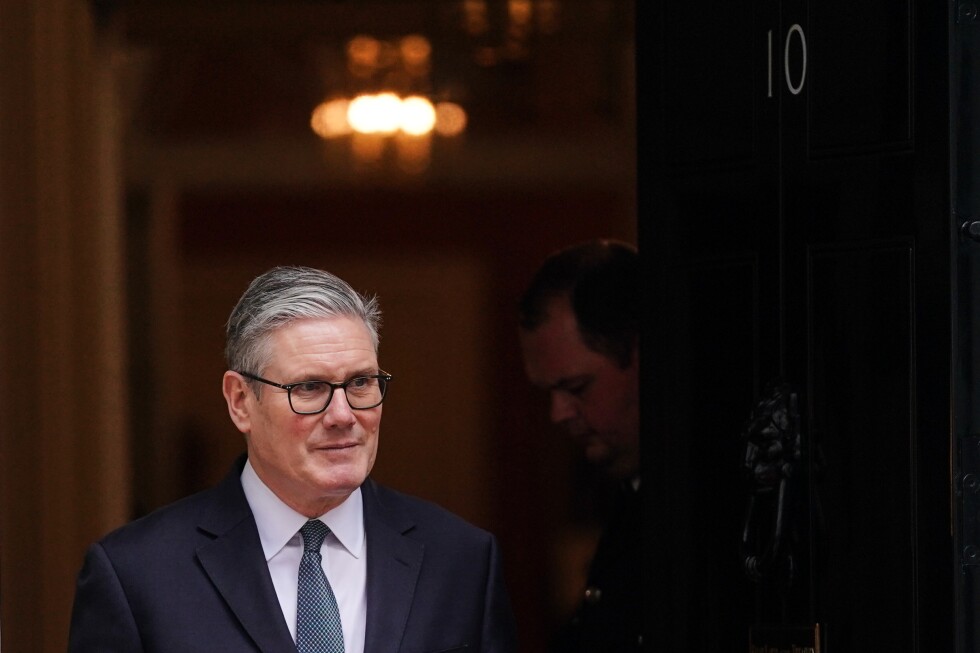
UK Prime Minister Keir Starmer embarked on a high-stakes diplomatic mission to China this week, seeking to rebuild relations with Beijing amid growing global uncertainty and strained ties with the United States.
The trip, which began Wednesday, marks the first visit by a British leader to China since 2018. Starmer is scheduled to meet with Chinese President Xi Jinping and Premier Li Qiang during stops in Beijing and Shanghai, accompanied by Business Secretary Peter Kyle and dozens of corporate executives.
Economic interests lie at the heart of this diplomatic outreach. Britain is actively pursuing Chinese technology and investment, while seeking greater market access for UK financial services, automotive exports, and Scotch whisky in the world’s second-largest economy.
“Britain has veered from the golden age to the ice age” in relations with China, Starmer told his Cabinet before departure, emphasizing his commitment to a “strategic and consistent strategy.” Meanwhile, Chinese Foreign Ministry spokesperson Guo Jiakun framed the visit as an opportunity to enhance “political trust” and deepen “pragmatic cooperation” during what he described as a “complex and volatile international situation.”
The timing of Starmer’s visit is particularly significant as geopolitical realignments reshape the international landscape. With Donald Trump preparing to return to the White House and implementing protectionist policies toward traditional allies, both London and Beijing appear eager to establish a more stable relationship focused on trade and cooperation on global challenges like climate change.
Relations between the UK and China have deteriorated considerably since 2015, when then-Prime Minister David Cameron declared a “golden era” of bilateral ties and famously took Xi to a traditional English pub. Beijing’s subsequent crackdown on civil liberties in Hong Kong, its support for Russia in the Ukraine war, and growing concerns about espionage and economic interference have widened the divide.
Conservative governments following Cameron barred Chinese investment in sensitive telecommunications infrastructure and excluded China from investing in new UK nuclear power plants. Upon taking office last year, Starmer’s Labour government conducted a comprehensive review of relations with Beijing, pledging to protect national security while maintaining diplomatic dialogue and economic cooperation.
The visit comes at a challenging time domestically for Starmer, whose government has struggled to deliver promised economic growth and ease the cost-of-living crisis affecting millions of British households. Labour currently trails behind the hard-right Reform UK party in opinion polls, with some lawmakers openly questioning Starmer’s leadership.
Starmer’s China outreach occurs as his attempts to build a warm relationship with President Trump have shown signs of strain. While Starmer secured a trade deal reducing US tariffs on Britain’s automotive and aerospace industries, recent days have seen him criticize Trump’s interest in acquiring Greenland and condemn the president’s disparaging comments about NATO troops in Afghanistan.
The British leader insists the UK need not choose between the US and China. However, his trip follows a similar visit by Canadian Prime Minister Mark Carney and precedes one by German Chancellor Friedrich Merz next month, suggesting a pattern of America’s allies hedging against Trump’s unpredictable policies.
Zhao Minghao, a professor at Shanghai’s Fudan University, observed that growing unease among US allies over Washington’s recent policy decisions has “triggered a wave among allies to recalibrate their policies to ‘de-risk’ from the United States.” Yet such rapprochement with Beijing carries risks, as evidenced by Trump’s threat to impose a 100% tariff on Canadian goods after Carney struck a trade deal with China.
Domestically, Starmer faces criticism from those who believe his government is being naive about China’s security threat. Recent controversies include UK approval of a massive Chinese Embassy near the Tower of London, which critics argue could facilitate espionage and intimidation of dissidents, and an agreement to return the Chagos Islands to Mauritius, which some fear could increase Chinese influence in the Indian Ocean.
Human rights remain another contentious area. Chris Patten, Hong Kong’s last British governor, advised Starmer to be firm in raising concerns about the treatment of China’s Uyghur minority and the imprisonment of Jimmy Lai, a Hong Kong pro-democracy activist and British citizen.
“You have to say with them, without being impolite, exactly what you think,” Patten said. “They know we’re different, but they want to have a reasonable relationship with us and, particularly given the state of the world with Trump, we should want to have a reasonable relationship with them.”
According to Kerry Brown, director of the Lau China Institute at King’s College London, Starmer will likely consider his trip successful if it secures significant investment while avoiding major political pitfalls. The goal appears to be establishing consistency and predictability in the relationship—”Friends where we can be friends, otherwise agree to disagree.”
Fact Checker
Verify the accuracy of this article using The Disinformation Commission analysis and real-time sources.

18 Comments
The UK’s economic interests in China are understandable, but Starmer must tread carefully to avoid a rift with the U.S. Strengthening ties with Beijing could jeopardize crucial security and trade partnerships.
It’s a delicate balancing act, but the potential rewards may outweigh the risks if Starmer can strike the right tone and maintain alignment with key Western allies.
With the volatile global landscape, Starmer’s China outreach is a bold move. I’m curious to see if he can find a way to repair relations without jeopardizing the UK’s standing in the West.
Absolutely. Striking the right balance will be crucial, as the UK cannot afford to become isolated from its traditional allies or lose access to the Chinese market.
This visit could be a pivotal moment for UK-China relations. Starmer will need to demonstrate diplomatic deftness to capitalize on economic opportunities while reassuring the U.S. and other Western partners.
Indeed. Keeping all parties satisfied will be no easy feat, but the potential benefits for the UK economy may make the effort worthwhile if Starmer can pull it off.
Interesting to see Starmer prioritizing engagement with China amid the geopolitical tensions. The UK must weigh the commercial benefits against the potential political costs of this diplomatic outreach.
Absolutely. Balancing economic interests with strategic alliances will be the key challenge for Starmer as he navigates these complex waters.
Commodity-rich China remains a major economic player, so I can see the appeal for the UK to pursue greater market access and investment opportunities. However, the political sensitivities will require deft diplomacy from Starmer.
Agreed. Navigating the geopolitical tensions while advancing British interests will be a true test of Starmer’s leadership and strategic vision.
China’s vast market and industrial might make it an appealing partner for the UK, but Starmer will have to be extremely cautious not to jeopardize Britain’s standing with the U.S. and its European allies.
Agreed. Starmer will need to tread very carefully to avoid a diplomatic rift that could have severe economic and geopolitical consequences for the UK.
Starmer’s China visit represents a high-stakes gamble for the UK. The potential economic rewards are significant, but the political risks of alienating the U.S. and Western partners cannot be overlooked.
Absolutely. Starmer will have to demonstrate exceptional diplomatic skill to strike the right balance and protect the UK’s strategic interests on the global stage.
Intriguing move by PM Starmer to seek improved relations with China despite potential tensions with the U.S. Curious to see if he can strike a balance that benefits the UK economically while not alienating its Western allies.
Navigating the complex geopolitical landscape will be tricky, but engagement is often better than isolation. Let’s hope Starmer can find a diplomatic path forward that serves British interests.
The UK’s desire to thaw relations with China is understandable given the commercial opportunities, but Starmer must be mindful of the potential backlash from the U.S. and other Western allies.
Agreed. Navigating these treacherous geopolitical waters will require immense political acumen from Starmer if he hopes to advance the UK’s economic agenda without jeopardizing crucial international alliances.