


Listen to the article
Ukrainian Skeleton Racer Defies IOC Ban on Memorial Helmet
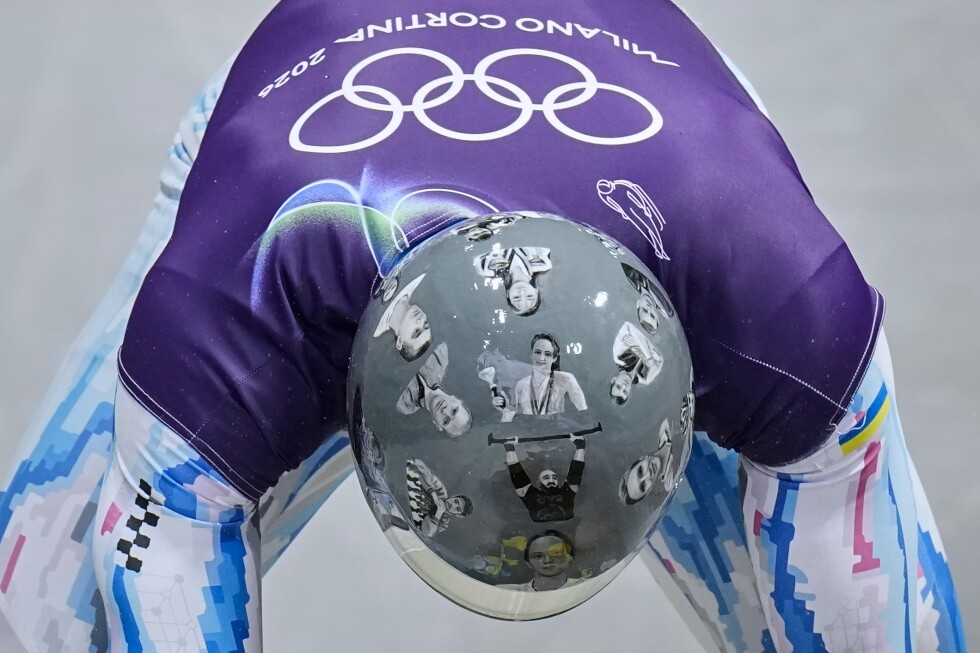
Ukrainian skeleton racer Vladyslav Heraskevych remains steadfast in his determination to compete at the Milan Cortina Winter Olympics wearing a helmet that commemorates Ukrainian athletes killed in the war with Russia, despite the International Olympic Committee’s prohibition.
“We will continue to fight for the right to compete in this helmet,” Heraskevych declared after his training runs on Tuesday in Cortina d’Ampezzo, Italy. “I truly believe that we didn’t violate any law and any rules.”
The helmet, adorned with images of more than 20 Ukrainian athletes and coaches who have perished since Russia’s 2022 invasion, has become a point of contention between the Ukrainian delegation and Olympic officials. The IOC has offered what they term a “compromise,” suggesting Heraskevych could wear a black armband instead, but the athlete has indicated he doesn’t plan to accept this alternative.
The IOC maintains that the memorial helmet violates Olympic Charter Rule 50, which prohibits “demonstration or political, religious or racial propaganda” at Olympic venues. In correspondence with the Ukrainian Olympic Committee, the IOC emphasized that separating the Games from “political, religious and any other type of interference” remains “a fundamental principle.”
Ukraine’s Olympic officials have pushed back, arguing the helmet “does not carry any political slogans, and does not express any racial discrimination,” making it fully compliant with Olympic regulations.
IOC spokesman Mark Adams defended the organization’s position, saying, “What we’ve tried to do is to address his desires with compassion and understanding.” Adams noted that while Heraskevych can express himself in press conferences and mixed zones, the helmet cannot be worn during competition.
Curiously, the IOC appears to be permitting Heraskevych to wear the helmet during training sessions without sanction. The athlete plans to don it again during Wednesday’s final practice runs before Thursday’s official competition begins.
Heraskevych, who placed fourth at last year’s world championships and is considered a medal contender, has garnered significant support from fellow competitors on the international skeleton circuit. Britain’s Matt Weston, the reigning world champion and gold medal favorite, expressed sympathy without directly addressing the controversy: “Any type of war or conflict is wrong. It’s super sad that we’re in the situation, having to talk about it.”
The faces depicted on Heraskevych’s helmet include figure skater Dmytro Sharpar, a former Youth Olympic Games teammate; boxer Pavlo Ishchenko; and hockey player Oleksiy Loginov. According to Ukrainian sports outlet Tribuna, the helmet memorializes 22 individuals, including a child as young as nine.
“I cannot understand how this helmet hurt anyone,” Heraskevych told The Associated Press. “It’s to pay tribute to athletes and some of them were medalists in the Youth Olympic Games. That means they’re Olympic family.”
The slider has also questioned the IOC’s consistency in rule enforcement, noting he has observed Russian flags—supposedly banned at these Games—in the spectator stands at some events.
This isn’t Heraskevych’s first political statement at the Olympics. During the 2022 Beijing Winter Games, he displayed a sign reading “No War in Ukraine” after his final run—just days before Russia launched its invasion.
The controversy has reached the highest levels of Ukrainian government, with President Volodymyr Zelenskyy publicly supporting Heraskevych on Instagram, thanking him for “reminding the world the price of our struggle.”
As the two-day, four-heat Olympic skeleton competition approaches, the standoff between Heraskevych and Olympic authorities remains unresolved. While the IOC has indicated it will make exceptions for black armbands in certain circumstances, Adams clarified, “We don’t want everyone wearing a black armband for every competition. But where there’s good reasoning it will be considered properly.”
For now, Heraskevych—who served as one of Ukraine’s flag bearers during the opening ceremony—appears determined to make his memorial statement on the Olympic stage, regardless of potential consequences.
Fact Checker
Verify the accuracy of this article using The Disinformation Commission analysis and real-time sources.

6 Comments
Honoring fallen athletes is understandable, but the IOC has rules about political displays. I’ll be interested to see if they can reach a solution that satisfies both sides on this tricky issue.
It’s understandable the Ukrainian team wants to commemorate their fallen countrymen, but the IOC has rules in place to keep politics out of the Olympics. This is a tricky balance to strike.
The helmet is clearly a meaningful gesture, but I can see the IOC’s perspective on wanting to avoid political displays at the Games. Hopefully they can work out a solution that allows Heraskevych to honor his teammates.
This is a difficult situation – honoring fallen Ukrainian athletes while respecting Olympic rules. I hope they can find a compromise that allows Heraskevych to pay tribute in an appropriate way.
Quite a dilemma here. On one hand, the Ukrainian athletes deserve to be remembered. But on the other, the Olympics have long sought to remain politically neutral. I’m curious to see how this plays out.
This is a sensitive issue that highlights the challenges of balancing national pride and Olympic neutrality. I hope the IOC and Ukrainian delegation can find a compromise that allows Heraskevych to pay his respects in an acceptable way.