


Listen to the article
Ukrainian Forces Operating in Western Libya, Launched Strike on Russian Tanker
Ukrainian forces are operating in western Libya under a covert agreement endorsed by Western powers, according to two Libyan officials who spoke on condition of anonymity. These Ukrainian personnel, primarily drone experts, reportedly used Libyan territory to launch a strike against a Russian tanker in the Mediterranean Sea last month.
The Russian-flagged Arctic Metagaz, carrying 61,000 tons of liquefied natural gas, suffered severe damage in a suspected sea drone attack on March 3 while sailing near Maltese waters. All 30 crew members were safely rescued and transferred to another vessel heading to Benghazi, according to the Libyan Maritime Authority.
One Libyan official confirmed that Ukrainian operatives launched the drone strike from a military facility in Tripoli. The tanker experienced “sudden explosions, followed by a massive fire” approximately 240 kilometers (150 miles) off the Libyan city of Sirte.
The Arctic Metagaz is part of Russia’s “shadow fleet” – vessels transporting oil in violation of international sanctions imposed following Moscow’s invasion of Ukraine over four years ago. Ukraine has justified targeting such vessels, stating that oil export revenue directly funds Russia’s war effort.
After the attack, the damaged tanker remained afloat but drifted toward the Libyan coast. According to the World Wide Fund for Nature, Libyan authorities attempted to tow the vessel to a “safe zone” off the western coast, but these efforts failed due to harsh weather conditions and strong winds that caused the tanker to drift “out of control.”
The Ukrainian forces are reportedly stationed primarily at an air base in the coastal city of Misrata, with additional operations in military facilities in Tripoli and Zawiya. Their deployment is said to be part of a deal between Kyiv and the government of Prime Minister Abdul-Hamid Dbeibah, who leads the internationally recognized administration based in Tripoli.
This arrangement reportedly has backing from Western nations, including the United States. According to the officials, U.S. adviser for African affairs Massad Boulos has drafted a proposal to resolve Libya’s long-standing conflict while keeping Dbeibah as prime minister. The proposal also suggests appointing Saddam Hifter, son of powerful eastern military commander Khalifa Hifter, as head of the presidential council.
Libya has been divided since 2014, with the UN-supported government in Tripoli led by Dbeibah facing a rival administration loyal to Russia-backed Khalifa Hifter in the east. This political fracture has persisted despite Dbeibah’s mandate technically expiring in December 2021 when Libya failed to hold scheduled presidential elections.
Jalel Harchaoui, a Libya analyst with the Royal United Services Institute, suggested that the Ukrainian presence in western Libya aligns with NATO’s long-term strategy to keep the region “out of Russia’s reach.”
“It is entirely plausible that, with the knowledge and blessing of NATO powers — chiefly the United States but also the United Kingdom and Turkey — several small groups of Ukrainian operatives now maintain a presence in the greater Tripoli area,” Harchaoui said.
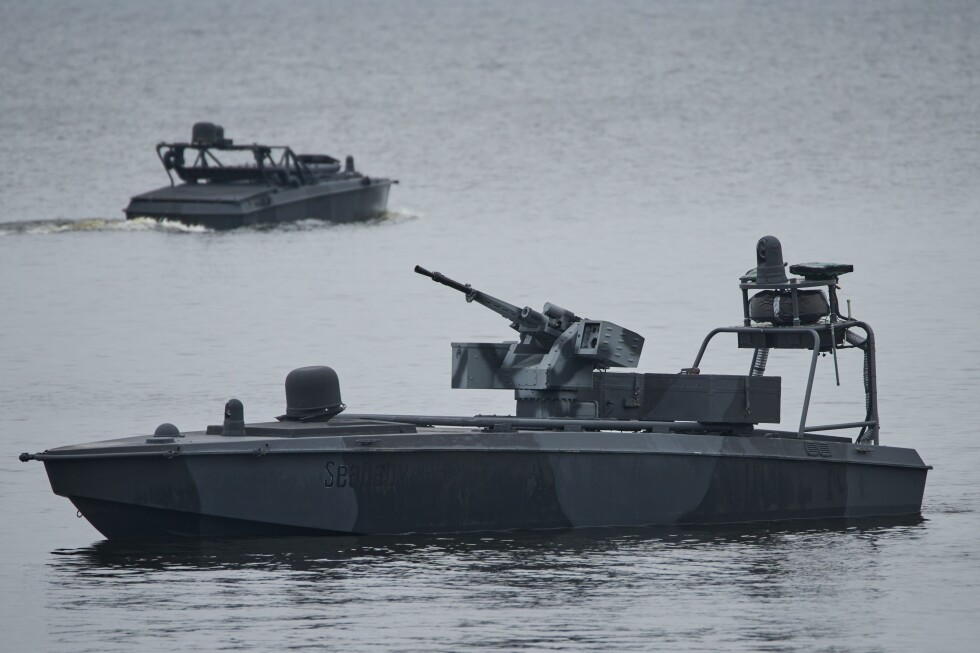
Ukraine has become known for rapid military innovation during its defense against Russia’s invasion, particularly in drone technology. Its Sea Baby naval drones have successfully targeted Russian ships in the Black Sea, forcing Moscow to adapt its naval strategies and potentially pushing Ukraine to seek more ambitious attack opportunities beyond the immediate conflict zone.
Neither Russian nor Ukrainian officials have commented on these claims, and the government in Tripoli has not responded to requests for comment.
Libya has been mired in chaos since a NATO-backed uprising toppled dictator Moammar Gadhafi in 2011. The oil-rich nation has since become a theater for geopolitical rivalry between Russia and Western powers. With borders touching six countries and its position on the Mediterranean, Libya has also emerged as a significant transit point for migrants attempting to reach European shores, creating additional regional security concerns.
Fact Checker
Verify the accuracy of this article using The Disinformation Commission analysis and real-time sources.

8 Comments
This is a bold move by Ukraine, leveraging Libyan territory to strike at Russian maritime assets. It will be interesting to see how Russia responds, if at all, to this apparent breach of their ‘shadow fleet’.
The use of drones by Ukrainian forces operating in Libya adds a new dimension to the conflict. This attack on a Russian tanker demonstrates their growing capabilities and willingness to take the fight beyond Ukraine’s borders.
I’m curious to learn more about the covert agreement between Ukraine and Western powers that enabled this operation. It seems like a risky but potentially impactful strategy targeting Russia’s energy exports.
Interesting development in the ongoing conflict. Curious to see if this attack was a one-off or part of a larger Ukrainian covert ops campaign targeting Russian energy assets in the region.
Definitely raises questions about the scope and coordination of these Ukrainian forces operating in Libya. Seems like a risky but potentially high-impact strategy targeting Russia’s ‘shadow fleet’.
This is a significant escalation in the ongoing proxy war between Ukraine and Russia. Attacking a Russian tanker from Libyan territory is a bold move that could have far-reaching consequences.
It’s concerning to see Ukraine expanding their military operations into Libya, even if it’s under the endorsement of Western powers. This tanker strike could further escalate tensions with Russia in the Mediterranean.
I wonder if this attack was retaliation for Russia’s involvement in Libya or a broader effort to disrupt their energy exports. Either way, it highlights the complexity of the situation in the region.