


Listen to the article
U.S. Expresses Concern Over Ukrainian Attacks Affecting American Oil Interests
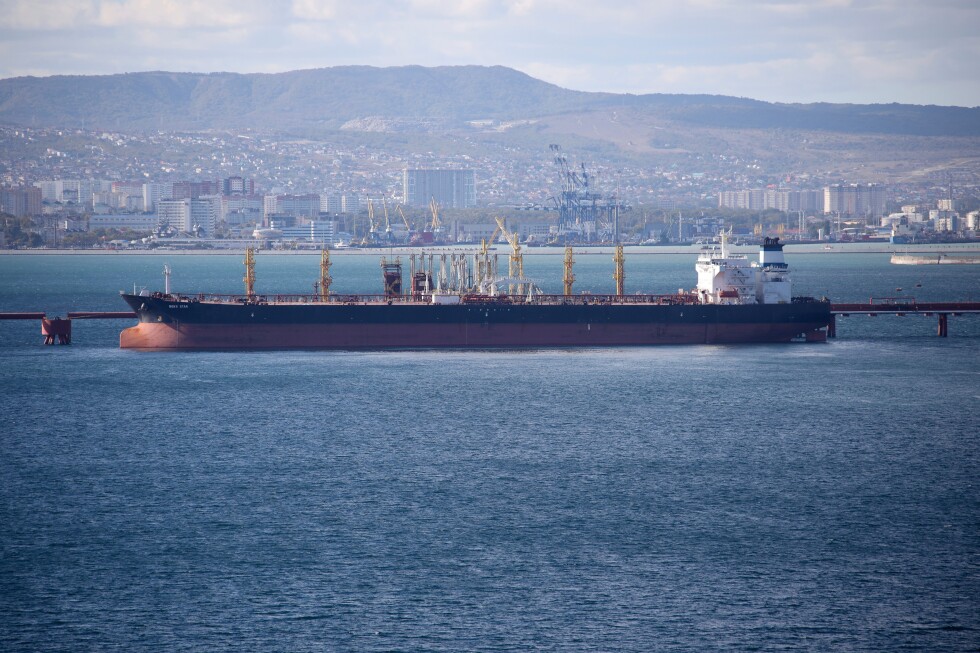
The U.S. State Department has voiced displeasure regarding Ukraine’s recent attacks on the Russian port of Novorossiysk on the Black Sea, which have impacted American oil interests in Kazakhstan, according to Ukraine’s chief envoy to Washington.
Ambassador Olga Stefanishyna acknowledged this communication on Tuesday, coinciding with the fourth anniversary of Russia’s invasion of Ukraine. She clarified that the American concern was specific to economic impacts, not a request to halt attacks on Russian military infrastructure.
“This reach-out was not related to encouraging Ukraine from refraining to attack Russian military and energy infrastructure. It was related to the very fact that American economic interest was affected there,” Stefanishyna told reporters in Washington. “It did happen, and we have taken the note.”
The State Department did not immediately respond to requests for comment on the matter.
At issue is the Caspian Pipeline Consortium’s operation, which transports crude oil from Kazakhstan’s northwestern Caspian coast to Novorossiysk. This pipeline is crucial for exports from major Kazakh oil fields where American energy giants Chevron and ExxonMobil hold significant stakes. Any disruption to this infrastructure has direct implications for U.S. energy companies’ operations and global oil supply chains.
The situation highlights the complex intersection of geopolitical and economic interests as the Ukraine conflict enters its fifth year. On Tuesday, the G7 nations released a statement reaffirming their “unwavering support for Ukraine in defending its territorial integrity and right to exist, and its freedom, sovereignty and independence.” The statement also acknowledged President Donald Trump’s efforts to broker peace between Russia and Ukraine.
In a parallel development, the U.N. General Assembly passed a resolution supporting Ukraine’s sovereignty and calling for an immediate ceasefire. However, the United States was among 51 countries that abstained from the vote. The U.S. had previously attempted to remove references to Ukraine’s sovereignty and territorial integrity from the resolution.
U.S. deputy ambassador Tammy Bruce explained that while the Trump administration supports an immediate ceasefire, it believes language about Ukraine’s sovereignty would “distract” from ongoing peace negotiations with Russia.
The peace process faces significant hurdles. Russian President Vladimir Putin continues to make maximalist demands, insisting Ukraine withdraw from four Ukrainian regions that Moscow illegally annexed but never fully controlled. President Trump has suggested Russia’s eventual control over these territories is inevitable and has pressured Ukrainian President Volodymyr Zelenskyy to reach a deal to prevent further loss of life.
Despite these pressures, Zelenskyy has emphasized Ukraine’s resilience against Russia’s larger military. According to the Institute for the Study of War, a Washington-based think tank, Russia captured just 0.79% of Ukraine’s territory in the past year of fighting, though it now controls nearly 20% of the country in total.
Ambassador Stefanishyna indicated she expected President Trump to address the conflict in his State of the Union speech later Tuesday, though she anticipated no major policy shifts. “Despite all the complexity and tragedy of what is happening in Ukraine, still Ukrainian people very much rely on his leadership,” she noted.
The situation underscores the delicate balance the Biden administration faces in supporting Ukraine while protecting American economic interests abroad. The Novorossiysk port represents a critical energy infrastructure node where military operations and global energy security directly intersect, creating tensions between strategic allies with different priorities in the ongoing conflict.
As peace negotiations continue, the protection of energy infrastructure and economic interests will likely remain contentious issues alongside the broader questions of territorial integrity and national sovereignty that have defined the conflict since Russia’s invasion four years ago.
Fact Checker
Verify the accuracy of this article using The Disinformation Commission analysis and real-time sources.

16 Comments
I’m not surprised the US is expressing concerns about the impact on its oil interests. Geopolitics and economics are often intertwined, especially in volatile regions like this. It will be worth watching how the US navigates this delicate balance going forward.
Absolutely, the US has to weigh its support for Ukraine against the potential economic fallout. Protecting American oil interests is likely a key consideration, even if it’s not the primary driver of US policy in the region.
This is a fascinating development, as it shows the US trying to balance its support for Ukraine with its own economic interests. The Caspian Pipeline Consortium is a crucial export route for Kazakhstan, so the US is understandably concerned about any disruptions. It will be interesting to see how this plays out.
Exactly. The US is in a difficult position, having to weigh its geopolitical objectives with its economic realities. Protecting American oil interests is likely a key consideration, even if it’s not the primary driver of US policy in the region.
The US raising concerns about the impact on its oil interests in the region highlights the complex interplay between geopolitics and economics. It’s a delicate balancing act, as the US wants to support Ukraine’s defense efforts while also protecting its own economic interests. This will be an important dynamic to watch going forward.
You make a good point. The US has to navigate this tricky situation carefully, as its support for Ukraine could have unintended consequences for its own economic interests. It will be fascinating to see how the Biden administration handles this dilemma.
This is a fascinating development that underscores the intricate web of geopolitics and economics at play in the Ukraine conflict. The US is clearly trying to balance its support for Ukraine with the need to protect its own oil interests in the region. It will be interesting to see how this dynamic evolves and whether it leads to any shifts in US policy or strategy.
Absolutely. The US has to weigh its priorities carefully here, as its support for Ukraine could have significant economic consequences for American interests. It’s a delicate balance that will require skilful diplomacy and policymaking to navigate effectively.
The US raising concerns about the impact on its oil interests in the region is an interesting development. It highlights the complex web of geopolitics and economics at play in the conflict in Ukraine. I wonder if this could lead to any shifts in US policy or strategy going forward.
Agreed, this is a delicate balancing act for the US. They want to support Ukraine, but they also have to protect their own economic interests. It will be fascinating to see how they manage this going forward.
This highlights the geopolitical and economic complexities of the conflict in Ukraine. The US clearly has its own interests at stake, beyond just supporting Ukraine militarily. It will be interesting to see if this leads to any changes in US policy or strategy.
You’re right, the US is trying to balance competing priorities here. On one hand, they want to support Ukraine, but on the other, they don’t want their own economic interests to be collateral damage. Tricky situation.
This is a complex issue with no easy answers. On one hand, the US wants to support Ukraine’s defense efforts, but on the other, it doesn’t want its own economic interests to be collateral damage. It will be interesting to see how the Biden administration handles this dilemma.
You raise a good point. The US has to balance its geopolitical objectives with its economic interests. It’s a tricky situation that will require careful diplomacy and policymaking to navigate effectively.
Interesting to see the US expressing concerns over the impact of Ukrainian attacks on American oil interests in the region. I wonder if this signals a shift in Washington’s stance or if it’s just pragmatic concerns about economic disruptions.
It seems like a complex balancing act for the US – supporting Ukraine’s defense efforts while also trying to mitigate damage to its own economic interests. Curious to see how this plays out going forward.