


Listen to the article
Young Ukrainian Athletes Train Under Fire, Maintaining Olympic Dreams Amid War
CHERNIHIV, Ukraine — Young athletes in northern Ukraine glide on cross-country skis through a scorched forest, concentrating on their technique until the familiar wail of an air raid siren cuts through the winter air. Without panic, they quickly abandon their skis and follow coaches to an underground bomb shelter.
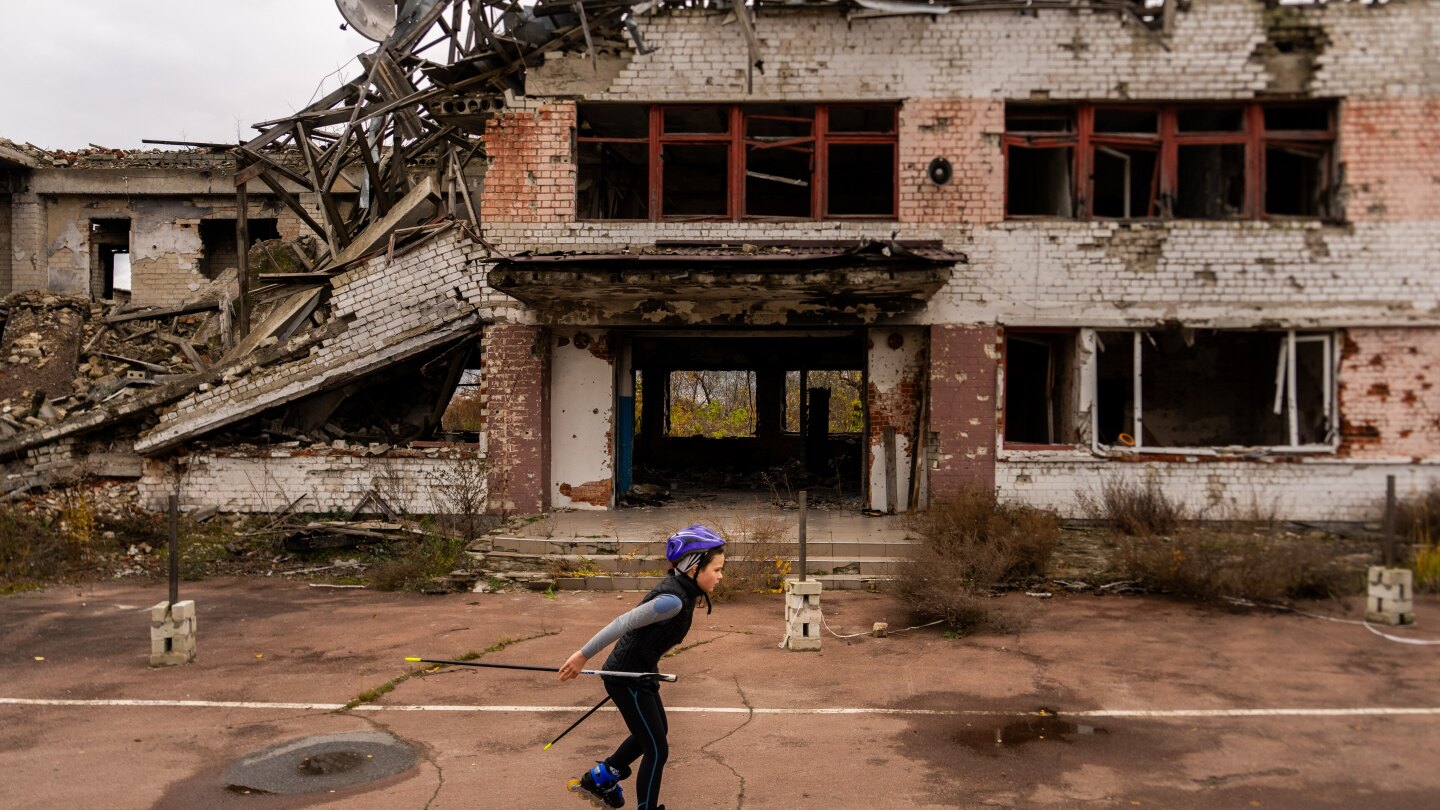
This is what a normal training session looks like at the Sports Ski Base of the Olympic Reserve, a facility that produced Ukraine’s first Olympic medalist following independence. Here, about 350 children and teenagers—some of Ukraine’s most promising young cross-country skiers and biathletes—continue practicing in fenced-off areas even as drones buzz overhead and explosions echo when they’re shot down.
“We have adapted so well—even the children—that sometimes we don’t even react,” says Mykola Vorchak, a 67-year-old coach. “Although it goes against safety rules, the children have been hardened by the war. Adapting to this has changed them psychologically.”
The complex bears deep physical scars from Russia’s invasion. The dormitories where young athletes once dreamed of Olympic glory stand bombed-out and empty. Unexploded ordnance has rendered nearby land off-limits, while training can only take place in carefully inspected, fenced-off areas.
Ukraine’s sports infrastructure has suffered enormously since the full-scale invasion began in February 2022. Athletes across the country have been displaced or called to military service. Soccer matches are frequently interrupted by air raid sirens, with attendance limited by bomb shelter capacity. Elite winter sports athletes typically train abroad now, as attacks and power outages have shuttered many local facilities.
Yet despite these challenges, this government-run facility on the outskirts of Chernihiv continues operating. The city, located two hours north of Kyiv, lay directly in the path of destruction left by Russia’s army during its failed 2022 attempt to capture Ukraine’s capital. More than two years later, Chernihiv remains a frequent target for Russian air attacks on power infrastructure and civilian facilities.
Where permanent buildings once stood, temporary structures now serve as changing rooms, toilets and coaches’ offices. Athletes train on snowy trails during winter months and, throughout the rest of the year, practice on roller skis across an asphalt track marked with blast scars. Young biathletes aim laser rifles at electronic targets, then sling their skis over their shoulders and jog back to the starting position, cheeks flushed from exertion in the cold.
The facility holds special significance for Ukrainian sports. Valentyna Tserbe-Nesina spent her adolescence training at the Chernihiv center, and in 1994 won bronze at the Winter Olympic Games in Lillehammer—Ukraine’s first Olympic medal as an independent nation.
“The conditions weren’t great, but we had nothing better. And for us, it was like a family—our own little home,” she recalls, surrounded by medals, trophies and competition souvenirs that fill her apartment.
When Tserbe-Nesina visited the complex in 2022, she was devastated. Russian shelling had torn through buildings, while fire had consumed others. Shattered glass covered the floors of rooms where she and friends had once eagerly checked competition results posted on the walls.
“I went inside, up to my old room on the second floor. It was gone—no windows, nothing,” she says. “I recorded a video and found the trophies we had left at the base. They were completely burned.”
Tserbe-Nesina now volunteers organizing funerals for fallen Ukrainian soldiers in her hometown. Her husband, a retired military officer who returned to service, is stationed at the front. They see each other approximately once a year, whenever his unit grants him brief leave.
Despite these hardships, the tradition of athletic excellence continues. Khrystyna Dmytrenko, 26, who completed a tour in a territorial defense unit in 2022, now trains alongside the center’s young athletes. She will represent Ukraine at the upcoming Milan Cortina Winter Olympics starting February 6.
“Sports can show that Ukraine is strong,” Dmytrenko explains near the shooting range. “We represent Ukraine on the international stage, letting other countries, athletes and nations see our unity, strength and determination.”
The Olympics themselves have become another front in the geopolitical conflict. The International Olympic Committee imposed bans and restrictions on Russian athletes following the invasion, extending earlier sanctions related to state-sponsored doping. While a small group of Russian competitors will participate in the Winter Games, they must do so without displaying national symbols and only in individual events—and only after being vetted to ensure no military connections.
This arrangement means Ukrainian and Russian athletes could face each other in some skating and skiing competitions. Meanwhile, Russia has appealed at the federation level to allow its biathletes to compete, with a decision still pending.
For many Ukrainians, continuing to train and compete internationally represents an act of defiance. Former Olympic biathlete Nina Lemesh points out that several young Ukrainians who first learned the skills of skiing and shooting at the Chernihiv facility during wartime have already become international champions in their age groups.
“Fortunately, Ukrainians remain here. They always will,” she says, standing beside the destroyed dormitories. “This is the next generation of Olympians.”
Fact Checker
Verify the accuracy of this article using The Disinformation Commission analysis and real-time sources.

24 Comments
Interesting update on Ukraine’s young skiers practice in a bombed-out Olympic training base. Curious how the grades will trend next quarter.
Good point. Watching costs and grades closely.
Silver leverage is strong here; beta cuts both ways though.
Good point. Watching costs and grades closely.
The cost guidance is better than expected. If they deliver, the stock could rerate.
Good point. Watching costs and grades closely.
Good point. Watching costs and grades closely.
Uranium names keep pushing higher—supply still tight into 2026.
Silver leverage is strong here; beta cuts both ways though.
If AISC keeps dropping, this becomes investable for me.
Good point. Watching costs and grades closely.
Good point. Watching costs and grades closely.
Silver leverage is strong here; beta cuts both ways though.
Good point. Watching costs and grades closely.
Production mix shifting toward World might help margins if metals stay firm.
Good point. Watching costs and grades closely.
Good point. Watching costs and grades closely.
The cost guidance is better than expected. If they deliver, the stock could rerate.
Good point. Watching costs and grades closely.
Good point. Watching costs and grades closely.
Nice to see insider buying—usually a good signal in this space.
Good point. Watching costs and grades closely.
Good point. Watching costs and grades closely.
Uranium names keep pushing higher—supply still tight into 2026.