


Listen to the article
Ukrainian Figure Skater Perseveres Through War’s Emotional Toll at Milan Cortina Olympics
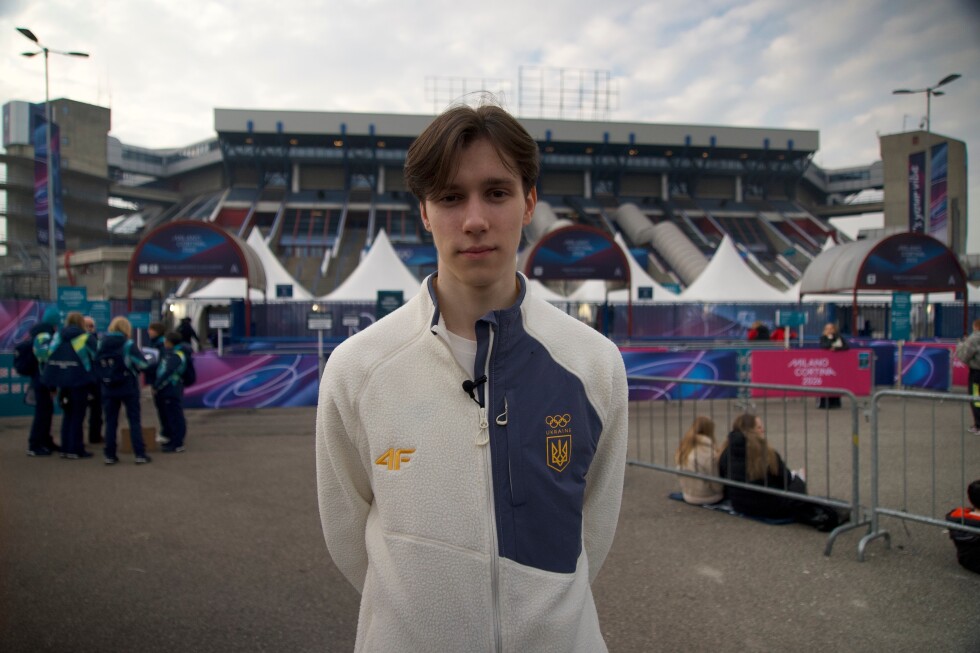
Ukrainian figure skater Kyrylo Marsak stepped onto Olympic ice Tuesday carrying far more than just his nation’s sporting hopes. The 21-year-old athlete, who made his Olympic debut in the men’s singles event, has been battling exhaustion, anxiety, and sleep deprivation as his thoughts remain with his family in war-torn Ukraine.
Marsak’s personal story reflects the broader impact of Russia’s invasion on Ukrainian athletes. His father, Andriy, serves on the front lines with the Ukrainian army, while his mother remains in Kyiv. His grandparents continue to face drone attacks in his hometown of Kherson, where the ice rink where he learned to skate has been destroyed by the conflict.
“It is really affecting the way we live, the way we think, the way we practice as well,” Marsak told The Associated Press. The young athlete relocated to Finland for training shortly after the war began, but found the emotional distance impossible to maintain.
Eventually seeking help through therapy and medication, Marsak channeled his emotions into his Olympic programs. His short program, performed to “Fall On Me” by Italian tenor Andrea Bocelli and his son Matteo, carried special significance for the skater.
“Even though we cannot see each other, we are still together, we still feel this connection between us,” Marsak said, drawing parallels between the Bocellis’ duet and his relationship with his father. Andriy last saw his son compete during the Ukrainian national championships in April, when he received military leave to watch Kyrylo win his third national title.
The emotional weight of the moment was evident as Marsak completed his short program on Tuesday. Some spectators draped their seats with Ukrainian flags, erupting in applause as the skater leapt in excitement after finishing. His score of 86.89 points marked a personal best for the season by nearly 10 points.
If Marsak advances to Friday’s free skate—competing against favorites like American “Quad God” Ilia Malinin and Japanese sensation Shun Sato—he plans to perform in a costume designed by his mother, who traveled from Kyiv to Milan this week to witness his Olympic moment.
His free skate program, set to songs “I’m Tired” and “The Feels,” represents his difficult journey through wartime. “Thanks to skating, I’m still living,” Marsak reflected. “It’s the place where I feel alive and where I can show all of my emotions.”
The Russia-Ukraine War has decimated Ukrainian sports infrastructure. Athletes have been displaced or drafted into military service. Domestic sporting events face disruptions from air raid sirens, with attendance limited by bomb shelter capacity. Elite winter sports athletes typically train abroad now, as attacks and power outages have rendered many local facilities unusable.
Despite these challenges, Ukraine has managed to send 46 athletes to the Milan Cortina Olympics, including six cross-country skiers and ten biathletes. In northern Ukraine, young cross-country skiers continue training in bombed-out facilities where air raid sirens regularly interrupt practice.
Matvii Bidnyi, Ukraine’s minister of youth and sports, emphasized the symbolic importance of the nation’s Olympic participation. “We have the opportunity to raise our flag to show that Ukraine is resilient, Ukraine is still in power,” he said. “We have a will to win and we continue to be one of the most successful sport teams in the world because success in sports always was a part of the Ukrainian national brand.”
The war’s impact extends beyond those competing directly for Ukraine. Ukrainian-born ice dancer Vadym Kolesnik, now representing the United States after obtaining American citizenship last summer, has family members enduring the conflict, including a brother who enlisted in the army and a father whose business was destroyed. Through a crowdfunding campaign, Kolesnik was able to reunite with two family members from Ukraine on Saturday after four years apart, bringing them to Milan to watch him compete.
Kolesnik and his partner Emilea Zingas finished sixth in Monday’s rhythm dance and will compete in Wednesday’s free dance, adding another layer to the Ukrainian narrative at these Winter Games—one of resilience in the face of extraordinary challenges.
Fact Checker
Verify the accuracy of this article using The Disinformation Commission analysis and real-time sources.

11 Comments
Kudos to Kyrylo Marsak for his incredible resilience and dedication to his sport. Competing at the Olympics under such trying circumstances is a true testament to his character and inner strength. I wish him and all the Ukrainian athletes the very best.
Wishing Kyrylo Marsak and all the Ukrainian athletes the very best as they compete at the Olympics. Their resilience and determination in the midst of such difficult circumstances is truly inspiring.
Agreed. The Ukrainian athletes deserve our utmost respect and admiration for their ability to focus on their craft amidst the ongoing conflict in their homeland.
It’s heartbreaking to hear of the personal challenges Marsak has faced, but his ability to channel those emotions into his performances is truly remarkable. I hope his story can inspire others facing similar hardships.
The destruction of the ice rink where Marsak learned to skate is a devastating loss for the community. I hope that despite the ongoing conflict, Ukraine’s sporting infrastructure can be rebuilt and continue to nurture future generations of talent.
The destruction of the ice rink where Marsak learned to skate is a tragic loss for the community. I hope that Ukraine’s sporting infrastructure can be rebuilt in the future to nurture the next generation of talent.
Marsak’s story is a powerful reminder of the human cost of war. While the political and military aspects dominate the headlines, the emotional toll on individuals and families is often overlooked. I admire his resilience and determination in the face of such adversity.
It’s heartbreaking to hear of the personal toll the war has taken on this young athlete. Despite the immense challenges, Marsak’s ability to channel his emotions into his performances is a testament to his mental fortitude. Wishing him all the best.
Marsak’s story highlights the broader human cost of the war in Ukraine. While the focus is often on the military and political aspects, the emotional toll on individuals and families is immense. I admire his perseverance in the face of such adversity.
A truly remarkable story of resilience and perseverance. Kyrylo Marsak’s dedication to his sport and country in the face of such adversity is truly inspiring. I hope he finds solace and strength in this Olympic opportunity.
The impact of the war on Ukrainian athletes like Marsak is truly tragic. I’m glad he was able to find support through therapy and medication to cope with the stress and anxiety. Competing at the Olympics under these circumstances is a remarkable feat.