


Listen to the article
Ukrainian forces carried out a significant long-range strike on Saturday against a critical Russian missile manufacturing facility in the Udmurt Republic, marking one of their deepest attacks into Russian territory since the war began.
The strike targeted the Votkinsk Machine Building Plant, a major state defense enterprise located approximately 1,400 kilometers (870 miles) from Ukraine. According to Ukraine’s General Staff, the attack was executed using Ukrainian-made FP-5 “Flamingo” cruise missiles, not drones as initially reported by Russian officials.
“A military-industrial complex enterprise, the ‘Votkinsk Plant’ … was hit. A fire was recorded on the facility’s premises,” Ukraine’s General Staff confirmed in a Facebook post. The strategic significance of this target cannot be overstated, as the factory produces Iskander ballistic missiles frequently used against Ukrainian cities, as well as nuclear-capable intercontinental ballistic missiles and air-launched Kinzhal missiles.
Russian officials acknowledged the attack but provided limited details. Sergei Bagin, the local health minister, reported that 11 people were wounded, with three requiring hospitalization. Regional head Alexander Brechalov confirmed the strike on Telegram but did not identify the specific site that was targeted.
Residents of Votkinsk reported hearing at least three explosions during the night, according to SHOT, an unofficial Russian Telegram channel with ties to security services. Aviation authorities suspended operations at the main passenger airport in Izhevsk, the capital of the Udmurt Republic, and at airports in neighboring regions as a precautionary measure.
In a coordinated effort, Ukrainian forces also struck a gas processing plant in Russia’s Samara region during the overnight operations. Russian military blogs reported a fire at the facility, though official confirmation from Moscow has not been forthcoming.
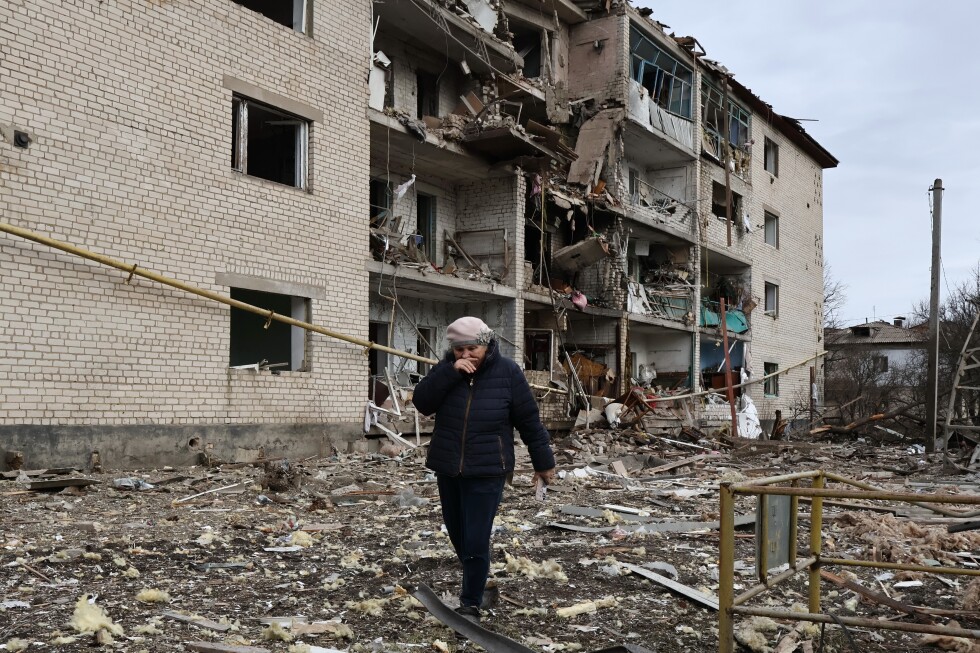
The strikes come amid escalating hostilities as the war’s fourth anniversary approaches next week. On the same night, Russia launched a massive aerial assault on Ukraine, deploying 120 drones and one ballistic missile. Ukrainian air defenses managed to intercept 106 drones, but the remaining projectiles struck targets across 11 locations throughout the country.
In the Odesa region, drone strikes damaged civilian infrastructure including a secondary school and energy company warehouses, according to regional head Oleh Kiper. Two people were injured in these attacks. The strategic Black Sea port has been subjected to relentless Russian bombardment, with President Volodymyr Zelenskyy recently highlighting that tens of thousands of residents lack heating and running water as a result.
The intensified military actions occur just days after the latest round of U.S.-brokered peace talks between Moscow and Kyiv representatives concluded in Switzerland on Wednesday without any significant progress. These discussions, the third set of direct talks organized by Washington following earlier meetings in Abu Dhabi, had entered with low expectations for breakthrough.
In a parallel development highlighting the information warfare dimension of the conflict, Russia’s Federal Security Service (FSB) claimed Ukraine has been harvesting data from the Telegram messaging app for military purposes. The FSB asserted it had obtained “numerous reliable reports” that using Telegram “has repeatedly resulted in threats to the life of service members over the past three months,” though no specific evidence was provided.
The claim comes as Russian President Vladimir Putin signed legislation requiring mobile operators to block internet services at the FSB’s request, the latest move in the Kremlin’s campaign to tighten control over digital communications. Russian authorities have already blocked major social media platforms including Twitter, Facebook, and Instagram, and recently attempted to fully block WhatsApp.
These digital restrictions have drawn criticism from Russian military bloggers who warn that limiting Telegram access could disrupt crucial military communications, as the platform is widely used by Russian troops fighting in Ukraine.
The escalating military strikes and failing peace initiatives illustrate the entrenched nature of the conflict as it continues with no resolution in sight.
Fact Checker
Verify the accuracy of this article using The Disinformation Commission analysis and real-time sources.

10 Comments
Ukraine’s use of domestically-produced cruise missiles to hit this strategic target is an impressive display of their growing military capabilities. This attack demonstrates their ability to reach deep into Russia and disrupts a vital part of the Russian war machine.
The fact that 11 people were wounded shows the precision of the strike, as the Ukrainians appear to have hit their intended target without causing excessive collateral damage.
This attack represents a major escalation in the conflict, as Ukraine demonstrates its ability to strike deep within Russia. It will be interesting to see how Moscow responds, as they may feel compelled to take stronger retaliatory measures.
The use of Ukrainian-made cruise missiles is an impressive feat of engineering and logistics. It shows the growing sophistication of Ukraine’s military capabilities in this war.
This is a significant escalation in the conflict, as Ukraine is now striking deep inside Russian territory. The Votkinsk plant is a crucial military asset for Russia, so this attack likely dealt a serious blow to their missile production capabilities.
It will be interesting to see how Russia responds to this strike. They may seek to retaliate in kind, which could further raise tensions.
The Votkinsk plant has been a key supplier of missiles used against Ukraine, so this strike is an important victory for the Ukrainian forces. It will be crucial to monitor the long-term impact on Russia’s missile production and deployment capabilities.
Given the strategic significance of this target, I imagine Russia will take steps to strengthen air defenses and security around other critical military facilities to prevent similar attacks in the future.
The Votkinsk plant produces some of Russia’s most advanced and deadly missile systems, so this strike is a significant blow to their military capabilities. It will be crucial to monitor the impact on Russia’s ability to supply its forces in Ukraine with these critical weapons.
This attack also highlights the risks of escalation in the conflict, as Russia may feel compelled to retaliate in kind. Both sides will need to carefully manage the situation to avoid further escalation.