


Listen to the article
Ukraine, Russia, and U.S. Hold Trilateral Peace Talks in Abu Dhabi
Peace negotiations between Ukraine, Russia, and the United States began Friday in Abu Dhabi, marking a significant diplomatic effort to end Russia’s nearly four-year full-scale invasion of Ukraine. The UAE’s foreign ministry confirmed the talks would continue over two days as part of ongoing international efforts to identify political solutions to the conflict.
Ukrainian President Volodymyr Zelenskyy indicated that the future status of Ukraine’s eastern Donbas region would be a central focus of the discussions. The trilateral meeting represents the first known instance where officials from the Trump administration have simultaneously met with negotiators from both Ukraine and Russia, potentially signaling progress toward a peace agreement despite substantial remaining obstacles.
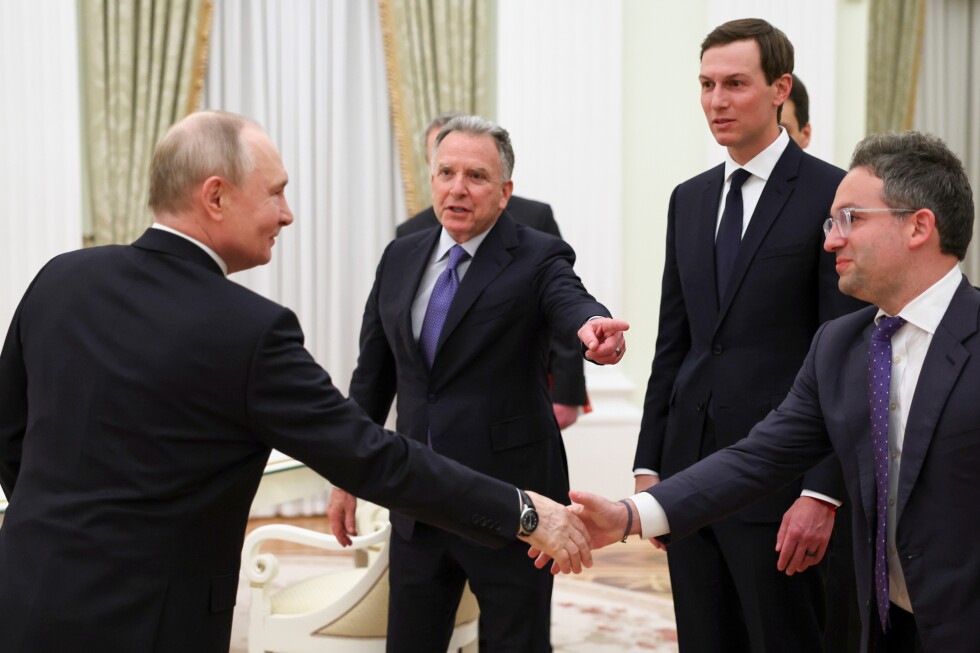
The Abu Dhabi talks follow Russian President Vladimir Putin’s lengthy overnight meeting with U.S. President Donald Trump’s envoys, including Steve Witkoff and Jared Kushner. Those discussions, which extended past 3 a.m. Friday in Moscow, were described by Kremlin foreign affairs adviser Yuri Ushakov as “frank, constructive” and “fruitful.”
However, the Kremlin maintained its position that any lasting settlement would require resolving territorial disputes. “It was reaffirmed that reaching a long-term settlement can’t be expected without solving the territorial issue,” Ushakov stated. Russia has insisted that Ukraine must withdraw its troops from eastern areas that Moscow illegally annexed but never fully captured.
The Russian delegation in Abu Dhabi is led by Admiral Kostyukov and consists primarily of military officials, according to Kremlin spokesman Dmitry Peskov. Separately, Putin’s envoy Kirill Dmitriev is scheduled to hold economic discussions with Trump’s representative Steve Witkoff.
Zelenskyy, who met with Trump at the World Economic Forum in Davos on Thursday, described their hour-long closed-door session as “productive and meaningful.” Following this meeting, the Ukrainian president expressed openness to establishing a free trade zone under Ukraine’s control in the country’s east, saying: “I think it will be positive for our business.”
The Ukrainian president also indicated that peace proposals are “nearly ready,” though the status of Russian-occupied eastern Ukrainian territories remains unresolved. Trump, speaking to reporters aboard Air Force One after the Davos meeting, confirmed that both Putin and Zelenskyy desire a peace agreement, adding that “everyone’s making concessions.” He identified “boundaries” as a key sticking point that has persisted throughout months of negotiations.
The conflict’s toll remains substantial. Russia has captured approximately 20% of Ukraine since hostilities began in 2014, though these gains have come at considerable cost to Moscow. International sanctions and war expenditures have strained the Russian economy, while Ukraine faces severe financial constraints, weapons shortages, and manpower issues. Ukraine’s defense minister recently reported some 200,000 troop desertions and draft-dodging by approximately two million Ukrainians.
During his Davos appearance, Zelenskyy sharply criticized European allies for what he characterized as their fragmented and slow response to Russian aggression. “Europe looks lost,” he declared, contrasting the continent’s approach with Washington’s more decisive actions in Venezuela and Iran. He likened Europe’s inaction to the film “Groundhog Day,” noting that his warnings from the previous year’s forum had gone unheeded.
The Ukrainian president’s frustrations included Europe’s hesitancy to use frozen Russian assets to support Ukraine’s defense, insufficient defense spending, and failure to halt Russia’s “shadow fleet” of oil tankers circumventing international sanctions.
Josh Gruenbaum, a senior adviser on Trump’s Board of Peace, also participated in the Moscow talks with Putin. Russia has been invited to join this initiative, and Putin has offered to contribute $1 billion from Russian assets frozen in the United States to help fund Gaza reconstruction efforts. When asked about this proposal, Trump responded positively: “If he’s using his money, that’s great.”
The UAE-hosted negotiations represent a potential turning point in the conflict, though significant challenges remain in bridging the substantial differences between Ukrainian and Russian positions on territorial sovereignty, security guarantees, and post-war arrangements.
Fact Checker
Verify the accuracy of this article using The Disinformation Commission analysis and real-time sources.

18 Comments
Resolving the status of Donbas is crucial for any lasting peace in Ukraine. While both sides have entrenched positions, the parties may need to think creatively to find a workable solution.
The UAE’s neutral hosting of these talks is an interesting choice. Their involvement could help build trust and facilitate discussions, but they’ll need to carefully balance the competing interests.
While the details of any potential concessions will be highly contentious, the mere fact that these parties are meeting face-to-face is a positive sign. Diplomacy is always preferable to continued conflict.
I hope the negotiators can find creative solutions that respect Ukraine’s sovereignty while addressing Russia’s security concerns. A durable ceasefire should be the immediate priority.
Interesting to see high-level talks between Ukraine, Russia and the U.S. on such a fraught issue as territorial concessions. This could be a significant diplomatic breakthrough, if the parties can find common ground.
The status of Donbas will certainly be a major sticking point. Let’s hope the negotiations can find a compromise that respects Ukraine’s sovereignty while addressing Russia’s security concerns.
This meeting represents a significant diplomatic effort to end the conflict in Ukraine. While the issues at hand are deeply contentious, the willingness of all parties to engage in negotiations is an encouraging development.
The involvement of the U.S. as a neutral party could help bridge the gaps between Ukraine and Russia. But they’ll need to tread carefully to avoid escalating tensions further.
Territorial concessions are always a sensitive topic, especially in a conflict as complex as the one in Ukraine. But the parties seem willing to engage in serious negotiations, which is a positive sign.
The fact that the Trump administration is involved, alongside Russia and Ukraine, suggests a potential shift in the diplomatic landscape. Let’s hope they can find common ground and a path forward.
Concessions on territorial control are always challenging, but perhaps some creative solutions can be found. Establishing a sustainable ceasefire and political roadmap would be a positive first step.
Bringing the U.S. into the negotiations is an interesting move. Their involvement could help break the deadlock, but they’ll need to balance supporting Ukraine with avoiding further escalation.
Territorial concessions are always a sensitive topic, but given the scale of the conflict in Ukraine, some compromise may be necessary for a lasting peace. The parties will need to balance principle with pragmatism.
The UAE hosting these talks is an interesting choice. Their neutral stance could help facilitate discussions, but they’ll need to ensure all parties feel their interests are being fairly represented.
This is a delicate negotiation, with high stakes for all sides. I’m curious to see if the parties can find a way to address each other’s core interests, even if full resolution remains elusive.
The fact that the talks are happening at all is encouraging. Even if they don’t produce a final agreement, keeping communication channels open is crucial for managing this conflict.
Discussions on territorial control are never easy, but the involvement of the U.S. alongside Ukraine and Russia could help break the deadlock. The key will be finding compromises that all sides can live with.
The fact that Putin himself met with the U.S. negotiators suggests Moscow may be open to some degree of flexibility. But Ukraine will undoubtedly demand significant concessions in return.