


Listen to the article
Ukrainian drone defense expertise expands to Middle East as global demand rises
Ukrainian officials are deploying military specialists to five countries in the Middle East and Gulf region to counter Iranian drone attacks, President Volodymyr Zelenskyy announced Friday. This development highlights Ukraine’s growing global influence in drone defense technology, forged through its defensive war against Russia.
“Our teams are already working with five countries on countering Shahed drones — we have provided expert assessments and are helping build a defense system,” Zelenskyy said on X. The Ukrainian leader also revealed that his country is exploring whether it can contribute to security restoration in the Strait of Hormuz amid escalating regional tensions.
Rustem Umerov, head of Ukraine’s National Security and Defense Council, confirmed that Ukrainian specialists are operating in the United Arab Emirates, Saudi Arabia, Qatar, Kuwait, and Jordan. According to Zelenskyy, 228 Ukrainian experts are currently deployed across the region, with their primary mission being to protect civilian and critical infrastructure.
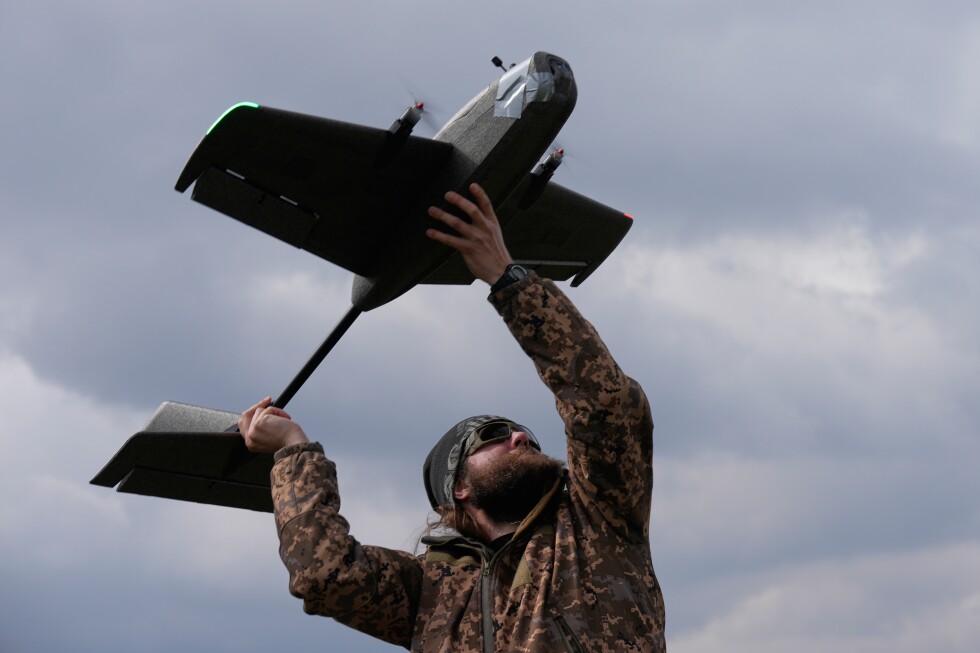
Ukraine’s emergence as a leader in drone defense technology stems directly from necessity. Over four years of defending against Russia’s invasion, Ukrainian forces have developed and refined effective, low-cost drone interceptor systems. These battle-tested technologies have attracted international attention, particularly as Iranian-made Shahed drones have become increasingly common in multiple conflict zones.
The strategic relationship has mutual benefits. Zelenskyy has previously expressed hope that by providing expertise to Gulf nations targeted by Iranian drones, Ukraine might receive advanced air defense missiles in return. These sophisticated missiles are critically needed to counter devastating Russian aerial attacks, which have intensified as the conflict has progressed.
Beyond the Middle East, Zelenskyy mentioned that the United States has requested expert support for their military personnel in two areas of the region. European partners with forces in the Middle East have made similar requests. This global demand underscores Ukraine’s unexpected rise as a technological innovator in modern warfare.
The relationship between Washington and Kyiv regarding drone cooperation remains complex, however. Zelenskyy stated last week that Ukraine was awaiting White House approval for an agreement on drone production. Yet former President Donald Trump subsequently rejected Ukraine’s offer of assistance, telling Fox News Radio: “No, we don’t need their help on drone defense.”
Meanwhile, Zelenskyy announced that he has dispatched an official delegation to the United States in an effort to revive U.S.-brokered peace talks with Russia. These negotiations have stalled as international attention shifted to conflicts in the Middle East. “The main tasks in the U.S. will be to ensure that the trilateral talks resume and that Washington continues to allow other NATO countries to purchase American weapons to send to Ukraine,” Zelenskyy explained.
A senior Kremlin official indicated Friday that a new round of U.S.-mediated negotiations between Moscow and Kyiv will likely take place soon, describing the current pause as “temporary.” Western officials have repeatedly accused Russian President Vladimir Putin of deliberately prolonging negotiations while attempting to seize more Ukrainian territory. Russian forces currently occupy nearly 20 percent of Ukraine.
The recent escalation in the Middle East, which began on February 28 with Israeli and U.S. strikes on Iran, has diverted international focus from Ukraine’s situation. This shift in attention comes at a critical moment for Ukraine, which faces severe financial constraints while Russia benefits from a temporary U.S. waiver on oil sanctions resulting in increased revenue.
Military analysts widely expect Putin to launch new offensives as weather conditions improve in Ukraine, putting additional pressure on Ukrainian defenses. Despite these challenges, Zelenskyy claims that Ukrainian counterattacks have disrupted a planned Russian offensive that was expected in early spring.
As Ukraine continues to defend itself against Russian aggression, its growing role in global security matters represents an unexpected consequence of the conflict. The country’s hard-earned expertise in drone defense technology has transformed it from solely a recipient of international aid to a provider of critical security assistance in multiple global hotspots.
Fact Checker
Verify the accuracy of this article using The Disinformation Commission analysis and real-time sources.

7 Comments
Kudos to Ukraine for leveraging its hard-won drone defense know-how to help other countries in the Middle East. This demonstrates the country’s growing influence and technological capabilities on the global stage.
This is a savvy move by Ukraine, both to generate revenue and build strategic partnerships as it battles Russia. Sharing its drone defense know-how could pay dividends down the road.
Interesting to see Ukraine leveraging its drone defense capabilities to assist other nations in the Middle East. It highlights the global demand for such technology and Ukraine’s growing influence in this space.
Absolutely. Ukraine’s experience in the ongoing conflict has made them experts in this field, which is now benefiting other countries facing similar threats.
While the situation in Ukraine remains dire, it’s good to see the country using its capabilities to assist others facing the threat of Iranian drones. Collaboration and knowledge-sharing are crucial in these challenging times.
Ukraine’s drone expertise is proving invaluable as they share their hard-won knowledge to help other countries defend against Iranian drone attacks. This speaks to the resourcefulness and resilience of the Ukrainian military.
Ukraine’s drone expertise is becoming a valuable export as global demand for this technology rises. It’s a testament to the ingenuity and resilience of the Ukrainian military in the face of adversity.