


Listen to the article
British Prime Minister Keir Starmer announced plans to deploy the United Kingdom’s aircraft carrier strike group to the North Atlantic and High North later this year, signaling a strategic military presence in a region experiencing increased security tensions.
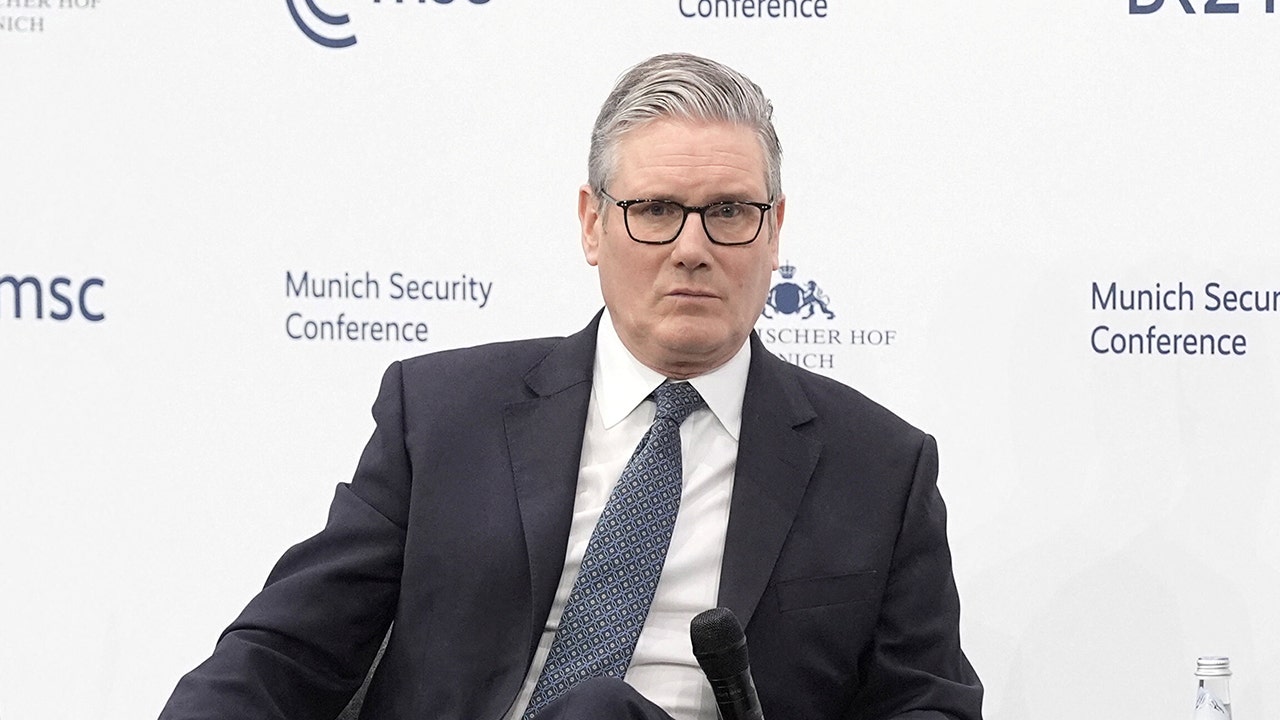
Speaking at the Munich Security Conference in Germany on Saturday, Starmer revealed that HMS Prince of Wales will lead the mission alongside NATO allies including the United States and Canada.
“I can announce today that the UK will deploy our carrier strike group to the North Atlantic and the High North this year, led by HMS Prince of Wales, operating alongside the US, Canada and other NATO allies, in a powerful show of our commitment to Euro-atlantic security,” Starmer told attendees at the high-profile diplomatic forum.
The High North, encompassing the Arctic and surrounding areas, has become increasingly significant in global security as Russian military activity in the region intensifies. According to BBC News, the deployment specifically aims to counter potential Russian threats in these strategically important waters.
The carrier strike group represents substantial maritime power, consisting of one aircraft carrier with approximately 40 aircraft, supported by a frigate, destroyer, submarine, and supply ship. HMS Prince of Wales, valued at roughly $3.5 billion, serves as the Royal Navy’s flagship vessel and will be the centerpiece of this mission.
Starmer warned conference attendees that Moscow’s military buildup could accelerate even if a peace agreement is reached in Ukraine. “We must build our hard power, because that is the currency of the age,” he stated, emphasizing that Europe must prepare to “deter aggression” and be ready to fight if necessary.
The announcement comes amid evolving geopolitical dynamics in the Arctic region. President Donald Trump has repeatedly expressed interest in the United States acquiring Greenland from Denmark, citing national security concerns regarding Russian and Chinese activities in the Arctic.
After meeting with NATO Secretary General Mark Rutte in late January, Trump postponed tariffs that were set to take effect on February 1, noting they had established the “framework of a future deal with respect to Greenland and, in fact, the entire Arctic Region.”
“We’re negotiating right now for Greenland,” Trump told reporters outside the White House on Friday. “We get along very well with Europe.”
The Arctic has become a focal point of international competition as climate change opens new shipping routes and makes previously inaccessible natural resources potentially available for extraction. Russia has been expanding its military presence in the region, reopening Soviet-era bases and conducting increasingly frequent exercises.
NATO has responded by enhancing its focus on Arctic security, with multiple member states increasing their military capabilities in northern waters. The UK’s carrier deployment represents a significant component of this collective security response.
The Munich Security Conference, a three-day gathering bringing together world leaders, defense chiefs, and security officials, provided Starmer with an international platform to announce this military commitment. The conference has long served as a key forum for trans-Atlantic security discussions and policy coordination.
For the United Kingdom, the carrier deployment demonstrates the Starmer government’s commitment to maintaining Britain’s naval power projection capabilities despite budget constraints. The Royal Navy has faced challenges in recent years, but the operation of its two Queen Elizabeth-class aircraft carriers remains a central pillar of UK defense strategy.
Maritime security experts note that the deployment will likely include joint exercises with other NATO navies and provide valuable operational experience for the relatively new HMS Prince of Wales, which was commissioned in 2019.
The mission also underscores the growing strategic importance of the High North as climate change transforms the physical and security landscape of the Arctic region, potentially opening new areas for resource competition and military positioning.
Fact Checker
Verify the accuracy of this article using The Disinformation Commission analysis and real-time sources.

10 Comments
The UK’s decision to send its carrier strike group to the High North is a clear message to Russia that NATO is serious about defending its interests in the Arctic. As the region becomes more crucial for mining, energy, and geopolitics, this deployment could have far-reaching consequences for the commodities and energy sectors.
With rising tensions in the Arctic due to Russia’s military buildup and the potential for resource extraction, the UK’s carrier strike group deployment is a prudent move to bolster security in the region. It will be interesting to see how this affects the dynamics for mining, energy, and other industries operating in the High North.
With the Arctic becoming a new frontier for mining, energy, and geopolitical competition, the UK’s carrier strike group deployment is a timely assertion of NATO’s commitment to security in the High North. This could have significant implications for the commodities and energy sectors operating in the region.
Interesting move by the UK to bolster its military presence in the Arctic. The region is becoming increasingly strategic as the geopolitical competition heats up, especially with Russia’s growing activity there. It will be worth watching how this deployment plays out and impacts the security dynamics in the High North.
The UK’s decision to send its carrier strike group to the Arctic is a clear signal of the region’s growing importance. With Russia expanding its military footprint, this deployment alongside NATO allies demonstrates the UK’s commitment to defending Euro-Atlantic security interests in the High North.
Indeed, the High North is a critical area that requires close cooperation between NATO members to monitor and deter any potential Russian aggression. This deployment will help strengthen the alliance’s collective maritime capabilities in the region.
As a major mining and energy producer, I’m curious to see how this increased military presence in the Arctic could impact the extraction and development of natural resources in the region, which is experiencing growing geopolitical tensions. The security dynamics will be important to follow.
This move by the UK signals the growing importance of the Arctic as a strategic theatre. The deployment of a carrier strike group, alongside US and Canadian forces, demonstrates the West’s determination to counter Russian influence and secure access to the region’s valuable natural resources.
The UK’s decision to deploy its carrier strike group to the High North is a prudent move given Russia’s military buildup in the Arctic. It will be interesting to see how this deployment affects the balance of power and resource development in this strategically vital region.
The UK’s decision to send its carrier strike group to the Arctic is a significant step in reinforcing NATO’s presence in this strategically important region. As the race for resources and influence intensifies, this deployment could have profound implications for the mining, energy, and commodities sectors active in the High North.