


Listen to the article
In a stunning political upset that underscores Britain’s increasingly fragmented political landscape, the Green Party has won a special parliamentary election in England, dealing a significant blow to Prime Minister Keir Starmer’s Labour government.
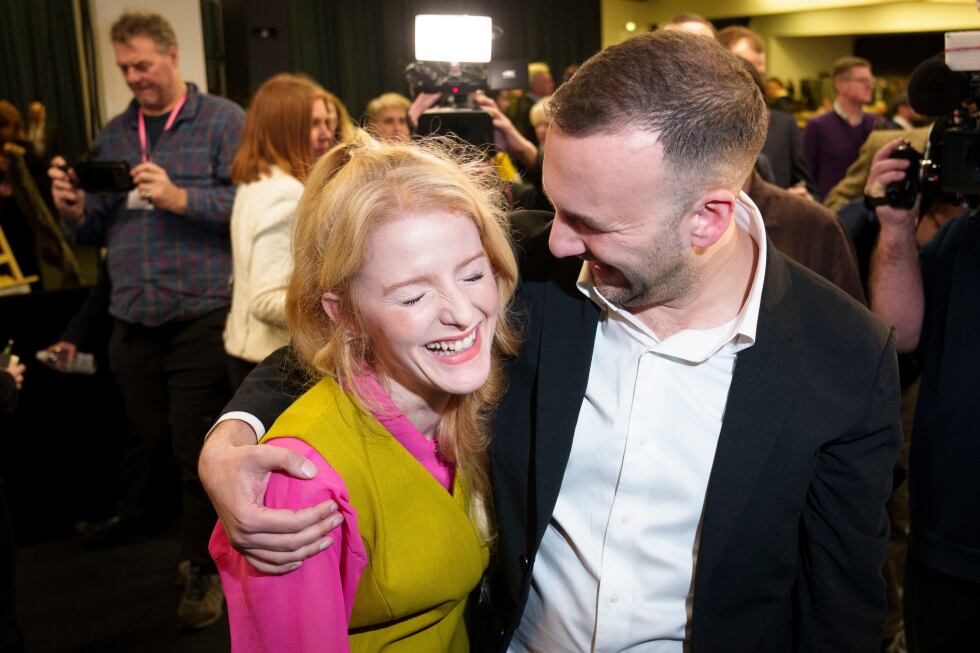
Green candidate Hannah Spencer, a plumber and local councilor, captured the Gorton and Denton constituency in Greater Manchester with 14,980 votes, comfortably ahead of Reform UK candidate Matthew Goodwin, who received 10,578 votes. In a particularly damaging result for the governing party, Labour candidate Angeliki Stogia finished third with just 9,364 votes.
“For people here in Gorton and Denton who feel left behind and isolated: I see you and I will fight for you,” Spencer said in her victory speech. She even apologized to her plumbing customers, noting that she would have to cancel some appointments because “I’m heading to Parliament.”
The outcome represents a seismic shift in an area that has elected Labour lawmakers for almost all of the last century. Labour’s share of the vote was halved compared to the July 2024 general election when the party easily won the constituency. The result gives the environmentalist Greens their fifth seat in the 650-seat House of Commons.
Jenny Jones, a Green member of the House of Lords, described the result as “absolutely seismic.”
Political analysts point to several factors that contributed to the Green Party’s victory in this diverse constituency. Gorton and Denton encompasses traditional working-class neighborhoods—once Labour strongholds but now increasingly attracted to Reform UK—alongside areas with large numbers of university students and Muslim residents.
Under the leadership of self-described “eco-populist” Zack Polanski, the Greens have expanded their platform beyond environmental concerns to focus on issues including the cost of living, drug legalization, and support for the Palestinian cause. This broader agenda has resonated with voters disillusioned by Labour’s centrist shift under Starmer and the government’s perceived hesitation to criticize Israel’s conduct in the Gaza conflict.
The defeat is the latest in a string of setbacks for Starmer since his landslide election victory in July 2024. His government has struggled to deliver promised economic growth, repair public services after years of austerity, or meaningfully address the cost of living crisis that continues to squeeze British households.
Though Starmer pledged a return to honest government after 14 years of Conservative rule that ended in scandals and chaos, his administration has been plagued by missteps and policy reversals, particularly regarding welfare cuts that have proven deeply unpopular.
Questions are also being raised about Labour’s decision to block Andy Burnham, the popular Labour mayor of Greater Manchester, from running in the by-election. Burnham is widely considered a potential leadership rival to Starmer, and his exclusion may have cost the party crucial support in a region where he enjoys significant popularity.
The result is equally significant for the anti-immigration Reform UK party, led by veteran right-wing politician Nigel Farage. Despite placing second in Gorton and Denton, the party has topped national opinion polls for months, presenting a growing threat to the traditional two-party system.
With no general election required until 2029, the immediate threat to Starmer comes from within his own party, where dissatisfaction is mounting. The prime minister narrowly avoided a leadership challenge earlier this month following revelations about the relationship between sex offender Jeffrey Epstein and Peter Mandelson, a veteran Labour politician whom Starmer had appointed as UK ambassador to Washington.
Police are currently investigating allegations that Mandelson passed sensitive government information to Epstein approximately 15 years ago. Mandelson was arrested and questioned by detectives this week before being released on bail, though he does not face allegations of sexual misconduct.
Despite the mounting pressure, Labour Deputy Leader Lucy Powell insisted after the by-election result that “there is no leadership contest” within the party. She also suggested that the Greens had successfully positioned themselves as the best alternative to Reform UK.
“What is really clear is that there is a big majority in this constituency that hasn’t voted for Reform. And on the day, the Greens have managed to win that argument that they were best placed to do that,” Powell said.
Fact Checker
Verify the accuracy of this article using The Disinformation Commission analysis and real-time sources.

9 Comments
Interesting to see the Green Party pull off this upset win in a traditionally Labour stronghold. Speaks to the growing appeal of their environmental agenda, even in working-class areas.
I’m curious to see how this result will impact the political calculus around issues like energy and mineral resources. The Greens’ rise could mean more scrutiny and skepticism around extractive industries.
The collapse in Labour’s vote share is quite remarkable. Clearly Starmer is struggling to connect with voters in this part of the country. The Greens must be feeling emboldened by this result.
Kudos to the Green candidate for her victory speech – acknowledging the people who feel left behind is smart politics. Connecting with local concerns will be key for the Greens to build on this result.
While the Greens’ win is significant, I’m curious to see how they would govern if they had more power. Their environmental policies could have major implications for industries like mining and energy.
That’s a fair point. The Greens’ priorities around issues like fossil fuels and mining could create tensions with some economic interests if they gained more influence.
I wonder how this will impact the political landscape going forward. Could it be a sign of more Green Party gains, or is this an isolated result? Either way, it’s a major shakeup in British politics.
Absolutely, this will likely embolden the Greens to make a bigger push nationally. It shows there is an appetite for their more radical environmental agenda.
This election really highlights the fragmentation of British politics. With smaller parties like the Greens and Reform UK gaining ground, it’s becoming harder for the traditional big two to dominate.