


Listen to the article
In a dramatic escalation of international support for Israel, Uganda’s military chief has publicly stated that his nation’s armed forces could enter the conflict against Iran, sparking widespread attention across diplomatic channels.
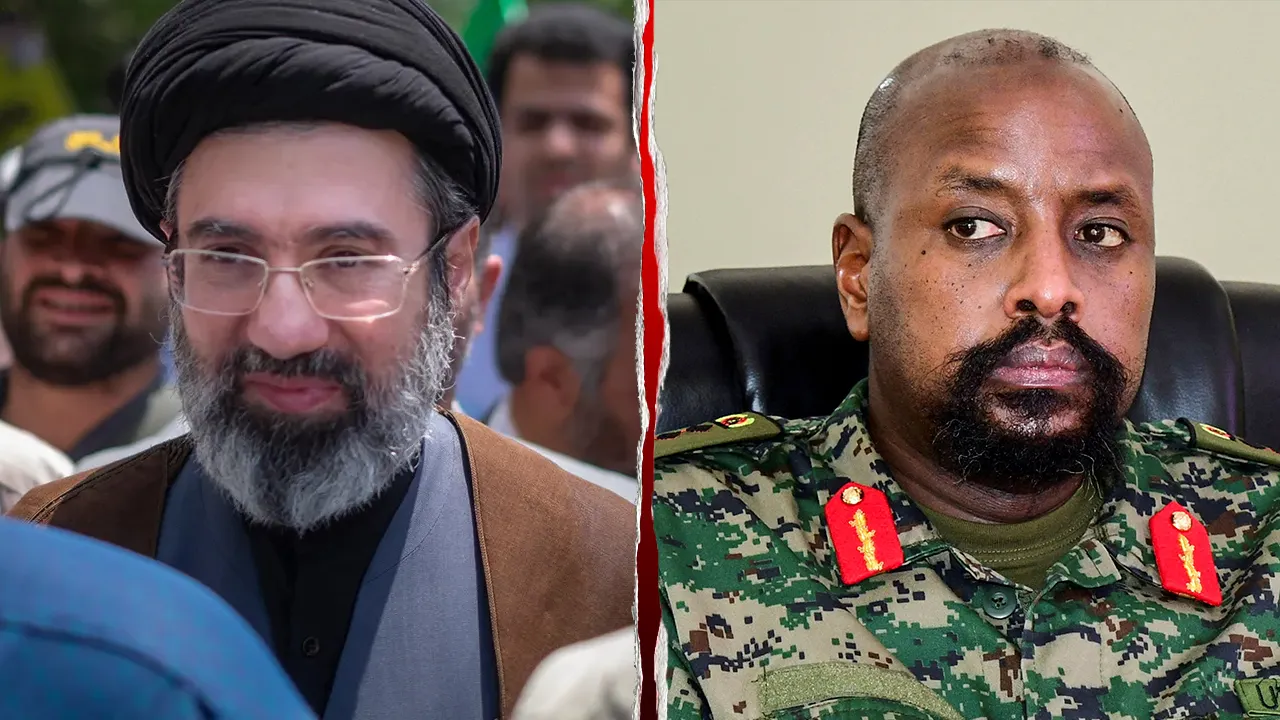
General Muhoozi Kainerugaba, son of Ugandan President Yoweri Museveni and widely considered his likely successor, made a series of bold statements on social media this week pledging Uganda’s military support to Israel amid ongoing regional tensions.
“We want the war in the Middle East to end now. The world is tired of it. But any talk of destroying or defeating Israel will bring us into the war. On the side of Israel!” Kainerugaba wrote, initiating what would become a barrage of pro-Israel posts.
The general, who leads the Uganda People’s Defense Force (UPDF), framed his country’s position in both religious and historical terms. “We stand with Israel because we are Christians,” he stated, later adding, “Uganda is the David that was forgotten and neglected by the world. We will defeat the giant, Goliath.”
Uganda’s military consists of approximately 45,000 active personnel and 35,000 reserves, according to its defense ministry. The nation maintains a considerable arsenal, estimated to include 240 tanks and over 1,000 armored fighting vehicles, representing one of the more significant military forces in East Africa.
This is not Uganda’s first international military engagement. The country currently deploys troops as part of the African Union mission combating al-Shabab terrorists in Somalia and maintains operations in eastern Democratic Republic of Congo against Islamic State-affiliated ADF militants.
The historical relationship between Uganda and Israel has experienced significant transformation over decades. During the 1970s under dictator Idi Amin, relations were hostile. In 1976, this tension culminated in a pivotal moment when terrorists hijacked Air France Flight 139 en route from Tel Aviv to France, diverting it to Uganda’s Entebbe Airport.
Israel mounted a daring rescue mission, later named Operation Yonatan after its commander, Lieutenant Colonel Yonatan Netanyahu—elder brother of current Israeli Prime Minister Benjamin Netanyahu—who was killed by Ugandan forces during the raid. While the mission successfully rescued 106 mostly Israeli hostages, it resulted in the deaths of four hostages, seven hijackers, and 45 Ugandan soldiers.
In a remarkable gesture of reconciliation, Kainerugaba announced plans to erect a statue of Yonatan Netanyahu at the exact location in Entebbe Airport where he fell. The general posted what he called “a sneak peek” of the statue on social media this week.
The present-day relationship between Uganda and Israel appears to rest on solid strategic foundations. “Israel stood with us when we were nobodies in the 1980s and 1990s,” Kainerugaba noted. “Why wouldn’t we defend her now that our GDP is $100 billion? One of the largest in Africa.” Israel has reportedly trained Ugandan forces, including Kainerugaba himself, and maintains close security and intelligence cooperation with the East African nation.
While Iran has no known direct interests in Uganda, regional experts point to alleged covert Iranian operations in neighboring Kenya and Tanzania. These include suspected smuggling networks and controversial diplomatic outreaches throughout East Africa. Despite being landlocked, Uganda remains vigilant about Iran’s strategic ambitions to establish presence in the Indian Ocean and Red Sea regions.
Kainerugaba’s statements represent a rare public declaration of potential military support for Israel from an African nation, particularly at a time when much international attention has focused on criticisms of Israel’s military operations. The general’s proclamations highlight the complex web of alliances and historical relationships that continue to shape global responses to Middle East conflicts.
The Ugandan government has not issued an official statement clarifying whether Kainerugaba’s social media posts represent formal foreign policy or personal views, leaving diplomatic observers to speculate about the potential practical implications of his remarks in the volatile regional landscape.
Fact Checker
Verify the accuracy of this article using The Disinformation Commission analysis and real-time sources.

9 Comments
Uganda’s military capabilities are relatively modest compared to the major powers involved in the Middle East. It remains to be seen how impactful their involvement could be, if it materializes.
The general’s bold social media statements have certainly captured global attention. This will be an important diplomatic development to follow in the coming weeks and months.
This appears to be a high-stakes geopolitical gambit by the Ugandan military leadership. It will be crucial to monitor how it impacts the country’s diplomatic and economic ties in the months ahead.
From a mining and commodities perspective, I wonder if this could have any impact on Uganda’s relations with Iran, given Iran’s involvement in the global energy and minerals markets.
Any military entanglement between Uganda and Iran could potentially disrupt trade and investment flows in the region’s natural resource sectors.
The Ugandan general’s framing of this as a religious and historical issue is noteworthy. It suggests deeper ideological and cultural factors behind Uganda’s posture, beyond just strategic considerations.
This move could potentially escalate regional tensions and draw Uganda into a complex geopolitical conflict. The implications bear close watching.
This is certainly a bold and unexpected move by the Ugandan military leadership. I’m curious to learn more about their strategic rationale and potential implications for regional dynamics in the Middle East and Africa.
Pledging military support to Israel against Iran is a significant geopolitical decision. It will be interesting to see how this plays out on the diplomatic stage.