


Listen to the article
Ukrainian Filmmaker Captures Soviet Terror in Chilling “Two Prosecutors”
In his latest film “Two Prosecutors,” acclaimed Ukrainian director Sergei Loznitsa crafts a meticulously composed nightmare of government corruption that leaves viewers feeling as entrapped as its idealistic protagonist.
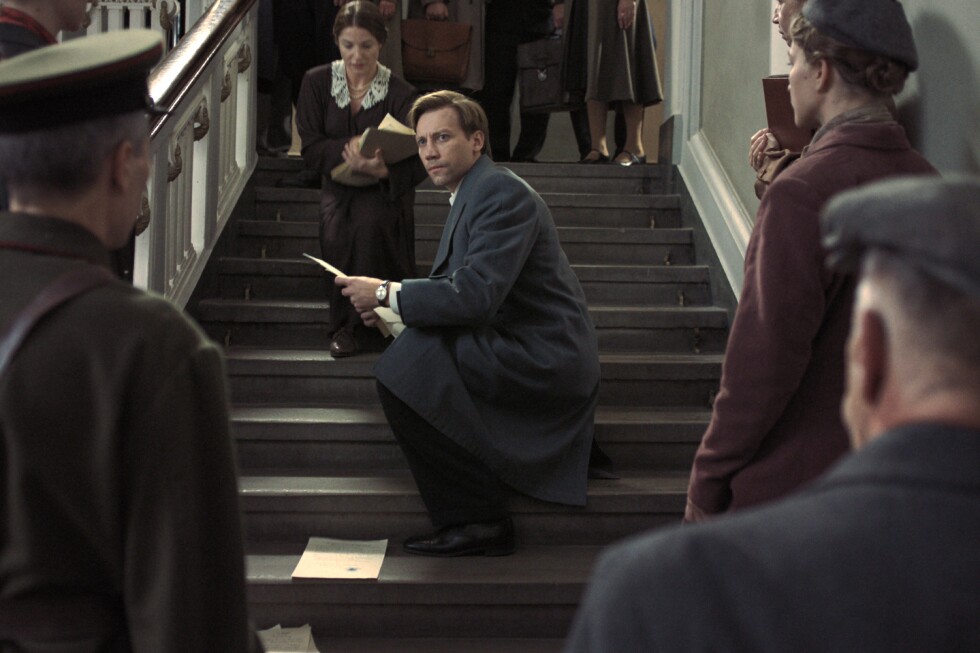
Set during Josef Stalin’s Great Purge of 1937, the film follows Alexander Kornyev (Aleksandr Kuznetsov), a newly appointed prosecutor who arrives unexpectedly at a Soviet prison in Bryansk. Armed with nothing but determination and a note written in blood from a prisoner he wishes to interview, Alexander’s unexpected appearance startles the prison warden.
The film’s opening scenes establish the oppressive atmosphere, showing prison officials burning stacks of letters from inmates documenting brutality and injustice. This era marked one of the darkest chapters in Soviet history, when the NKVD secret police rounded up suspected dissenters and Bolsheviks, sending them to prisons, gulags, or execution.
The story’s origins are particularly poignant. “Two Prosecutors” is based on a novella by Georgy Demidov, a physician who spent 14 years imprisoned in Soviet labor camps. Though written in 1969, his work wasn’t published until 2009, years after his death.
Loznitsa, who has lived in Berlin since 2001, brings his documentary filmmaker’s precision to this narrative. Known for unflinching documentaries about Ukraine (including 2024’s “The Invasion” and 2014’s “Maiden”) and Stalinist Russia (2021’s “State Funeral” and 2019’s “The Trial”), Loznitsa returns to fiction filmmaking after a seven-year hiatus. The cast includes several Russian actors, including Kuznetsov, who fled their homeland after speaking out against Vladimir Putin’s war in Ukraine.
The film, which debuted in competition at the Cannes Film Festival last year, unfolds with the measured pacing of a trap slowly closing. The first half follows Alexander’s extended journey into the prison—a labyrinth of doors, locks, and stone-faced guards. Each advancement deeper into the facility comes with ominous warnings about his predecessor’s fate and suggestions to reconsider his mission.
When Alexander finally reaches prisoner I.S. Stepniak (powerfully portrayed by Aleksandr Filippenko), he discovers another former prosecutor. Stepniak, a Bolshevik with a bruised body testifying to his mistreatment, relates his harrowing story and details of Stalin’s crackdown. His motivation transcends personal justice—he wants the truth exposed.
Recognizing that local officials cannot be trusted, Alexander travels to Moscow to report directly to the chief prosecutor. In the capital, he encounters bureaucratic barriers as formidable as those in the prison, with “Two Prosecutors” cleverly structured as a sinister palindrome. His second passage through totalitarian bureaucracy mirrors the first, as he secures a meeting with prosecutor Andrey Vyshinsky (Anatoliy Beliy).
By this point, viewers understand that Alexander’s whistleblowing efforts are doomed, and he is unwittingly orchestrating his own downfall. The walls of the system literally and figuratively close in around him.
Beyond its historical setting, “Two Prosecutors” resonates as a timeless parable reminiscent of Gogol—a universal story of naive courage confronting fascism. Loznitsa’s stark visual style and deliberate pacing create an atmosphere of mounting dread that speaks to any era where truth challenges power.
The film serves as both a historical account of Stalinist terror and a sobering reminder of how authoritarian systems function. Its relevance extends beyond the Soviet era, reflecting contemporary concerns about state power, suppression of dissent, and the price paid by those who challenge corruption.
“Two Prosecutors,” distributed by Janus Films and now playing in theaters, runs 118 minutes. The Russian and Ukrainian language film has not been rated by the Motion Picture Association.
Fact Checker
Verify the accuracy of this article using The Disinformation Commission analysis and real-time sources.

6 Comments
Capturing the oppressive atmosphere of that era through the prison setting and burnt inmate letters sounds like an impactful cinematic approach. I’ll have to add this film to my watchlist.
Demidov’s own experience lends a powerful authenticity to the story. Adapting little-known works like this can shed much-needed light on overlooked historical tragedies.
Chilling to think about the NKVD rounding up so-called dissenters and Bolsheviks during the Great Purge. This film must offer a sobering look at the abuse of power and injustice of that time.
It’s crucial that these stories continue to be told, lest we forget the horrors of totalitarian regimes. Kudos to Loznitsa for bringing this history to the screen.
Fascinating look into the horrors of Stalin’s purges. Loznitsa’s film sounds like a harrowing but important historical drama. I’m intrigued to learn more about this dark chapter in Soviet history.
The personal story behind the novella makes it even more compelling. These firsthand accounts are crucial for understanding the human cost of such oppressive regimes.