


Listen to the article
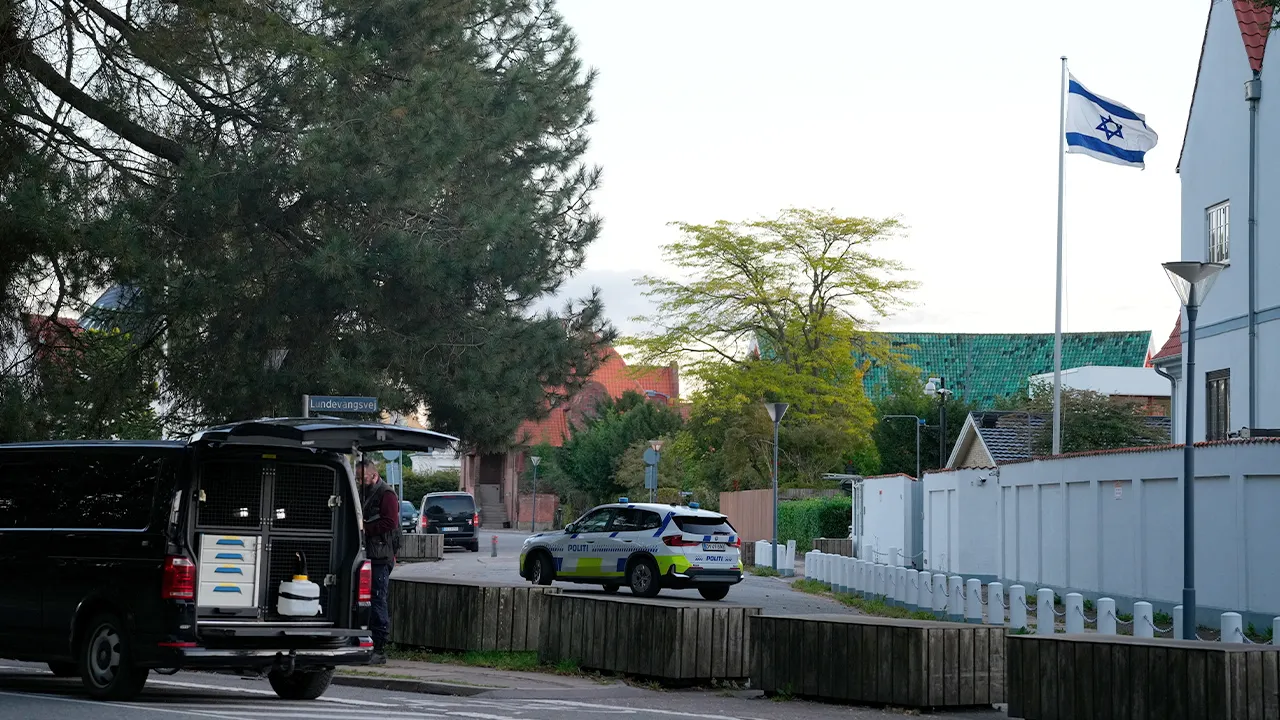
Two Swedish nationals have been convicted of terrorism and attempted murder by a Danish court for detonating hand grenades near the Israeli Embassy in Copenhagen last year. The attack, which occurred on October 2, 2024, resulted in prison sentences of 12 years for an 18-year-old defendant and 14 years for his 21-year-old accomplice.
According to reports from The Associated Press, citing Swedish news agency TT, the two men admitted to throwing the grenades but denied being ideologically motivated, claiming they carried out the attack for financial gain. Prosecutors alleged the pair were operating on behalf of an organized criminal gang.
The grenades detonated on the terrace of a residential building occupied by a family with children. Fortunately, no injuries were reported from the blasts. A nearby Jewish school, Carolineskolen, was closed at the time of the attack.
Court proceedings revealed a split decision on the terrorism charges. Two judges and four jurors concluded that the defendants were guilty of terrorism, while one judge and two jurors disagreed with this classification, highlighting the complex legal determinations in terrorism cases.
The attack came during a period of heightened tensions in the Middle East. By October 2024, the Israel-Gaza conflict had been ongoing for nearly a year following Hamas’ attack on Israel on October 7, 2023, which resulted in 1,200 deaths and 251 hostages taken. The war had triggered international debates about the proportionality of Israel’s military response in Gaza.
Security experts note that diplomatic missions, particularly those of Israel, have faced increased threats across Europe in recent years. The Copenhagen attack represents one of the most serious physical assaults on Israeli diplomatic interests in Scandinavia, a region traditionally known for its stability and security.
Denmark, which has a small but well-established Jewish community dating back centuries, has previously experienced antisemitic violence. In 2015, a gunman attacked a synagogue in Copenhagen, killing a security guard during a broader terrorist incident that also targeted a free speech event.
The conviction comes amid growing concerns about cross-border criminal activity between Sweden and Denmark. Swedish gang violence has increasingly spilled over into neighboring countries, with criminal networks exploiting the relative ease of movement between Scandinavian nations.
Swedish authorities have been battling rising gang violence domestically for years, with criminal networks often recruiting younger members to carry out high-risk operations. The ages of the convicted men – 18 and 21 – align with this troubling pattern of youth involvement in serious organized crime.
The case has prompted calls for enhanced security cooperation between Nordic countries and raised questions about the effectiveness of existing anti-radicalization programs. It also highlights the complex intersection of criminal networks and potential extremist motivations.
The Israel-Gaza war eventually concluded in October 2025 with a peace agreement negotiated under the Trump administration. However, the diplomatic and security implications of the conflict continue to reverberate globally, including in countries far from the Middle East.
Danish officials have not commented on whether additional security measures will be implemented around diplomatic facilities following the incident, but the case underscores the ongoing challenges in protecting foreign missions in an era of unpredictable threats.
Fact Checker
Verify the accuracy of this article using The Disinformation Commission analysis and real-time sources.

20 Comments
This incident highlights the ongoing threats facing Jewish communities and institutions worldwide. I hope the Danish authorities continue to work closely with the Israeli government and other partners to enhance security and prevent future attacks.
You’re right, the targeting of Jewish sites is especially troubling. Effective cooperation between nations and with local communities is crucial to addressing these complex security challenges.
Attacks near diplomatic missions are particularly concerning. I’m glad no one was physically harmed, but the psychological impact on the community must be significant. Hopefully the courts’ decisions bring some measure of justice.
You raise a good point. Even when no one is physically injured, these kinds of attacks can have lasting traumatic effects. Providing robust security and support services is crucial.
This incident serves as a reminder of the persistent security risks facing Israel and its diplomatic missions abroad. I hope Denmark and its allies work closely to strengthen protective measures and intelligence sharing.
You make a good point. Attacks on Israeli targets often have broader geopolitical implications. Robust international cooperation is essential to counter these threats effectively.
It’s good to see the perpetrators facing substantial prison sentences. However, the threat of terrorism remains, and we must stay vigilant to protect vulnerable communities and infrastructure.
Absolutely. Even with convictions, the work of preventing future attacks and addressing the underlying drivers of extremism must continue. Sustained efforts on multiple fronts are required.
The split decision on the terrorism charges highlights the legal complexities involved. Determining intent and ideology can be challenging, but public safety must remain the top priority.
Agreed, these cases often involve nuanced legal arguments. Balancing justice, public safety, and civil liberties is an ongoing challenge for the courts.
While the financial motive is unusual, the use of explosives is always deeply troubling. I hope the Danish authorities continue to investigate the full extent of this criminal network and its connections.
Yes, the financial angle raises many questions. Were the perpetrators acting alone or as part of a larger organized crime syndicate? Uncovering the full scope of the plot will be important.
This is a disturbing incident. I hope the victims and their families receive the support they need. It’s crucial that we address the root causes of terrorism to prevent such attacks in the future.
Agreed, terrorism is a complex issue with no easy solutions. Prosecuting the perpetrators is important, but we must also invest in community programs and conflict resolution to address the underlying factors.
While the financial motive is unusual, the perpetrators’ actions still qualify as terrorism under Danish law. The court’s decision to impose lengthy sentences reflects the seriousness of the offense.
Exactly. Terrorism is defined by the nature of the act, not necessarily the underlying motivation. The court has sent a clear message that such attacks will be met with firm consequences.
The split decision on the terrorism charges is interesting. It suggests that even with clear evidence, the legal determination of intent and ideology can be nuanced and contested. Continued refinement of anti-terrorism laws may be warranted.
That’s a good observation. The legal framework must keep pace with evolving tactics and motivations. Ensuring a consistent and robust approach to prosecuting such crimes is an ongoing challenge.
The use of grenades in a residential area is particularly alarming. I’m relieved no one was physically harmed, but the potential for catastrophic casualties is clear. Tighter controls on explosives must be a priority.
I agree, the use of such indiscriminate weapons in a populated area is deeply concerning. Strengthening regulations and enforcement around dangerous materials should be a key focus.