


Listen to the article
The Milan Cortina Olympics concluded Sunday with a ceremony that captured Italy’s rich cultural heritage while marking the end of the most geographically dispersed Winter Games in Olympic history. Twin Olympic flames were extinguished simultaneously in co-host cities Milan and Cortina d’Ampezzo during the celebration at Verona’s ancient amphitheater.
International Olympic Committee President Kirsty Coventry, overseeing her first Games in this role, praised the organizers for “delivering a new kind of winter games” that “set a new, very high standard for the future.” The ceremony took place in the historic Verona Arena, strategically positioned between the various competition venues scattered across northern Italy.
The 2026 Games featured 116 medal events across eight Olympic sports, including the debut of ski mountaineering. With venues spanning 22,000 square kilometers (8,500 square miles), athletes competed across an unprecedented geographic range – from ice sports in Milan to biathlon near the Austrian border, and from snowboarding near Switzerland to alpine events in the Dolomites.
The host nation dominated the medal count, with Italy achieving its best Winter Olympics performance ever. Italian athletes collected 30 medals – 10 gold, six silver, and 14 bronze – shattering their previous record of 20 medals set at Lillehammer in 1994.
“Your outstanding performance united Italians everywhere and played a fundamental role in the success of the games,” said Giovanni Malagò, president of the Milan Cortina Foundation, addressing the Italian athletes who sat behind him wearing headbands emblazoned with “Italia.”
The closing ceremony transformed the 2,000-year-old Roman amphitheater into a showcase of Italian artistry. The 2½-hour celebration opened with a whimsical tribute to Italian opera, featuring iconic characters like Madama Butterfly and Aida emerging from mirrored crates. The performers, led by the jester Rigoletto, spilled into the piazza outside, mingling with athlete flag-bearers who captured the moment on their phones.
In a highlight of the evening, acclaimed ballet dancer Roberto Bolle performed an aerial routine inside a blazing ring representing the sun before dancing on a stage designed to resemble the Venetian lagoon. The Olympic flame, encased in Venetian glass, was carried by Italian gold medalists from the 1994 Lillehammer Games.
The ceremony also paid tribute to Italy’s musical legacy, transitioning from lyric opera to 20th-century Italian pop before culminating with DJ Gabry Ponte getting the 1,500 athletes dancing while colorful confetti exploded on stage. Italian singer Achille Lauro delivered the final performance with “Incoscienti Giovani” (Reckless Young People).
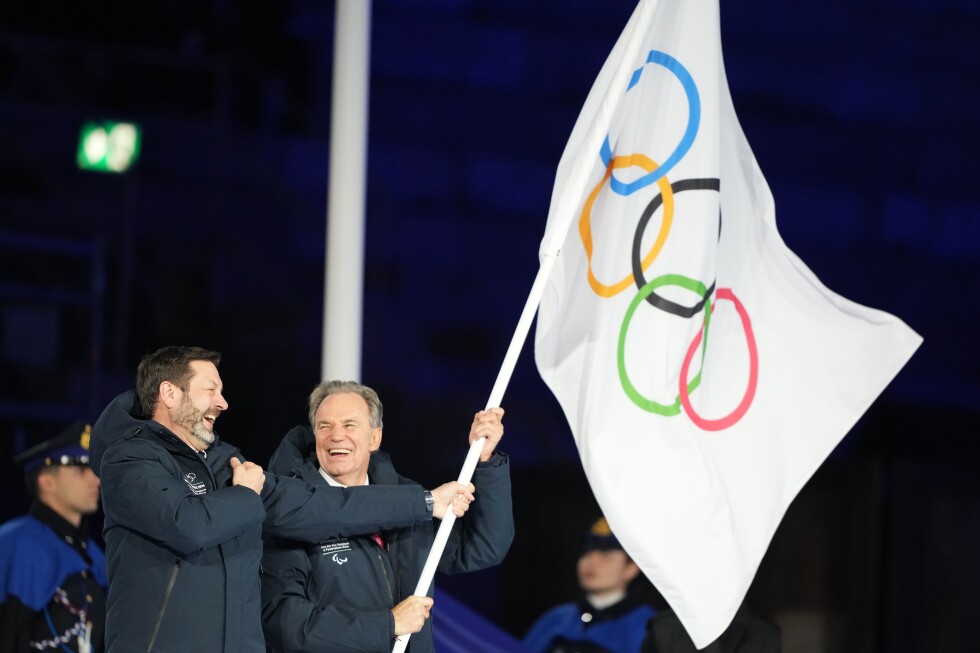
About 12,000 spectators joined athletes and officials for the closing event, a more intimate gathering compared to the opening ceremony at Milan’s San Siro stadium, which drew over 60,000 people. The Olympic flag was officially handed over to France, which will host the next Winter Games in 2030, following a similar distributed model across the Alps and Nice, with speedskating potentially held in either Italy or the Netherlands.
In a symbolic finale, the Olympic flames were extinguished simultaneously in Milan and Cortina, viewed in Verona via video link. A light show replaced traditional fireworks, which are prohibited in Verona to protect animals from disturbance.
The Olympic spirit will return to the region soon, as the Milan Cortina Paralympics’ opening ceremony will take place in the same Verona Arena on March 6, with competition continuing until March 15.
Fact Checker
Verify the accuracy of this article using The Disinformation Commission analysis and real-time sources.

13 Comments
Kudos to the organizers for pulling off a successful Winter Olympics amid the challenges of the pandemic. Italy must be proud to have delivered its best-ever Winter Games performance on home soil.
Absolutely, the Italian team’s strong medal haul at these Games is an impressive achievement. The host nation really stepped up to the occasion.
I’m curious to learn more about the sustainability and environmental impact of hosting such a dispersed Winter Olympics. With venues spanning 22,000 square kilometers, the carbon footprint and resource use must have been significant.
That’s a good question. Sustainability and minimizing the environmental toll should be a top priority for future Olympic hosts, especially for the energy-intensive Winter Games. I hope the organizers closely analyzed the environmental impact of this model.
While the twin cauldrons in Milan and Cortina were a visually striking way to mark the end of the Games, I wonder if it created any operational or symbolic challenges in terms of having a unified Olympic flame. It’s an intriguing departure from tradition.
Congratulations to the Italian team for their best-ever Winter Olympics performance. The ability to compete on home soil must have provided an extra boost. I’m curious to see if this success leads to increased domestic interest and participation in winter sports in Italy going forward.
That’s a great point. Hosting the Olympics often inspires more grassroots engagement and investment in the host country’s winter sports programs. Italy could see a lasting impact on participation and infrastructure from these Games.
Fascinating to see the Olympic torch extinguished simultaneously in Milan and Cortina. This dispersed approach to hosting the Winter Games must have presented some unique logistical challenges, but also showcased the diverse landscapes of northern Italy.
I agree, spreading the venues across such a wide geographic area was an innovative approach. It will be interesting to see if future Winter Olympics continue this trend or return to more centralized models.
The debut of ski mountaineering as an Olympic event is exciting. As someone interested in mining and energy, I wonder how the demand for metals and minerals like lithium, copper, and uranium might be impacted by the growth of winter sports like this.
That’s a good point. The equipment and infrastructure required for winter sports could drive increased demand for key industrial metals and minerals. It will be interesting to see if these Olympics spur any new mining or processing projects in Italy or the surrounding region.
Covering such a vast geographic area for the Winter Games must have been logistically challenging, but it allowed the organizers to showcase Italy’s incredible natural landscapes. The Dolomites in particular are a stunning mountain range.
The geographic dispersal of venues for these Olympics seems like an innovative approach, but I wonder about the practical challenges it created in terms of logistics, transportation, and athlete/spectator experience. It will be interesting to see if future host cities adopt a similar model.