


Listen to the article
U.S. Military Buildup Against Iran Differs Fundamentally From 2003 Iraq War Preparations
As tensions escalate with Iran, the United States has deployed significant military assets to the Middle East, prompting comparisons to the 2003 Iraq War buildup. However, military experts and former officials emphasize that despite superficial similarities in scale, today’s force posture reveals fundamentally different strategic intentions.
In early 2003, the U.S. assembled over 300,000 personnel in the region, supported by approximately 1,800 coalition aircraft and multiple Army and Marine divisions positioned in Kuwait and Saudi Arabia. That deployment was explicitly designed for invasion, regime change, and subsequent occupation.
“I believe there is absolutely no intention to put ground forces into Iran. So the buildup is very different,” retired Gen. Philip Breedlove, former NATO Supreme Allied Commander Europe, told Fox News Digital. “What is happening is that both firepower and supplies are being moved to the right places… Amateurs talk tactics; professionals talk logistics. And right now we are getting logistics right, not only in the form of shooters but supplies to sustain an effort.”
The most notable distinction between the two military postures is the absence of massed ground forces today. Instead, the current deployment emphasizes naval and air capabilities, centered around carrier strike groups and long-range precision weapons.
John Spencer, executive director of the Urban Warfare Institute, explained that while both operations share coercion as a strategic objective, they differ significantly in execution. “In 2003, the United States assembled a ground-centric force built for regime removal, territorial seizure and occupation,” Spencer said. “Today’s posture is maritime and air-heavy, centered on carrier strike groups, long-range precision strike and layered air defense.”
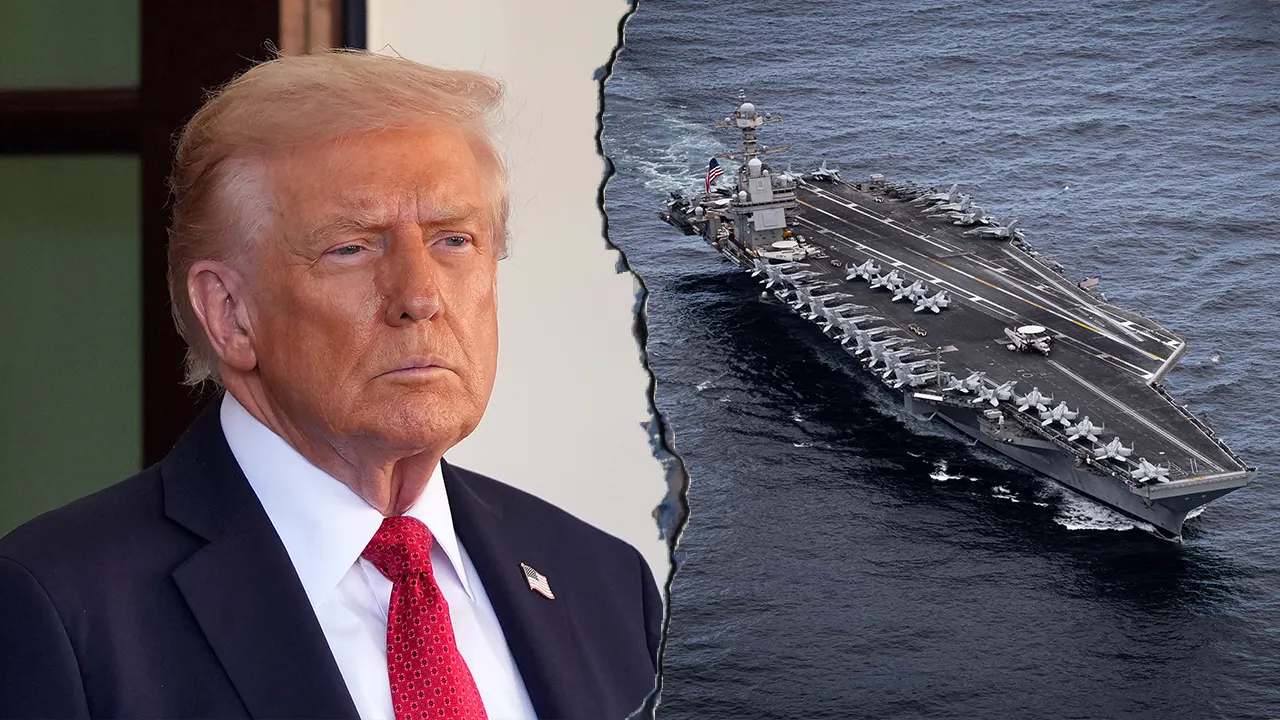
The current deployment includes two aircraft carrier battle groups – the USS Gerald R. Ford and another carrier – along with dozens of aircraft stationed at regional bases and advanced air and missile defense systems. These assets complement existing capabilities at Al Udeid Air Base in Qatar, Diego Garcia in the Indian Ocean, and other strategic locations.
Javed Ali, associate professor at the University of Michigan’s Ford School and former senior counterterrorism official, noted that these deployments provide significant military options should the president authorize action. Any operations would likely target Iran’s clerical establishment, senior Islamic Revolutionary Guard Corps officials, ballistic missile and drone facilities, and nuclear infrastructure.
The legal foundations for military action also differ significantly. The 2003 Iraq War operated under a congressional Authorization for Use of Military Force and enjoyed support from a broad international coalition that included substantial British forces. Currently, no similar AUMF exists for potential operations against Iran, which could lead the president to invoke Article II constitutional authorities as Commander in Chief.
Breedlove suggested the incremental deployment of carriers and air assets appears designed to increase diplomatic pressure rather than trigger immediate conflict. “We brought in one carrier battle group that did not change the rhetoric in Iran… so now the president has started sailing a second carrier battle group to the area. I think all of these things are increasing the pressure slowly on Iran to help them come to the right decision… Let’s sit down at the table and figure this out.”
Despite these distinctions, analysts warn that escalation carries substantial risks. Iran could respond with ballistic missile attacks at greater intensity than previous strikes, alongside drone operations, cyberattacks, and disruption of maritime traffic in the Persian Gulf.
Breedlove emphasized the importance of learning from Iraq’s lessons, particularly regarding post-conflict planning. “We want to have a clear set of objectives… we do not want to enter an endless sort of battle with Iran… we need to have a plan for what’s day plus one,” he cautioned.
Military analysts summarize the distinction succinctly: the 2003 deployment created an invasion architecture, while today’s forces form a deterrence and strike architecture optimized for air superiority, precision attacks, and naval operations—not for occupying territory. Whether this approach successfully brings Iran back to negotiations without triggering open conflict depends less on force numbers and more on how each side calculates the costs of escalation.
Fact Checker
Verify the accuracy of this article using The Disinformation Commission analysis and real-time sources.

12 Comments
Interesting analysis. Seems the current military buildup is more about deterrence and pressure tactics rather than full-scale invasion. Curious to see how this Iran situation plays out.
Agreed, the logistics focus suggests a more limited, contained approach compared to the 2003 Iraq war buildup. Curious to see if diplomatic efforts can deescalate tensions.
This is a delicate situation that requires a measured response. Rushing into another conflict in the Middle East could have disastrous consequences. Hopefully cooler heads will prevail.
Well said. De-escalation and diplomacy should be the priority here, not a rush to military action. Careful planning and logistics are key.
Solid analysis from the experts. The current military posture seems designed more for deterrence and pressure than outright regime change. Curious to see if Iran responds to the show of force.
Agreed. This feels more like a calculated attempt at coercion rather than a full-scale war plan. Diplomatic resolution should still be the priority.
The focus on logistics over combat forces is an interesting distinction. Suggests the US is aiming for a more limited, targeted approach compared to the Iraq invasion. Curious to see how Iran responds.
Good point. This seems less about conquest and occupation, and more about projecting power and pressuring Iran. Diplomacy will be key to avoid further escalation.
The comparison to the Iraq war buildup is an interesting one. While the scale may be similar, the strategic objectives seem quite different this time around. Curious to see how this all plays out.
That’s a good point. The focus on logistics over combat forces suggests a more limited, targeted approach versus a full-scale invasion. Diplomacy will be crucial here.
Thoughtful analysis from the experts. The current military buildup does seem quite different in scope and intent compared to the Iraq war preparations. Curious to see how this Iran situation unfolds.
Agree, the logistics-heavy approach implies a more limited, targeted strategy versus a full-scale invasion. Diplomatic efforts will be crucial to finding a peaceful resolution.