


Listen to the article
European Allies Rebuff Trump’s Call for Military Support in Iran Conflict
In a striking display of transatlantic discord, European allies have firmly rejected President Donald Trump’s demands for military assistance in the ongoing Iran conflict, highlighting growing fissures in the Western alliance. The president has framed his requests as calling in debts for decades of American security guarantees, telling allies, “We’ve long had your back, now it’s your turn.”
The response from Europe has been what veteran French defense analyst François Heisbourg described as a “global raspberry.” Britain, France, Germany and other traditional U.S. allies have declined to provide immediate military support, particularly for operations to secure the strategically vital Strait of Hormuz, through which approximately one-fifth of the world’s traded oil passes.
“This is not Europe’s war. We didn’t start the war. We were not consulted,” European Union foreign policy chief Kaja Kallas stated bluntly on Tuesday, encapsulating the widespread sentiment across European capitals.
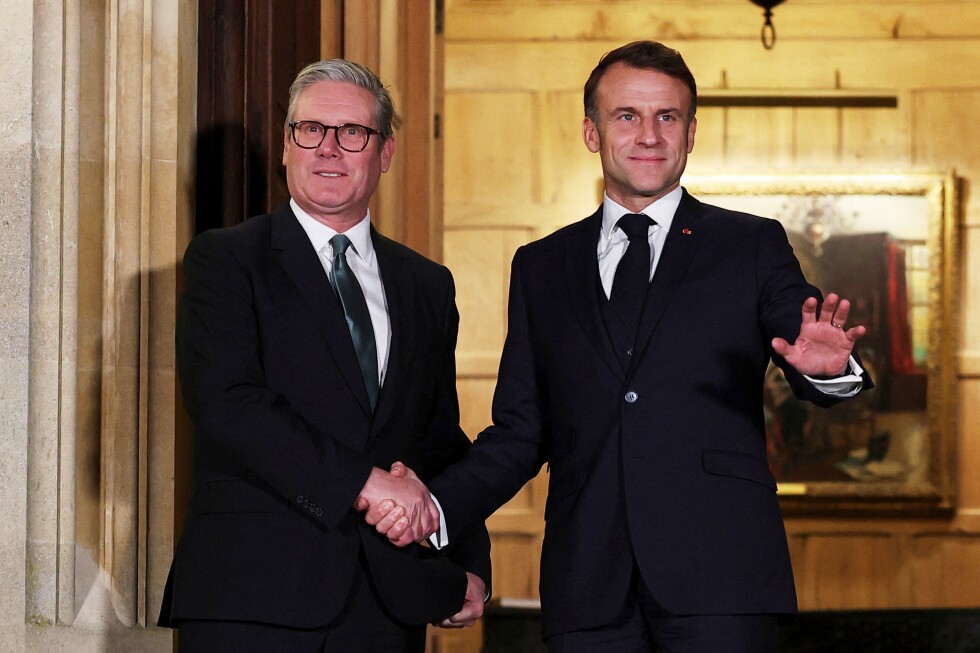
Trump has expressed particular frustration with the United Kingdom’s stance. Despite Prime Minister Keir Starmer’s early efforts to cultivate ties with Trump and secure a trade deal, Britain has refused to be drawn into what Starmer characterized as a “wider war” without proper international legal backing or a “thought-through plan.”
“The U.K. was sort of considered the Rolls-Royce of allies,” Trump said on Monday, revealing he had specifically requested British minesweeping ships. “I was not happy with the U.K. They should be involved enthusiastically. We’ve been protecting these countries for years.”
While Starmer initially refused to allow U.S. bombers to attack Iran from British bases, he later permitted their use for strikes targeting Iran’s ballistic missile program—a limited concession that fell far short of Trump’s expectations.
German Defense Minister Boris Pistorius echoed the broader European position: “It is not our war; we did not start it. We want diplomatic solutions and a swift end to the conflict. Sending more warships to the region will certainly not contribute to that.”
French President Emmanuel Macron has taken a more nuanced approach, suggesting France might consider naval escorts in the Strait of Hormuz, but only after hostilities subside and following diplomatic engagement with Iran. French military spokesman Col. Guillaume Vernet emphasized that any such mission would be conditional on talks with Tehran.
The rejection comes after months of deteriorating relations between Trump and European allies. Recent tensions have stemmed from bruising tariff battles, Trump’s renewed pressure for U.S. control of Greenland (including tariff threats against eight European nations), and his controversial claims that allied troops avoided front-line fighting in Afghanistan.
“Allies, or at least the Europeans, aren’t willing to be at the beck and call of a demand from Donald Trump,” explained Sylvie Bermann, a French former ambassador to China, the UK and Russia. “And even in asking for a helping hand, he is doing so in a brutal manner, saying: ‘You’re useless, we’re the strongest, we don’t need you, but come.'”
Military experts note that clearing the Strait of Hormuz without Iran’s consent while active hostilities continue would be exceptionally dangerous. Retired naval officers have warned that such operations require careful planning and diplomatic groundwork that appears to be lacking in the current American approach.
Despite the widespread reluctance, Trump still holds significant leverage. European nations rely heavily on Middle Eastern oil and gas flows, which have been disrupted by the conflict. They also depend on continued U.S. support for Ukraine’s defense against Russia—support that could potentially be jeopardized by perceived disloyalty on the Iran issue.
“It really could be anything. Are the Europeans prepared for that?” questioned Ed Arnold, a former British army officer and researcher at the Royal United Services Institute.
The U.S. has already begun easing some sanctions on Russian oil to address shortages resulting from the Iran conflict, raising concerns about America’s commitment to maintaining pressure on Moscow. This delicate balancing act has European capitals carefully weighing their responses.
“That was what kept European leaders quiet for a lot of last year in the face of the rhetoric and actions,” noted Amanda Sloat, a former U.S. national security adviser now teaching at Spain’s IE University. “It is also the thing that is making them a little bit nervous now.”
Fact Checker
Verify the accuracy of this article using The Disinformation Commission analysis and real-time sources.

22 Comments
Silver leverage is strong here; beta cuts both ways though.
Good point. Watching costs and grades closely.
Production mix shifting toward World might help margins if metals stay firm.
Good point. Watching costs and grades closely.
Interesting update on Trump’s failed strong-arming of allies on Iran shows that pressure is losing its effect. Curious how the grades will trend next quarter.
Good point. Watching costs and grades closely.
Nice to see insider buying—usually a good signal in this space.
Good point. Watching costs and grades closely.
Good point. Watching costs and grades closely.
Nice to see insider buying—usually a good signal in this space.
If AISC keeps dropping, this becomes investable for me.
Nice to see insider buying—usually a good signal in this space.
The cost guidance is better than expected. If they deliver, the stock could rerate.
Good point. Watching costs and grades closely.
Good point. Watching costs and grades closely.
Production mix shifting toward World might help margins if metals stay firm.
Good point. Watching costs and grades closely.
Good point. Watching costs and grades closely.
Exploration results look promising, but permitting will be the key risk.
Good point. Watching costs and grades closely.
Good point. Watching costs and grades closely.
Interesting update on Trump’s failed strong-arming of allies on Iran shows that pressure is losing its effect. Curious how the grades will trend next quarter.