


Listen to the article
More Countries Join Trump’s Board of Peace as Israel Objects to Gaza Plan
The European Union, Russia, Belarus, and Thailand have become the latest entities invited to join U.S. President Donald Trump’s new Board of Peace, which will oversee the next phase of the Gaza peace plan. The initiative has sparked controversy, with a top Israeli official calling it “bad for Israel” and demanding its termination.
Kremlin spokesman Dmitry Peskov confirmed that Russian President Vladimir Putin received an invitation and is currently “studying the details” while seeking clarity on “all the nuances” through contacts with the United States. The Thai Foreign Ministry likewise acknowledged receiving an invitation and is reviewing it. Belarus President Alexander Lukashenko was also invited and is reportedly ready to participate, according to the country’s Foreign Ministry.
European Commission spokesperson Olof Gill confirmed that Commission President Ursula von der Leyen received an invitation and would be consulting with other EU leaders about Gaza. While Gill didn’t confirm whether the invitation had been accepted, he noted that the commission wants to “contribute to a comprehensive plan to end the Gaza conflict.”
The scope of the board appears ambitious, with Trump’s invitation letters suggesting it would “embark on a bold new approach to resolving global conflict.” This language indicates the body could potentially function as a rival to the UN Security Council, established after World War II as the world’s premier international security body.
The task ahead is monumental. According to a World Bank assessment released last year, rebuilding Gaza will require approximately $53 billion—an unprecedented reconstruction effort for the war-devastated territory.
Israeli officials have reacted strongly against the initiative. Far-right Finance Minister Bezalel Smotrich dismissed the Board of Peace as detrimental to Israel’s interests, calling for its cancellation. “It is time to explain to the president that his plan is bad for the State of Israel and to cancel it,” Smotrich declared at a ceremony inaugurating a new settlement in the occupied West Bank.
Smotrich, who opposed the Gaza ceasefire, went further, suggesting that Israel should “impose military administration” in Gaza and potentially renew a full-scale offensive if Hamas fails to meet a “short ultimatum for real disarmament and exile.”
Prime Minister Benjamin Netanyahu’s office also distanced itself from the initiative, stating on Saturday that the formation of the committee “wasn’t coordinated with the Israeli government and is contrary to its policy.” Notably, Israel has not been invited to join the board, while regional rival Turkey has reportedly received an invitation.
The United States is expected to announce the official list of board members in coming days, likely during the World Economic Forum meeting in Davos, Switzerland. Board members will oversee an executive committee tasked with implementing the second phase of the Gaza peace plan, which includes deploying an international security force, disarming Hamas, and reconstructing Gaza.
According to a U.S. official speaking anonymously, permanent membership requires a $1 billion contribution toward Gaza’s reconstruction, while a three-year appointment has no contribution requirement. British Prime Minister Keir Starmer indicated the UK’s willingness to participate, stating that his country has “indicated willingness to play our part, and we will.”
Meanwhile, the humanitarian situation in Gaza remains precarious. The UN World Food Program reports having “significantly expanded” operations during the 100-day ceasefire, reaching over a million people monthly with food assistance. Despite this progress, the situation remains “extremely fragile,” with 77% of Gaza’s population facing crisis-level food insecurity and over 100,000 people experiencing catastrophic hunger levels.
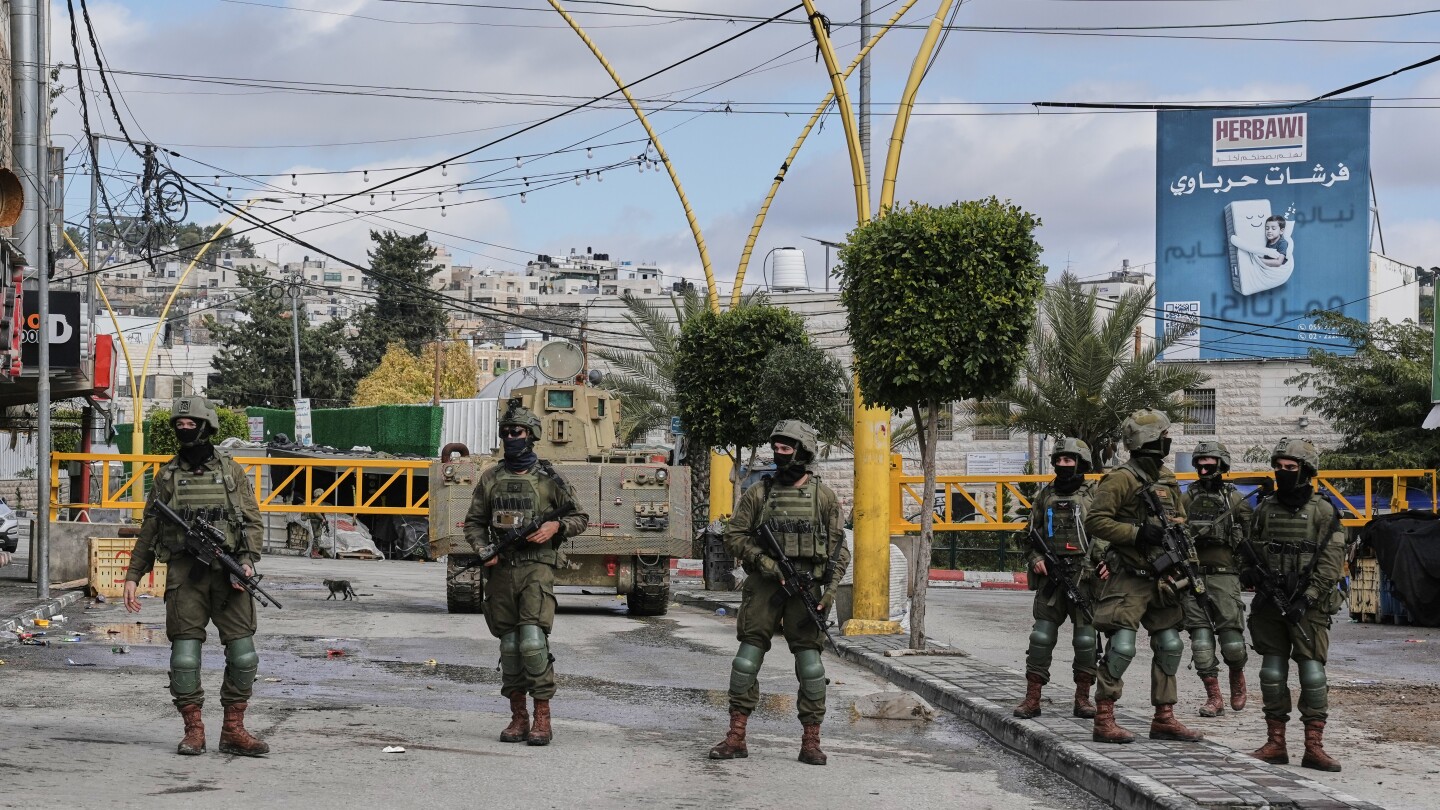
Tensions persist in the West Bank, where Israeli forces launched what they described as a “large-scale counterterrorism operation” in Hebron to dismantle “terrorist infrastructure.” Hebron Mayor Khaled Dudin claimed Israeli forces targeted the area, home to 80,000 people, to facilitate the construction of additional Israeli settlements.
Violence continues despite the ceasefire. Israeli forces killed three Palestinians, including a 17-year-old, in southern Gaza on Monday, according to hospital authorities. Since the ceasefire began three months ago, more than 460 people have been killed by Israeli fire, according to the Gaza Health Ministry.
Fact Checker
Verify the accuracy of this article using The Disinformation Commission analysis and real-time sources.

16 Comments
The involvement of Russia, Belarus, and the EU adds an intriguing international dimension to this process. I’m curious to see how they approach the discussions and whether they can help broker a more comprehensive solution for Gaza.
With Israel’s objections, the Trump administration will need to tread carefully to keep all parties engaged and build trust in the process.
With Israel’s strong objections, the Trump administration will need to carefully manage the participation of the various parties to avoid further escalating tensions in the region.
The mining and energy industries will be watching this process closely, as a stable resolution to the Gaza conflict could unlock economic opportunities in the area.
The presence of so many influential leaders on this Board raises the stakes and visibility of the Gaza peace plan. I’ll be closely following how they navigate the complex geopolitical dynamics at play.
Successful collaboration on this initiative could bolster the credibility and influence of the Board of Peace going forward.
This Board of Peace initiative seems like a complex and high-stakes endeavor. It will be interesting to see how the various invited leaders navigate the nuances and potential controversies surrounding the Gaza peace plan.
Bringing together such a diverse group of stakeholders could yield productive dialogue, but also carries the risk of clashing perspectives and competing interests.
The Trump administration’s invitation of countries like Russia and Belarus to join the Board of Peace is an intriguing geopolitical development. I’m curious to see how their participation shapes the dynamics and outcomes of this initiative.
Given the complexities of the Israeli-Palestinian conflict, the Board of Peace faces a daunting challenge in trying to broker a lasting peace agreement for Gaza.
Bringing together such a diverse group of stakeholders is a bold move, but it remains to be seen whether they can set aside their differences and find common ground on the Gaza peace plan.
Effective diplomacy and compromise will be essential if the Board of Peace hopes to achieve a sustainable solution that satisfies all parties involved.
It’s encouraging to see countries like Thailand join the Board of Peace. Their participation could provide a fresh, neutral perspective to balance the more entrenched positions of the other stakeholders.
Achieving a durable peace agreement for Gaza will require compromise and creative solutions from all involved. I hope the Board can rise to the challenge.
From a mining and commodities perspective, the Gaza peace plan could have implications for the region’s natural resources and infrastructure. I wonder how the Board of Peace will address these economic factors in their deliberations.
Stability in the region is crucial for the mining and energy industries, so a successful outcome from this initiative could have broader positive impacts.