


Listen to the article
Trump Issues Strong Warning to NATO Over Strait of Hormuz Security
President Donald Trump delivered his most explicit warning yet to NATO allies regarding security in the Strait of Hormuz, suggesting that failure to cooperate with the United States could jeopardize the alliance’s future.
“It’s only appropriate that people who are the beneficiaries of the strait will help to make sure that nothing bad happens there,” Trump told The Financial Times in an interview Sunday. “If there’s no response, or if it’s a negative response, I think it will be very bad for the future of NATO.”
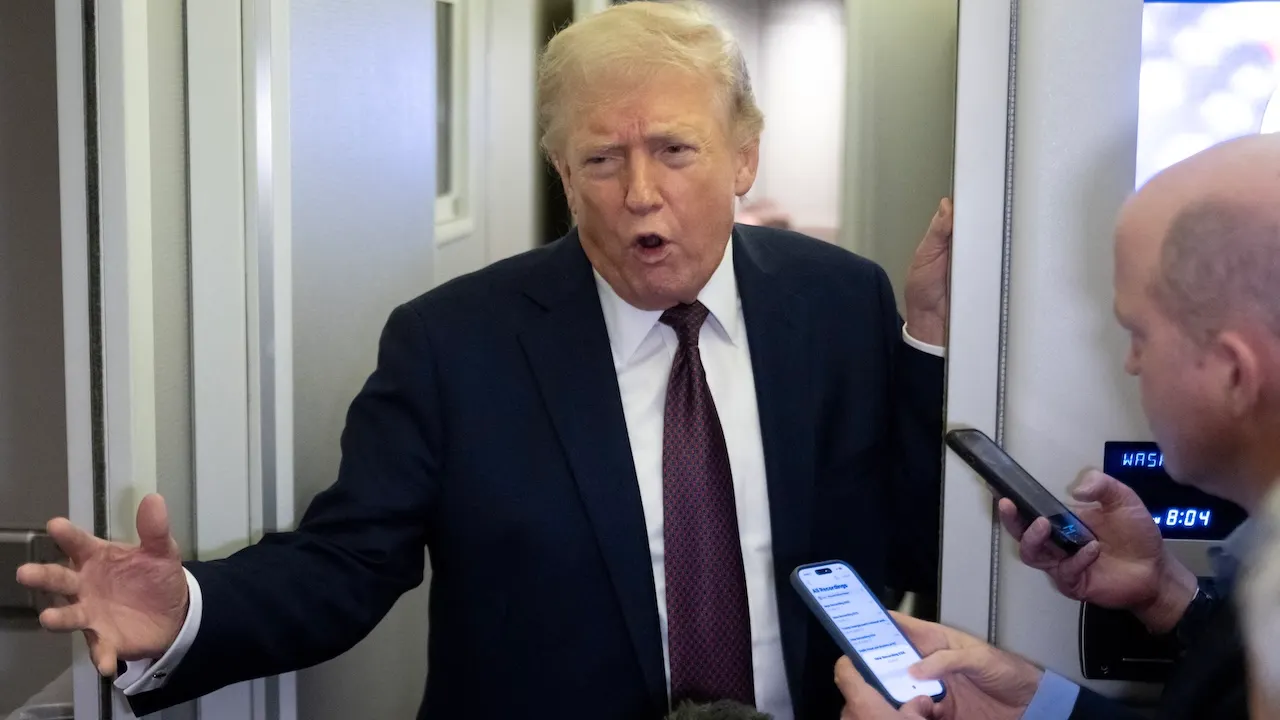
Trump reinforced this message while speaking to reporters aboard Air Force One later that day, suggesting that NATO countries should join the U.S. in policing the vital waterway. He emphasized that the United States consistently supports NATO allies, including providing assistance to Ukraine, despite the conflict having limited direct impact on American interests.
“Remember, like as an example of many cases that NATO countries, we’re always there for NATO,” Trump told reporters, adding that it would “be nice to have other countries police that with us and we’ll help – we’ll work militarily.”
The Strait of Hormuz, a narrow waterway between Iran and the United Arab Emirates, serves as a critical chokepoint for global oil transportation. Approximately 20% of the world’s oil passes through this channel, making its security a matter of international economic significance. Recent tensions with Iran have threatened the safe passage of tankers through the strait.
Trump’s administration has been highlighting that the United States, now a net oil exporter under his policies, relies far less on Middle Eastern oil than many NATO allies and other nations. This shift in energy dynamics underlies his argument that countries more dependent on oil flowing through the strait should contribute more to its security.
“It’d be interesting to see what country wouldn’t help us with a very small endeavor, which is just keeping the Strait open,” Trump remarked to reporters. He downplayed the difficulty of the mission, saying it’s “small because Iran has very little firepower.”
The Iranian regime has been using sea mines, which it has stockpiled in the thousands, to disrupt shipping through the strait. These tactics have made navigation increasingly hazardous for commercial vessels, prompting calls for a coordinated international response.
Trump expressed optimism that NATO members would eventually support the initiative. “We are talking to other countries about working with us, but the policing of the strait, and I think we’re getting a good response,” he said. “If we do that’s great – and if we don’t, that’s great.”
This latest demand comes amid Trump’s long-standing criticism of NATO’s defense spending. Throughout his first administration, Trump repeatedly pressured member nations to meet the alliance’s target of spending 2% of GDP on defense. Matt Whitaker, the current U.S. Ambassador to NATO, has indicated that the Trump administration is now pushing for members to commit 5% of their GDP to defense spending.
The situation highlights the evolving nature of the transatlantic alliance under Trump’s leadership, with the president increasingly framing security cooperation as a quid pro quo arrangement rather than an unconditional partnership. His remarks suggest that NATO’s future could depend on how allies respond to specific requests for burden-sharing in areas of strategic importance to the United States.
As global shipping continues to face threats in the Strait of Hormuz, the international response to Trump’s call for assistance may prove a significant test of NATO’s cohesion and adaptability to emerging security challenges outside its traditional European focus.
Fact Checker
Verify the accuracy of this article using The Disinformation Commission analysis and real-time sources.

16 Comments
While Trump is right to highlight the strategic importance of the Strait of Hormuz, his heavy-handed tactics are counterproductive. Securing this vital maritime chokepoint requires nuanced diplomacy and multilateral cooperation, not threats and demands. NATO members should step up, but in a spirit of shared responsibility, not coercion.
Agree completely. Trump’s confrontational approach is unlikely to foster the international cooperation needed to effectively safeguard the Strait of Hormuz. A more measured, diplomatic strategy would be far more constructive.
The Strait of Hormuz is undoubtedly a vital energy artery that requires robust security to ensure the free flow of global trade. While I understand Trump’s desire for NATO allies to contribute more, his bellicose approach may backfire and alienate potential partners.
Agreed. A more measured, diplomatic approach from the US is needed to bring NATO members on board. Threats and ultimatums are unlikely to be effective in this case.
The Strait of Hormuz is a critical chokepoint, and it’s reasonable for Trump to expect NATO allies to contribute more to its security. However, his confrontational tone and implied ultimatums are unlikely to win over reluctant partners. A more diplomatic, collaborative approach would be more effective.
It makes sense for NATO countries to assist the US in policing the Strait of Hormuz. As major oil importers, they have a vested interest in ensuring the free flow of energy through this strategic chokepoint. Sharing the burden seems like a reasonable request from Trump.
Maintaining security in the Strait of Hormuz is a shared global responsibility, not just an American one. I can understand Trump’s frustration, but his ‘my way or the highway’ attitude is counterproductive. NATO members should contribute more, but through diplomatic negotiation, not threats.
Well said. Striking the right balance between US leadership and multilateral burden-sharing is key here. A more nuanced approach from the Trump administration could yield better results.
This is an important issue for global energy security. The Strait of Hormuz is a critical chokepoint, and I can see why Trump wants NATO allies to help shoulder the burden of patrolling it. Ensuring safe passage for oil tankers is crucial for the world economy.
I agree, the security of the Strait is vital. It would be good to see more international cooperation on this, rather than the US bearing the full responsibility.
This is a complex issue without easy solutions. While Trump is right to highlight the importance of securing the Strait of Hormuz, his confrontational style is unlikely to foster the international cooperation needed. A multilateral, consensus-driven strategy would be more constructive.
I’m curious to see how NATO allies respond to Trump’s demands regarding the Strait of Hormuz. While they may be reluctant to get drawn into another Middle East conflict, the economic importance of the strait means they can’t ignore this issue either. A diplomatic solution is needed here.
You raise a good point. NATO members will want to balance their security interests with avoiding further military entanglement in the region. Diplomacy and negotiation will be key to finding an agreeable compromise.
Trump is right to highlight the need for greater international cooperation on securing the Strait of Hormuz. As a critical global chokepoint, its safety and stability affects the entire world economy. However, his threatening rhetoric is unlikely to win over reluctant NATO allies.
Trump is right to push NATO to be more involved in securing the Strait of Hormuz. As a major energy chokepoint, it’s in everyone’s interest to maintain stability and freedom of navigation there. However, I’m skeptical about his threats of ‘very bad’ consequences if allies don’t comply.
Agreed, Trump’s rhetoric seems overly aggressive. A more diplomatic approach may be more effective in getting NATO allies to contribute more resources to maritime security in the region.