


Listen to the article
Iran Rebukes Trump’s Warning on Nuclear Ambitions in State of the Union Address
Iran sharply rejected President Donald Trump’s warnings about its missile and nuclear capabilities following his State of the Union address, setting the stage for tense diplomatic negotiations as U.S. military assets gather in the Middle East.
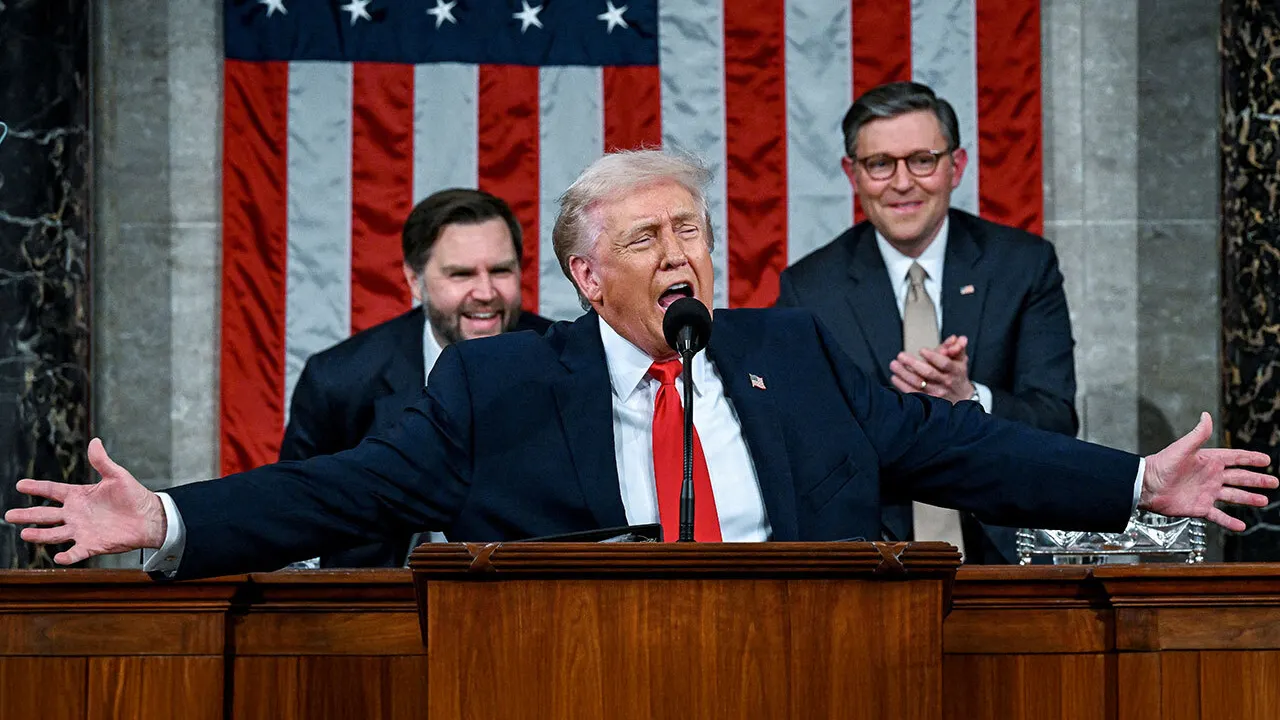
Speaking before Congress amid the largest deployment of American aircraft and warships to the region since the 2003 Iraq War buildup, Trump delivered a forceful message on Iran’s nuclear ambitions while emphasizing his preference for a diplomatic resolution.
“They’ve already developed missiles that can threaten Europe and our bases overseas,” Trump said. “And they’re working to build missiles that will soon reach the United States of America.”
The president struck a firm tone regarding Iran’s nuclear program, declaring: “My preference is to solve this problem through diplomacy. They want to make a deal. But we haven’t heard those secret words: we will never have a nuclear weapon.”
“One thing is certain,” Trump added, “I will never allow the world’s number one sponsor of terror to have a nuclear weapon. Can’t let that happen.”
Iranian officials quickly characterized Trump’s statements as propaganda, according to The Associated Press. While Tehran rejected his claims about its missile and nuclear programs, it notably stopped short of closing the door on diplomatic efforts ahead of upcoming negotiations in Geneva.
The Times of India reported that Iranian officials issued their own warning, stating that any U.S. military strike, even if described as “limited,” would be treated as aggression and met with a decisive response.
This heated exchange highlights the widening gap between public rhetoric and ongoing diplomatic efforts. The stakes remain high as representatives from both nations prepare for another round of nuclear talks in Geneva on Thursday.
Trump pointed to “Operation Midnight Hammer,” the June strike that targeted Iran’s nuclear infrastructure, claiming it had severely degraded Iran’s capabilities. Satellite imagery released after those strikes showed significant damage to facilities including the Fordow Fuel Enrichment Facility, where craters and destruction were visible at perimeter installations.
“We wiped it out and they want to start all over again and are at this moment again pursuing their sinister ambitions,” Trump said, suggesting that while the threat had been diminished, it had not disappeared.
The president’s State of the Union address also connected his Iran policy to broader regional security initiatives, including recent operations in the Western Hemisphere and campaigns against drug cartels. Trump highlighted the recent operation that killed Mexican drug lord El Mencho, citing it as evidence of America’s commitment to security across multiple fronts.
“We’re also restoring American security and dominance in the Western Hemisphere, acting to secure our national interests and defend our country from violence, drugs, terrorism, and foreign interference,” he said.
European media portrayed the speech as assertive and confrontational, with analysts closely monitoring its implications for NATO coordination, Ukraine policy, and trade relations. Trump’s emphasis on linking diplomacy with military readiness underscored his administration’s approach to international relations.
“NATO countries have just agreed, at my very strong request, to pay 5% of GDP for military defense rather than the 2%,” Trump claimed during the address, framing the purported increase as evidence of shifting burden-sharing within the alliance.
International analysts noted that while the address appeared primarily crafted for a domestic audience, it carried significant international messaging. Trump repeatedly connected American military power to deterrence, telling lawmakers the United States would “never hesitate to confront threats to America wherever we must,” while emphasizing a broader strategy of “peace through strength.”
Foreign policy experts cited in international reporting characterized the address as reinforcing a transactional approach to global security, where diplomatic engagement is presented as conditional and backed by military force.
For Tehran, Trump’s message was unmistakable as negotiations are set to resume: the nuclear issue remains non-negotiable in outcome, even if the diplomatic path remains his stated preference.
The silence from most world leaders in the immediate aftermath of Trump’s address suggests many countries are taking a wait-and-see approach, carefully calibrating their responses as tensions between Washington and Tehran continue to evolve ahead of the critical Geneva talks.
Fact Checker
Verify the accuracy of this article using The Disinformation Commission analysis and real-time sources.

11 Comments
The muted global response suggests a weariness with the ongoing tensions in the Middle East. Diplomatic efforts should focus on finding a way to address the legitimate security concerns of all stakeholders, rather than escalating the conflict.
Trump’s tough rhetoric towards Iran may be intended to pressure them, but it could also backfire and harden their position. A balanced, nuanced approach that considers Iran’s security concerns may be more constructive.
I agree. Diplomacy and mutual understanding are critical to de-escalate tensions and find a solution that addresses the concerns of all parties involved.
The muted global response suggests the international community is wary of being drawn into another conflict in the Middle East. All sides should exercise restraint and focus on diplomatic efforts to resolve this complex issue.
While Trump’s warnings about Iran’s nuclear ambitions are understandable, his approach seems to be further inflaming the situation. A more measured, diplomatic tone may be more effective in finding a peaceful resolution.
This situation highlights the complexity of Middle East geopolitics. Maintaining open communication channels and exploring creative diplomatic solutions that address the concerns of all parties involved should be the top priority.
While Trump’s tough stance on Iran’s nuclear ambitions is understandable, it’s crucial that the US and its allies pursue a measured, nuanced approach that prioritizes diplomacy and de-escalation. Unilateral actions could further destabilize the region.
Regardless of one’s political views, this situation requires careful and thoughtful handling to avoid a dangerous escalation. Maintaining open communication channels and exploring creative diplomatic solutions should be the priority.
Diplomacy and mutual understanding are key to resolving this delicate situation. Both sides should exercise restraint and focus on finding a peaceful solution that addresses the legitimate security concerns of all stakeholders.
This is a delicate geopolitical dance, and all parties involved must be willing to make compromises and concessions to find a lasting solution. Resorting to aggressive rhetoric and posturing is unlikely to produce the desired outcome.
This is a complex geopolitical situation. While Iran’s nuclear ambitions are concerning, diplomacy should be the priority to avoid further escalation. Maintaining open communication channels is key to finding a peaceful resolution.