


Listen to the article
Trump’s Rhetoric Escalates to Threats of “Annihilation” in Iran Conflict
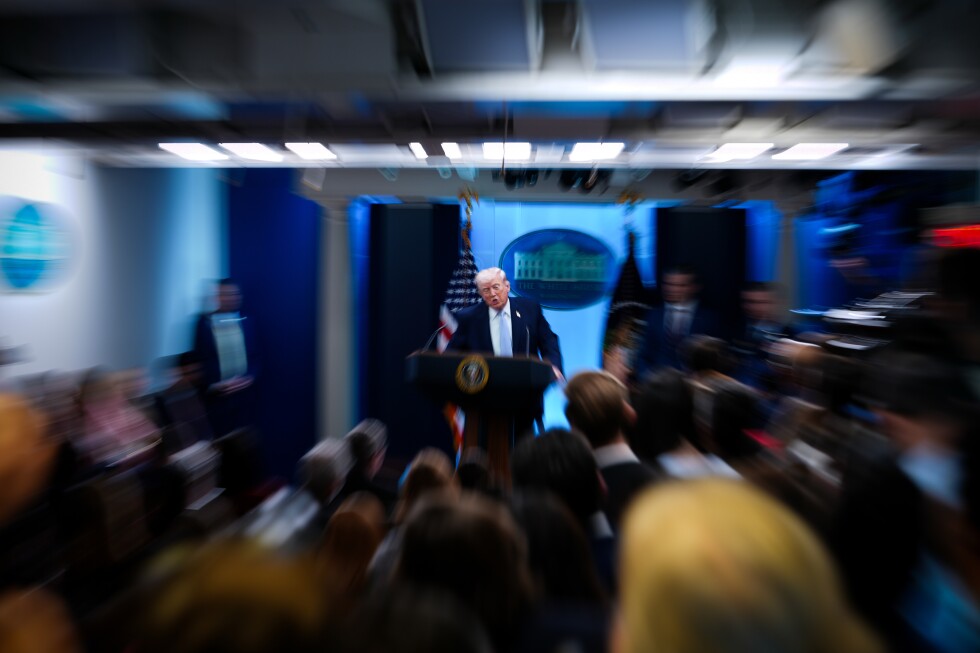
President Donald Trump’s approach to the ongoing conflict with Iran took a dramatic turn this week when he threatened that “A whole civilization will die tonight, never to be brought back again” if Iran failed to reopen the vital Strait of Hormuz as part of a potential deal.
The alarming rhetoric marks a sharp departure from Trump’s earlier positioning as a peacemaker and his previous pursuit of a Nobel Peace Prize. His latest statements have drawn widespread condemnation from across the political spectrum, including Democrats, former MAGA supporters, and even Pope Leo XIV.
In a series of increasingly hostile messages, Trump warned he would “blast Iran into oblivion” and “back to the Stone Ages,” while threatening to destroy bridges and civilian power plants—actions that military law experts suggest could constitute war crimes. On Easter morning, he used profane language in demanding Iran reopen the strait, writing they would be “living in Hell” if they failed to comply.
Just before his self-imposed 8 p.m. deadline Tuesday, Trump pulled back from his threats of widespread strikes, announcing that Iran had accepted a two-week ceasefire and agreed to reopen the Strait of Hormuz, a critical maritime passage through which approximately 20% of the world’s oil shipments pass.
The immediate crisis appears to have subsided, but Trump’s dramatic shift in tone raises serious questions. As recently as January, he had pledged that “HELP IS ON ITS WAY” to the Iranian people following government crackdowns on protests. The stark contrast between his previous messaging and current threats of civilization-ending violence has alarmed international observers.
The White House defended the president’s stance, with spokeswoman Anna Kelly stating: “The President will always stand with innocent civilians while annihilating the terrorists responsible for threatening our country and the entire world with a nuclear weapon.”
Some Republican allies attempted to frame Trump’s comments as strategic posturing. Senator Todd Young, an Indiana Republican and Marine Corps veteran, suggested the president was trying to “increase the amount of leverage he has immediately so that we can bring this conflict to a close and avoid further bloodshed.”
Senator Ron Johnson of Wisconsin, typically a steadfast Trump supporter, expressed hope that the threats were merely “bluster,” stating, “I do not want to see us start blowing up civilian infrastructure… We are not at war with the Iranian people. We are trying to liberate them.”
Democratic leadership condemned the rhetoric sharply, with House leaders calling it a statement that “shocks the conscience” and Senate counterparts describing it as “a betrayal of the values this nation was founded on, and a moral failure.”
Perhaps most surprising was the criticism from former Georgia Representative Marjorie Taylor Greene, once a loyal MAGA supporter. She suggested invoking the 25th Amendment to remove Trump from office, writing, “Not a single bomb has dropped on America. We cannot kill an entire civilization. This is evil and madness.”
Political scientists note that Trump’s approach represents a significant departure from traditional diplomatic norms. Roseanne McManus, a professor at Penn State University who specializes in international security, observed that presidential threats typically maintain some level of restraint and subtlety—a tradition Trump has repeatedly broken.
This incident mirrors Trump’s 2017 “fire and fury” threats toward North Korea, which raised fears of nuclear escalation before he later claimed to have “fallen in love” with North Korean leader Kim Jong Un. Since returning to office, his rhetoric and actions have become increasingly unpredictable, including strikes on Iran’s nuclear sites and the capture of Venezuelan President Nicolás Maduro.
Some experts believe Trump is deliberately employing the “Madman Theory”—a strategy attributed to former President Richard Nixon—which aims to deter adversaries by convincing them a leader is unpredictable enough to carry out extreme actions.
As diplomatic efforts continue behind the scenes, the international community watches closely, concerned that Trump’s willingness to break norms with inflammatory rhetoric could signal a dangerous unpredictability in how the United States handles global conflicts.
Fact Checker
Verify the accuracy of this article using The Disinformation Commission analysis and real-time sources.

20 Comments
If AISC keeps dropping, this becomes investable for me.
Production mix shifting toward World might help margins if metals stay firm.
Good point. Watching costs and grades closely.
Good point. Watching costs and grades closely.
I like the balance sheet here—less leverage than peers.
Interesting update on Trump uses the language of annihilation to threaten Iran. Curious how the grades will trend next quarter.
Good point. Watching costs and grades closely.
Good point. Watching costs and grades closely.
Production mix shifting toward World might help margins if metals stay firm.
Nice to see insider buying—usually a good signal in this space.
Good point. Watching costs and grades closely.
Good point. Watching costs and grades closely.
Uranium names keep pushing higher—supply still tight into 2026.
Good point. Watching costs and grades closely.
Good point. Watching costs and grades closely.
If AISC keeps dropping, this becomes investable for me.
Good point. Watching costs and grades closely.
Uranium names keep pushing higher—supply still tight into 2026.
Good point. Watching costs and grades closely.
Interesting update on Trump uses the language of annihilation to threaten Iran. Curious how the grades will trend next quarter.