


Listen to the article
Trump Administration Launches Second Phase of Gaza Peace Plan Amid Concerns Over Hamas Disarmament
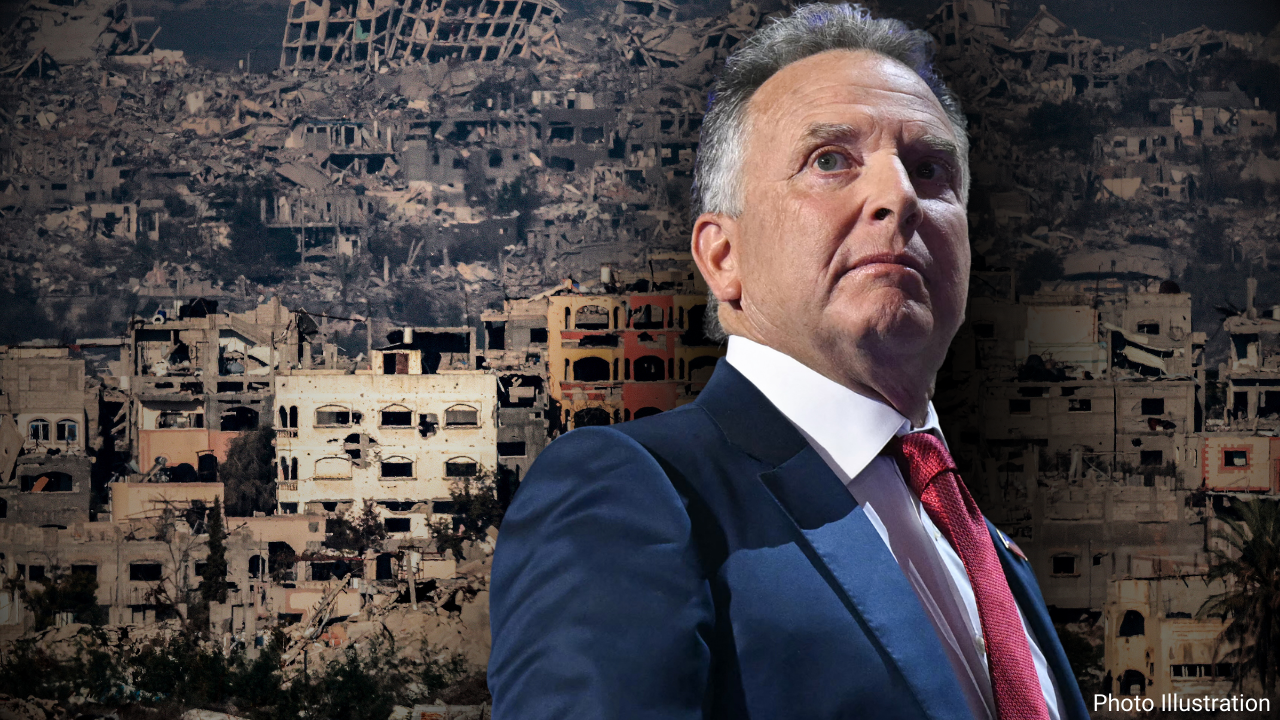
President Donald Trump’s administration has formally initiated the second phase of its plan to end the Israel-Hamas war, shifting focus from the ceasefire framework toward post-conflict governance, reconstruction, and security arrangements in Gaza. U.S. Special Envoy to the Middle East Steve Witkoff announced Wednesday that phase two is now underway, describing it as a transition “from ceasefire to demilitarization, technocratic governance and reconstruction.”
The announcement comes with a firm warning to Hamas regarding its obligations under the deal. “The U.S. expects Hamas to comply fully with its obligations, including the immediate return of the final deceased hostage,” Witkoff stated on social media platform X. “Failure to do so will bring serious consequences.”
President Trump reinforced this message on Thursday via his Truth Social platform, confirming the United States had “OFFICIALLY entered the next phase of Gaza’s 20-Point Peace Plan.” Trump highlighted that since the ceasefire, his administration has facilitated “RECORD LEVELS of Humanitarian Aid to Gaza, reaching Civilians at HISTORIC speed and scale,” which he said had “set the stage for this next phase.”
Central to phase two is the establishment of a Palestinian technocratic government, the National Committee for the Administration of Gaza, which would govern the territory during a transitional period. Trump described himself as chairman of the Board of Peace that would support this committee.
Despite the diplomatic momentum, the announcement has raised critical questions about implementation, particularly concerning who will disarm Hamas after its more than two decades of military control in Gaza. While families of hostages, including relatives of Ran Gvili, whose body remains held in Gaza, gathered in Tel Aviv urging his return before any transition to the next phase, the logistical challenges of disarmament remain largely unanswered.
France has expressed strong support for the initiative. In an exclusive interview with Fox News Digital, French Ambassador to the United Nations Jérôme Bonnafont called the ceasefire an “incredible achievement” and outlined how phase two could establish conditions for peace without Hamas.
“The Trump plan is establishing a ceasefire, which is an incredible achievement,” Bonnafont said. “It has to go to a massive reopening of humanitarian aid, and it is going to be announced within a couple of days.”
Bonnafont emphasized that the next stage includes an international stabilization force that would support both reconstruction efforts and contribute to Hamas’s disarmament. “That would help disarm Hamas, and that will help the Palestinian Authority return and democratically restart the management of Gaza as part of the Palestinian territory,” he explained.
While France prioritizes Israel’s security, particularly against regional threats like Iran, Bonnafont maintained that long-term security depends on establishing a demilitarized Palestinian state living peacefully alongside Israel. “We believe that security for Israel in the long term comes with the creation of Palestine,” he said. “A Palestine that has to be independent but demilitarized and in peace with Israel.”
Security analysts from both Israeli and American perspectives have raised concerns about the feasibility of phase two without addressing Hamas’s weapons and coercive power directly.
Dr. Avner Golov, vice president of Israeli policy institute Mind Israel, identified Hamas’s demilitarization as “the central challenge” of the plan. “The only actors truly willing to dismantle Hamas’s military capabilities are the Israelis,” he said, adding that “as long as Hamas remains armed, there should be no rebuilding and no IDF withdrawal from the current defensive line.”
Golov stressed that without credible military pressure from the Israel Defense Forces, Hamas would have little incentive to disarm voluntarily. He also noted what he described as a gap between diplomatic commitments and actions by regional actors like Turkey and Qatar, who “signed a document committing to Hamas’s disarmament, but since then have not demonstrated real commitment to implementing it.”
Jonathan Ruhe of the Jewish Institute for National Security of America (JINSA) observed that while Trump’s plan offers “a detailed framework for rebuilding Gaza and promoting better governance,” it remains “silent on the ‘who’ and ‘how’ of disarming Hamas.”
Ruhe emphasized that reconstruction efforts would face significant hurdles as long as Hamas retains the ability to “interrupt aid distribution, intimidate and kill Gazans who want a better future, and threaten renewed war with Israel.” He noted that a UN Security Council resolution authorizes an International Stabilization Force to disarm Hamas, but no country has shown willingness to undertake this challenging mission.
As the plan moves forward, analysts warn that time may be working against its implementation. “The status quo favors Hamas as it continues tightening its grip over its half of Gaza,” Ruhe cautioned. “Announcing the Board of Peace serves important diplomatic purposes, but it won’t mean much on the ground unless and until Hamas is disarmed.”
This sentiment was echoed by Golov, who insisted that “as long as Hamas remains armed, there should be no rebuilding and no IDF withdrawal from the current defensive line,” highlighting the delicate balance between diplomatic progress and security realities as the region moves into this next critical phase of the peace process.
Fact Checker
Verify the accuracy of this article using The Disinformation Commission analysis and real-time sources.

9 Comments
Shifting the focus from ceasefire to demilitarization and reconstruction is an important progression, but Hamas’ disarmament remains a major sticking point. Hoping the US can find a way to incentivize their cooperation.
Interesting to see the Trump administration continuing its involvement in the Gaza peace process. I wonder how this plan differs from previous efforts and what new strategies it brings to the table.
The focus on technocratic governance and reconstruction is encouraging, but the success of this plan will depend on the willingness of all sides to compromise and work towards a sustainable solution.
Disarming Hamas is a huge challenge, but it’s necessary for long-term peace and stability in the region. Curious to see how the US plan intends to overcome this hurdle and build trust with all parties.
Technocratic governance and reconstruction sound promising, but the challenge will be ensuring that the benefits reach the people of Gaza, not just the political factions. Transparency and inclusivity will be key.
Reconstruction and technocratic governance in Gaza seem like a sensible next step, but the details around Hamas’ obligations and accountability will be crucial. Cautiously optimistic, but a lot can still go wrong.
Agreed, the devil will be in the details. Hamas’ cooperation and commitment to the peace process will be essential for this plan to succeed.
This is a complex issue with many stakeholders. Disarming Hamas while maintaining security and stability in Gaza will be a major challenge. I’m curious to see how the US plan addresses the concerns of all parties involved.
Providing humanitarian aid to Gaza’s civilians is a positive step, but long-term stability requires finding a political solution that addresses the root causes of the conflict. Curious to see if this plan can achieve that.