


Listen to the article
Relations between Trump and Petro Shift as Colombian President Heads to White House
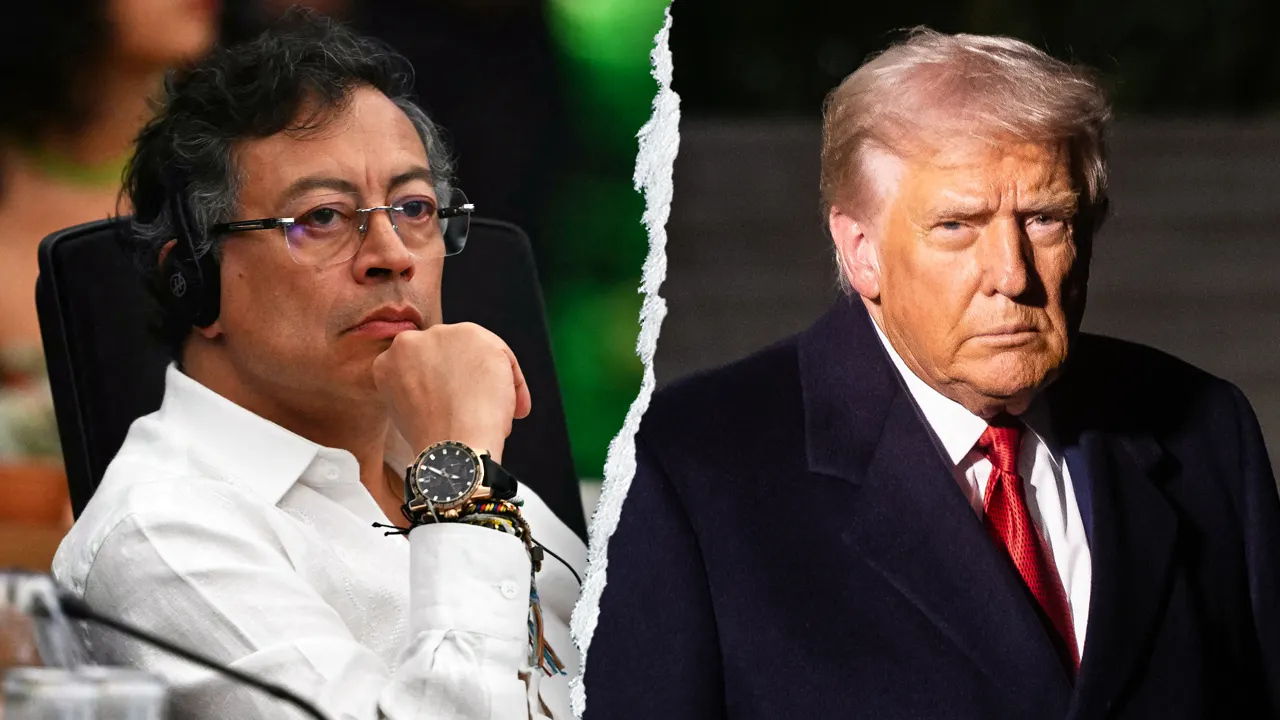
Relations between President Donald Trump and Colombian President Gustavo Petro have transformed dramatically over the past year, evolving from open hostility to cautious engagement ahead of their scheduled White House meeting on Tuesday.
The once-robust partnership between the United States and Colombia – long considered a model alliance in the Western Hemisphere – has been strained by fundamental disagreements over drug policy, security cooperation, and migration issues.
Speaking to reporters before the visit, Trump noted a recent change in tone from his Colombian counterpart. “He’s been very nice over the last month or two,” Trump said during a press availability. “They were certainly critical before that. But somehow after the Venezuelan raid, he became very nice. He changed his attitude. Very much so.”
Trump emphasized that narcotics trafficking would dominate their discussions. “We’re going to be talking about drugs because tremendous amounts of drugs come out of his country,” he stated. “And I look forward to seeing him. We’re going to have a good meeting.”
The bilateral relationship has deep historical roots. Colombia has been one of Washington’s closest South American allies for decades, with cooperation expanding significantly under Plan Colombia beginning in 2000. U.S. military and law enforcement assistance played a crucial role in Colombia’s fight against insurgent groups and drug trafficking networks, helping stabilize the country and eventually leading the United States to designate Colombia as a major Non-NATO ally.
However, security experts and U.S. officials note that this foundation has eroded significantly in recent years amid diverging priorities and growing mistrust between Washington and Bogotá.
The first major rift between the leaders emerged in January 2025, when Petro initially refused to allow U.S. deportation flights carrying Colombian nationals to land. The standoff prompted Trump to threaten tariffs, travel bans, and visa restrictions before Colombia ultimately reversed course and agreed to accept the flights.
Relations deteriorated further in September 2025 when Petro traveled to New York for the United Nations General Assembly, participated in protests, and publicly urged U.S. soldiers to “disobey the orders of Trump.” These remarks prompted the U.S. State Department to revoke Petro’s visa on September 27. The following month, the Trump administration announced punitive measures targeting Petro and members of his inner circle, citing concerns about drug trafficking and security cooperation.
Colombian officials denounced these actions as politically motivated. Trump publicly labeled Petro a “drug leader,” suspended U.S. aid, and threatened additional punitive measures, pushing bilateral relations to what observers described as their lowest point in decades.
Signs of de-escalation emerged last month when the two leaders spoke by phone for the first time since the diplomatic breakdown. Trump later described the call as a “great honor,” saying he appreciated Petro’s tone and looked forward to meeting him in person. Both sides agreed to restart dialogue on contentious issues, and Colombia subsequently resumed accepting U.S. deportation flights, paving the way for Tuesday’s face-to-face meeting.
Melissa Ford Maldonado, director of the Western Hemisphere Initiative at the America First Policy Institute, emphasized the stakes for both nations. “Colombia remains the most important U.S. partner in South America, but that status is conditional, and lately it’s been under real strain, largely because of President Gustavo Petro’s tolerance for criminal networks that threaten both Colombian sovereignty and American security,” she told Fox News Digital.
Maldonado suggested that the Trump administration’s objectives likely focus on restoring what she described as “real cooperation” on counternarcotics and security after years of deterioration. She pointed to record cocaine production and what she characterized as growing tolerance within parts of the Colombian state for criminal networks.
“What to watch going forward is whether Colombia chooses to course-correct or continues drifting toward the model next door, which blurred the line between the state and organized crime,” Maldonado said. “Colombia earned its status as a major Non-NATO Ally through decades of sacrifice. That trust has been badly damaged, but it is not beyond repair if Colombia demonstrates genuine resolve against cartels, rejects political cover for criminal groups, and realigns clearly with the United States on hemispheric security.”
The meeting comes at a critical juncture for regional security, with Washington increasingly concerned about narcotics trafficking and migration flows from South America. For Colombia, the stakes include maintaining access to U.S. markets and security assistance at a time when the country faces internal challenges from resurgent criminal groups and economic pressures.
“This visit should make one thing unmistakable: the United States wants a strong, sovereign Colombia. It is in America’s best interest. However, it will not tolerate ambiguity when it comes to narco-terrorism, regional security, or the safety of the American people,” Maldonado concluded.
Fact Checker
Verify the accuracy of this article using The Disinformation Commission analysis and real-time sources.

13 Comments
It’s promising to see Petro and Trump taking a more conciliatory tone. Rebuilding trust and finding common ground on drug policy will be essential. Both leaders will need to make tough compromises to move the relationship in a positive direction.
Ultimately, the success of this meeting will be measured by tangible progress on the ground – disrupting drug supply chains, reducing violence, and addressing root causes. Maintaining an open dialogue is a good start, but real change requires sustained, coordinated action.
It’s interesting to see the shift in tone between Trump and Petro. Cooperation on drug interdiction is critical, but they’ll also likely discuss security, migration, and other thorny issues. Navigating these tensions will require diplomatic skill and compromise on both sides.
While the US-Colombia alliance has faced challenges, the stakes are too high for the relationship to deteriorate further. Both leaders need to find ways to rebuild trust and find common ground, even if full alignment remains elusive.
This is a high-stakes meeting between Trump and Petro. Drug trafficking is a major issue that has strained US-Colombia relations, so it’s crucial they find common ground on this. Both leaders will likely want to demonstrate progress, even if they still disagree on key policy approaches.
Hopefully they can set aside political differences and work together pragmatically to disrupt drug supply chains and address the root causes of the drug trade. Colombia has been a vital US ally, so strengthening that partnership is in both countries’ interests.
Curious to see how Trump and Petro approach the drug trafficking issue. Colombia has borne the brunt of the narco-trade, so their perspectives and priorities may differ from the US. Hopefully they can find a path forward that respects both countries’ interests and values.
Addressing the root causes of the drug trade, like poverty and lack of economic opportunity, will be crucial. Neither country can solve this problem alone, so a collaborative, holistic approach is needed.
Shifting the tone is a positive first step, but Petro and Trump will need to go beyond rhetoric and deliver concrete results. Restoring the US-Colombia relationship to its former strength will be no easy feat, but the stakes are too high to fail.
Both leaders should approach these talks with open minds and a willingness to compromise. A pragmatic, results-oriented approach is the best path forward in addressing the complex challenges surrounding drug trafficking and regional security.
This meeting is a litmus test for the future of US-Colombia relations. While drug trafficking will dominate the agenda, the leaders should also discuss security cooperation, migration, and other regional issues. Striking the right balance will be critical.
Drug trafficking is a scourge that has plagued Colombia for decades. This meeting is an opportunity for Trump and Petro to chart a new course and strengthen cooperation, but they’ll need to overcome past disagreements and find mutually acceptable solutions.
This meeting is a chance for the US and Colombia to reaffirm their partnership and joint commitment to tackling the drug trade. While disagreements remain, they must find ways to work together effectively to combat this shared threat.