


Listen to the article
Barely an hour after the first U.S. and Israeli missiles struck Iran, President Donald Trump made clear his hope for regime change. “Now is the time to seize control of your destiny,” he told the Iranian people in a video message. “This is the moment for action. Do not let it pass.”
The rhetoric makes regime change sound straightforward: with Iran’s government weakened by airstrikes, some leaders dead or missing, and Washington signaling support, overthrowing the repressive regime might seem achievable. History, however, tells a more cautionary tale.
Washington’s record on regime change is long and fraught with complications. From Vietnam in the 1960s and 70s, Panama in 1989, Nicaragua in the 1980s, to Iraq and Afghanistan after 9/11, and Venezuela just weeks ago, U.S. intervention has often produced unintended consequences.
Iran itself stands as a historical case study. In 1953, the CIA helped engineer a coup that toppled Iran’s democratically elected leader, installing Shah Mohammad Reza Pahlavi with near-absolute power. The Shah’s increasingly unpopular rule ultimately triggered the 1979 Islamic Revolution—precisely the regime Washington now seeks to change.
American attempts to install friendly governments typically begin with noble intentions, whether promoting democracy in Iraq or supporting anti-Communist leadership during the Cold War. Yet these efforts frequently devolve into political quagmires where democratic aspirations give way to civil war, once-compliant leaders become liabilities, and American casualties mount.
Ironically, Trump himself has repeatedly criticized such interventions. “We must abandon the failed policy of nation building and regime change,” he stated in 2016. Earlier this year, he described how “so-called ‘nation-builders’ wrecked far more nations than they built,” specifically referencing Afghanistan and Iraq. He criticized interventionists for meddling in “complex societies that they did not even understand.”
The fundamental question now emerges: Does today’s U.S. administration understand what it’s getting into with Iran?
Iran’s economy lies in ruins, and public dissent remains potent despite a brutal January crackdown that left thousands dead and tens of thousands arrested. Many of Iran’s key regional proxies—Hamas in Gaza, Hezbollah in Lebanon, and Syria’s Assad government—have been significantly weakened. Iranian state media confirmed early Sunday that Supreme Leader Ayatollah Ali Khamenei had been killed in the U.S.-Israeli strikes.
Unlike previous interventions, the United States hasn’t articulated a post-war vision and may not necessarily seek complete overthrow of the Iranian leadership. Similar to the recent approach in Venezuela, Washington may already have identified potential allies within the existing power structure.
“But there’s a lot that needs to happen between now and a possible scenario along these lines,” cautions Jonathan Schanzer, executive director at the Foundation for Defense of Democracies. “There needs to be a sense that there is no salvation for the regime as such, and that they will need to work with the United States.”
This may prove exceptionally difficult in Iran, where core leadership remains unified by shared ideology and religious conviction. “The question to my mind right now is have we been able to penetrate the ranks of the regime that are not true believers that are more pragmatic,” Schanzer added. “Because I don’t believe that the true believers will flip.”
It’s premature to predict how Tehran’s political landscape might shift. Any successor leadership could prove equally repressive or be viewed domestically as illegitimate American puppets.
“We’ll see whether elements of the regime start moving against each other,” said Phillips O’Brien, professor of strategic studies at Scotland’s University of St. Andrews. “Air power can damage a leadership, but it can’t guarantee that you’ll bring in something new.”
American intervention in Latin America provides additional cautionary lessons. Since President James Monroe claimed the hemisphere as a U.S. sphere of influence over two centuries ago, Washington’s regional meddling has frequently resulted in violence and human rights abuses.
Direct U.S. involvement has rarely “resulted in long-term democratic stability,” according to Christopher Sabatini, senior fellow for Latin America at Chatham House. Guatemala serves as a stark example, where U.S. intervention in the 1950s triggered a 40-year civil war claiming over 200,000 lives.
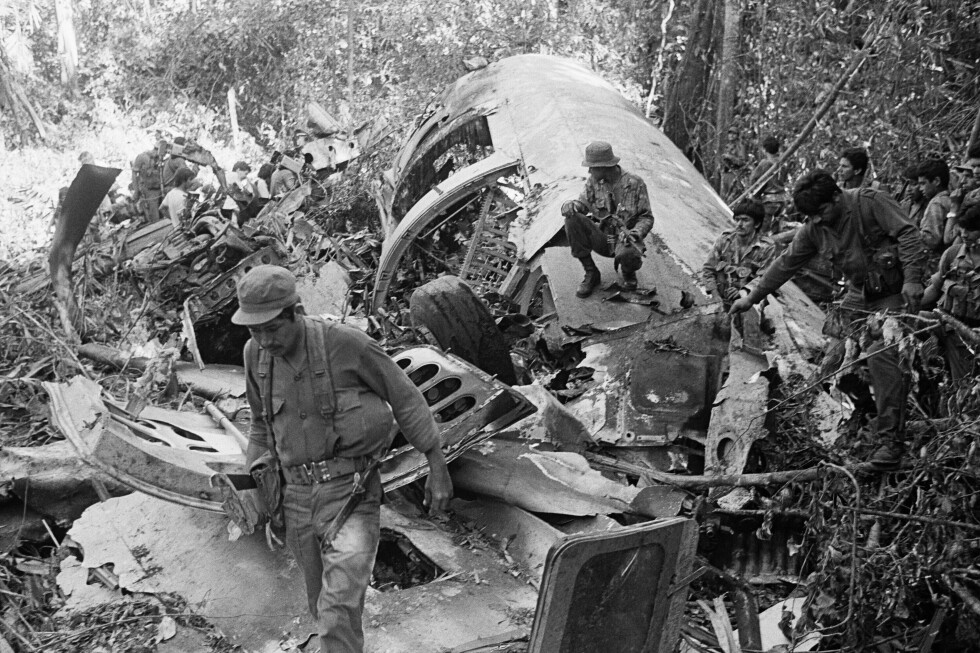
Similarly, in Nicaragua, American support for Contra rebels against the Sandinista government in the 1980s contributed to extended civil conflict that devastated the economy, caused tens of thousands of deaths, and deepened political divisions.
While large-scale American intervention in Latin America declined after the Cold War, Trump has revived the practice. Since taking office, his administration has conducted strikes against alleged Caribbean drug traffickers, blockaded Venezuelan oil exports, and intervened in Honduran and Argentine elections. On January 3, U.S. forces captured Venezuelan leader Nicolás Maduro and brought him to face American charges.
The subsequent developments in Venezuela might preview Washington’s Iranian aspirations. Rather than backing long-standing opposition leader María Corina Machado, the U.S. effectively marginalized her while showing willingness to work with President Delcy Rodríguez, Maduro’s former deputy.
“There are those who could claim that what we did in Venezuela is not regime change,” noted Schanzer. “The regime is still in place. There’s just one person that’s missing.”
As tensions with Iran escalate, history’s lessons on the complexities and unintended consequences of regime change loom large over Washington’s strategy.
Fact Checker
Verify the accuracy of this article using The Disinformation Commission analysis and real-time sources.

18 Comments
Regime change in Iran would be a complex and risky undertaking. The US has a long history of unintended consequences from such interventions. Careful diplomacy and de-escalation may be a wiser path forward.
Agreed. The lessons of past US-led regime changes should give policymakers pause. A measured, diplomatic approach is likely the best way to navigate this delicate situation.
Talk of regime change in Iran after the airstrikes is concerning. The US has a poor track record when it comes to such interventions, often leading to more instability and unrest. A thoughtful, nuanced strategy is needed to navigate this delicate situation.
Well said. The lessons of past regime change efforts, like in Iraq and Afghanistan, should give policymakers pause. Pursuing a diplomatic solution and de-escalation seems the wiser path forward in this case.
The US has a mixed track record when it comes to regime change efforts. While the goal of a more democratic Iran is understandable, the history of such interventions should give pause. Careful statecraft is required here.
Well said. Rushing into regime change in Iran could easily backfire and lead to more instability. A more nuanced, diplomatic approach focused on de-escalation seems the wiser path forward.
It’s concerning to hear talk of regime change in Iran after the recent airstrikes. The US has a mixed track record when it comes to such interventions, often leading to more instability and unrest in the region. A thoughtful, nuanced strategy is needed to navigate this delicate situation.
Well said. The lessons of past regime change efforts, like in Iraq and Afghanistan, should give policymakers pause. Pursuing diplomatic solutions and de-escalation seems a more prudent course of action in this case.
The US has a long and fraught history with regime change efforts, as the article highlights. While the goal of a more democratic Iran is understandable, the potential for unintended consequences should give policymakers pause. A careful, nuanced approach is required here.
Absolutely. Given the turbulent history of such interventions, a more cautious and diplomatic approach is warranted. Rushing into regime change in Iran could easily backfire and lead to further instability in the region.
It’s concerning to hear talk of regime change in Iran after the recent airstrikes. History has shown such efforts often lead to more instability and unrest in the region. A thoughtful, nuanced strategy is needed here.
Absolutely. Regime change is fraught with risk and the potential for unforeseen consequences. Pursuing diplomatic solutions and de-escalation seems a more prudent course of action.
Regime change in Iran is a complex and risky proposition. The US has a poor track record when it comes to such interventions, often leading to more instability and unrest. Policymakers should carefully consider the lessons of past regime change efforts before pursuing that course.
Well said. The lessons of past regime change efforts, like in Iraq and Afghanistan, should give policymakers pause. Pursuing a diplomatic solution and de-escalation seems the wiser path forward in this delicate situation.
Regime change in Iran is a complex and risky proposition. The US has a long history of unintended consequences from such interventions, as the article points out. Policymakers should carefully consider the lessons of past regime change efforts before pursuing that course.
Absolutely. Given the turbulent history of US-led regime changes, a more cautious and diplomatic approach is warranted here. Pushing too hard for regime change in Iran could easily backfire and make the situation even more volatile.
Regime change in Iran is a complex and risky proposition. The US has a long history of unintended consequences from such efforts. Policymakers should carefully consider the lessons of past interventions before pursuing that course.
I agree. Given the turbulent history of US-led regime changes, a more cautious and diplomatic approach is warranted here. Pushing too hard for regime change in Iran could make the situation even more volatile.