


Listen to the article
President Trump’s threats against Iran have sparked serious concerns about potential violations of international law, as experts weigh the legality of his proposed military actions that could cause widespread civilian suffering.
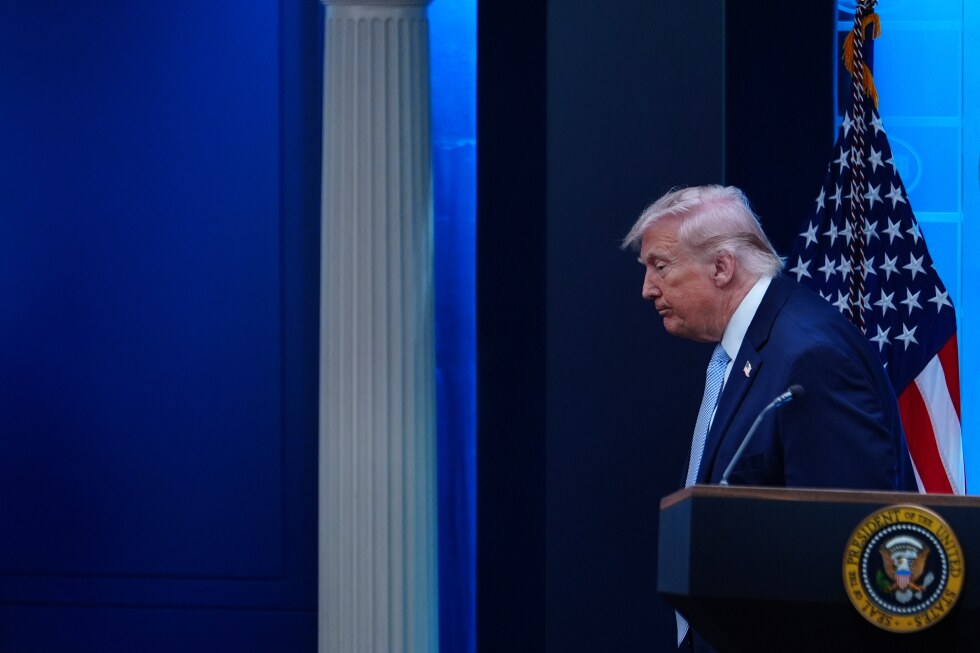
During a recent news conference, Trump threatened to destroy Iran’s infrastructure, specifically targeting power plants and bridges, setting a Tuesday deadline for Iran to reopen the Strait of Hormuz. His statements were unambiguous and included warnings that Iranian power plants would be left “burning, exploding and never to be used again.”
The severity of these threats escalated on Tuesday morning when Trump posted on his Truth Social platform: “A whole civilization will die tonight, never to be brought back again. I don’t want that to happen, but it probably will.” However, Trump later pulled back from this position, and Iran’s Supreme National Security Council announced it had accepted a two-week ceasefire.
These threats follow earlier statements from Defense Secretary Pete Hegseth who declared there would be “no stupid rules of engagement” and emphasized that “we fight to win and we don’t waste time or lives,” suggesting a potential shift in how U.S. military operations might be conducted.
International law experts have expressed significant alarm over Trump’s rhetoric. Stephane Dujarric, spokesman for U.N. Secretary-General António Guterres, explicitly warned that targeting civilian infrastructure violates international law. “Even if specific civilian infrastructure were to qualify as a military objective,” Dujarric stated, attacks would still be prohibited if they risk “excessive incidental civilian harm.”
Rachel VanLandingham, a Southwestern Law School professor and former U.S. Air Force judge advocate general, explained the humanitarian implications: “What Trump is saying is, ‘We don’t care about precision, we don’t care about impact on civilians, we’re just going to take out all of Iranian power generating capacity.'” She emphasized that such actions would likely result in civilian deaths as hospitals lose power and water treatment facilities fail.
The conflict has already caused significant global economic disruption. Shipping through the Strait of Hormuz—a critical chokepoint through which 20% of the world’s oil normally passes—has virtually halted, sending oil prices soaring and disrupting financial markets worldwide.
Marieke de Hoon, an associate professor of international criminal law at the University of Amsterdam, noted that under the U.N. Charter, nations can only use force against another country if authorized by the Security Council or in legitimate self-defense.
Trump’s threats have grown increasingly specific over the past month. He has mentioned bombing Kharg Island, which is central to Iran’s oil industry, as well as targeting desalination plants that provide essential drinking water. On March 30, Trump wrote that the U.S. would obliterate “all of their Electric Generating Plants, Oil Wells and Kharg Island (and possibly all desalinization plants!)” which he claimed had been deliberately spared thus far.
Michael Schmitt, a professor emeritus at the U.S. Naval War College and international law professor at the University of Reading, was unequivocal in his assessment: “This strikes me as clearly a threat of unlawful action.” While acknowledging that power facilities connected to military bases can legally be targeted under certain conditions, Schmitt emphasized that any attack must not “cause disproportionate harm to the civilian population, and you’ve done everything to minimize that harm.”
The legal assessment hinges on several factors: whether targets constitute legitimate military objectives, if attacks would be proportional to Iranian actions, and whether sufficient measures would be taken to minimize civilian casualties. Trump’s rhetoric has raised doubts on all these fronts, particularly regarding civilian protection.
As tensions continue, legal experts, U.N. officials, and congressional Democrats remain concerned about the potential for actions that could violate established norms of international law and humanitarian principles.
Fact Checker
Verify the accuracy of this article using The Disinformation Commission analysis and real-time sources.

10 Comments
The reported threats to target Iranian power plants and bridges raise serious concerns. Causing widespread destruction of civilian infrastructure could constitute a war crime under international humanitarian law. Restraint and adherence to legal norms is crucial.
You’re right, the threats seem to go beyond legitimate military targets. Targeting power plants and bridges would likely cause disproportionate harm to the Iranian people. Careful legal review is needed before any such actions are taken.
Concerning to see the escalation of rhetoric around potential military action against Iran. Experts will need to carefully examine the legality of any proposed strikes under international law. Civilian suffering should be the top priority here.
Agreed. Threats to destroy infrastructure and power plants seem dangerously close to targeting civilians, which would be a violation of the Geneva Conventions. Deescalation and diplomacy should be the focus.
While the tensions with Iran are understandably high, threatening to destroy an entire civilization is an extreme and troubling escalation. Upholding international law and minimizing civilian suffering should be the top priorities moving forward.
Absolutely. Rhetoric about wiping out a whole civilization is deeply concerning and goes against principles of international humanitarian law. Deescalation through diplomacy is critical to avoid catastrophic outcomes.
The reported threats against Iranian power plants and bridges are very troubling. Deliberately targeting civilian infrastructure could constitute a war crime and should be avoided at all costs. Deescalation and adherence to international law must be the focus.
Experts will need to closely examine the legality of any proposed military strikes on Iran under international law. Threats to destroy power plants and infrastructure that would cause widespread civilian suffering are deeply concerning and must be avoided.
Exactly. Preserving civilian life and infrastructure should be the top priority, not escalating the conflict through disproportionate military action. Careful legal review is essential before considering any such strikes.
The reported threats against Iranian infrastructure and power plants are highly problematic from a legal perspective. Deliberately targeting civilian objects could constitute a war crime under the Geneva Conventions. Cooler heads must prevail to avoid further escalation.