


Listen to the article
President Trump and British PM Starmer Hold Critical Talks on Middle East Crisis
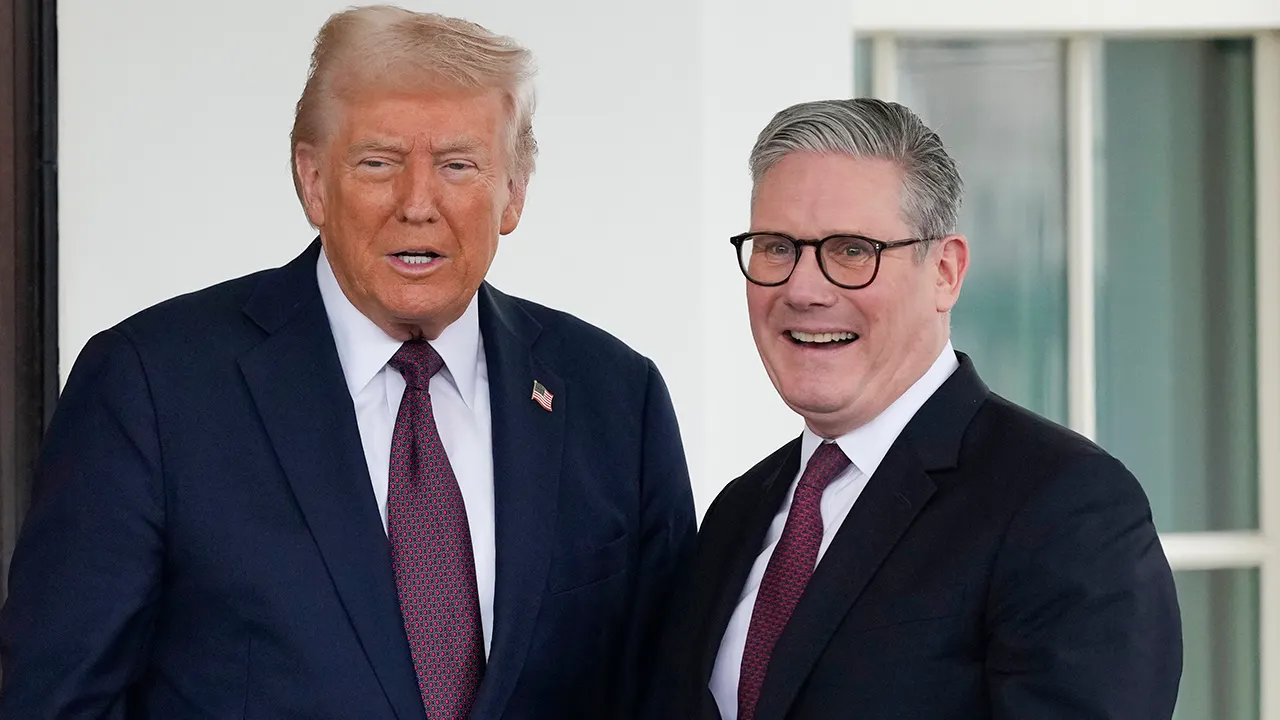
President Donald Trump and British Prime Minister Keir Starmer held urgent discussions Sunday focused on reopening the Strait of Hormuz amid escalating tensions in the Middle East, as global shipping routes remain paralyzed by the ongoing conflict.
According to a statement from Downing Street, the two leaders specifically addressed “the need to reopen the Strait of Hormuz to resume global shipping,” underscoring that “reopening the Strait of Hormuz was essential to ensure stability in the global energy market.” They agreed to maintain communication as the situation develops.
The call comes at a critical juncture in what has become a rapidly expanding regional conflict. Iran has blocked the strategically vital waterway since February 28, when the United States and Israel launched coordinated strikes against Iranian targets. Tehran’s swift retaliation has since evolved into a broader regional war, with Iranian missiles striking numerous neighboring countries not directly involved in the initial confrontation.
The Strait of Hormuz represents a crucial maritime chokepoint through which approximately 20 percent of the world’s oil supply passes daily. Its closure has sent shockwaves through global energy markets, with oil prices surging and supply chains facing significant disruption.
Just days before the call, on March 21, President Trump issued a stark 48-hour ultimatum to Iran demanding the reopening of the strait. In a post on his Truth Social platform, Trump warned that failure to comply would trigger further U.S. military action, potentially including strikes on Iran’s energy infrastructure.
Sunday’s conversation appears to signal a potential thaw in what has been a strained relationship between the two leaders during this crisis. Trump had previously criticized the UK government publicly, claiming Britain “should have acted a lot faster” in allowing the U.S. to use British military bases for strikes targeting Iranian missile sites.
For his part, Starmer had maintained that the use of UK bases could only be justified under the principle of “collective self-defense” in the region. His initial reluctance to support the U.S.-Israeli military operation drew repeated criticism from the White House, with Trump even sharing a “Saturday Night Live” clip mocking the British prime minister’s handling of the crisis.
Starmer has faced pressure domestically as well, with critics questioning his cautious approach while supporters argue he is appropriately deliberative about military involvement. The UK has, however, already deployed a nuclear submarine to the Arabian Sea as part of its response to the crisis.
Defense analysts note that the Strait of Hormuz blockade represents one of the most significant threats to global commerce in decades. Maritime insurance rates have skyrocketed, forcing many shipping companies to suspend operations in the region entirely. Energy economists estimate that continued closure could cost the global economy billions of dollars weekly and potentially trigger fuel shortages in parts of Asia most dependent on Middle Eastern oil.
The European Union has also stepped up diplomatic efforts, proposing what some have characterized as a “face-saving exit plan” that would allow all parties to de-escalate while maintaining their respective positions.
As the 48-hour deadline approaches, global markets remain on edge, with investors closely monitoring developments for signs of either breakthrough or further escalation. Military analysts suggest that any action against Iranian energy infrastructure would mark a significant escalation that could potentially draw in other regional powers.
For now, the call between Trump and Starmer indicates that diplomatic channels remain open, even as military options continue to be prepared should negotiations fail to produce immediate results.
Fact Checker
Verify the accuracy of this article using The Disinformation Commission analysis and real-time sources.

10 Comments
The situation in the Strait of Hormuz is certainly concerning. Reopening this critical maritime chokepoint will be essential for stabilizing global energy markets and trade. I hope the leaders can find a diplomatic solution to this escalating conflict.
The situation in the Strait of Hormuz is incredibly complex, with major geopolitical and economic implications. I appreciate the diplomatic efforts by Trump and Starmer to find a peaceful resolution and reopen this critical waterway.
Securing the Strait of Hormuz is a major geopolitical and economic priority. I’m curious to learn more about the specific actions the US and UK plan to take in order to reopen this vital waterway. Effective coordination between allies will be key.
The blockage of the Strait of Hormuz is deeply concerning, both for energy security and the broader global economy. I hope the collaborative efforts of world leaders like Trump and Starmer can find an effective solution to de-escalate tensions and restore the free flow of maritime traffic.
Disrupting shipping through the Strait of Hormuz could have severe ripple effects on the global economy. I’m glad to see Trump and Starmer taking this issue seriously and working together to find a solution. Diplomacy and cooperation will be crucial.
Ensuring the free flow of maritime traffic through the Strait of Hormuz is vital for energy markets and international trade. I’m glad to see the US and UK working together to address this crisis and restore stability in the region.
The Middle East conflict is concerning, but reopening the Strait of Hormuz is an important first step. Ensuring the free flow of global shipping and energy supplies should be the top priority for the international community right now.
Maintaining open shipping routes through the Strait of Hormuz is crucial for the global economy, especially for energy supplies. It’s good to see Trump and Starmer working together to address this crisis and find a way to de-escalate the situation.
Reopening the Strait of Hormuz is a critical priority given its importance for global energy and trade. I’m encouraged to see the US and UK working together to address this crisis, but the path forward will require nuanced diplomacy and cooperation with other key stakeholders.
The escalating conflict in the Middle East poses serious risks to the global economy. Reopening the Strait of Hormuz should be an urgent priority for world leaders. Effective collaboration between key allies like the US and UK will be key.