


Listen to the article
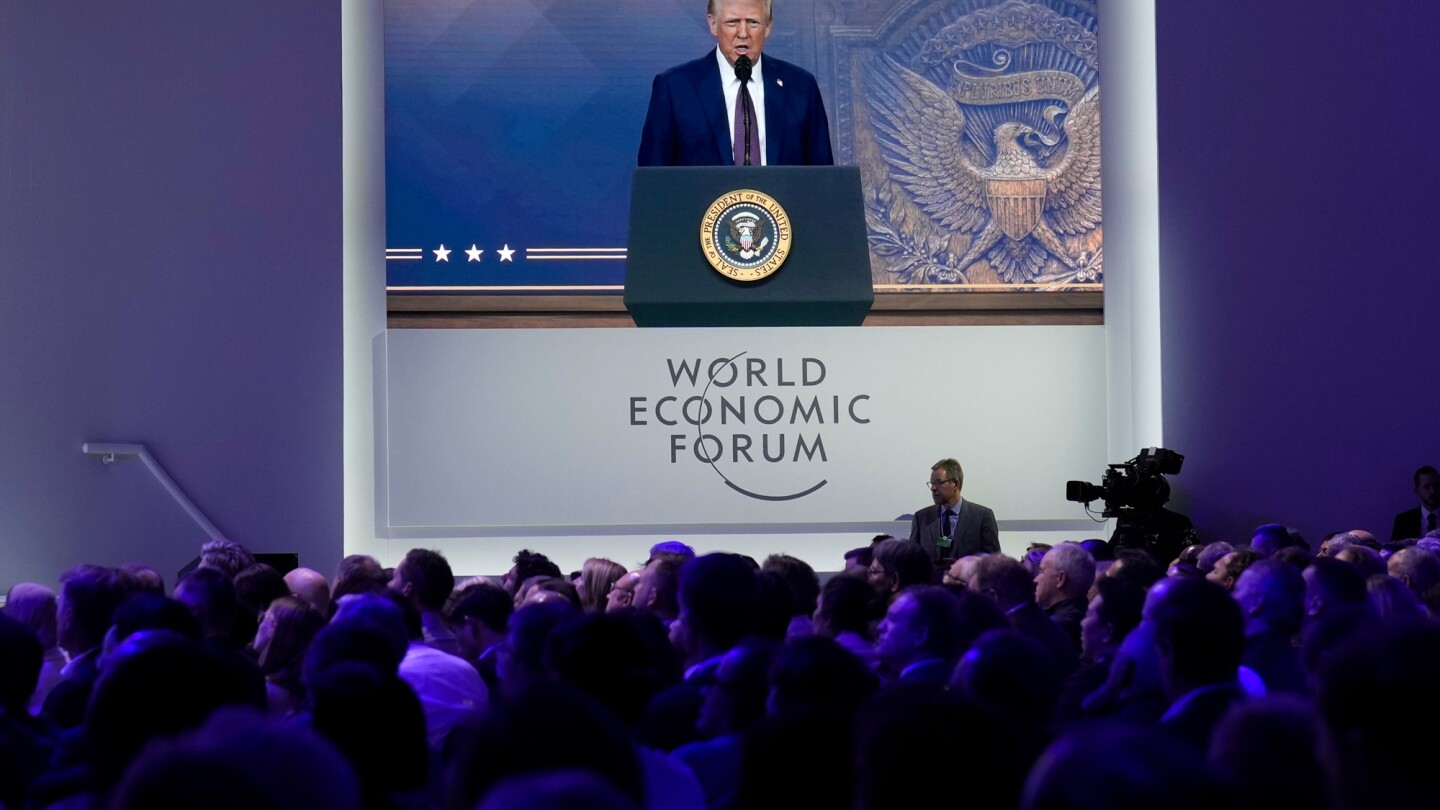
U.S. President Donald Trump is set to make his return to the World Economic Forum in Davos, Switzerland next week, leading what organizers have described as a record-sized U.S. delegation to the prestigious annual gathering of global elites.
The Geneva-based forum announced Tuesday that Trump will be joined by five Cabinet secretaries and numerous other high-ranking officials at the event, which runs from Monday through January 23. The U.S. delegation will include Secretary of State Marco Rubio, Treasury Secretary Scott Bessent, Commerce Secretary Howard Lutnick, and U.S. Trade Representative Jamieson Greer, along with Trump’s son-in-law Jared Kushner and special envoy Steve Witkoff.
This marks Trump’s third appearance at the forum, having attended twice during his first term as president. Last year, shortly after his inauguration for a second term, Trump participated virtually via video conference.
The Davos meeting continues to draw an impressive roster of global leaders and industry titans. Organizers expect approximately 3,000 participants from 130 countries, including 850 CEOs and chairs of the world’s leading companies. Forum President Borge Brende confirmed that six of the Group of Seven leaders will attend, with Trump among them.
Other notable attendees include Ukrainian President Volodymyr Zelensky and Syrian President Ahmad al-Sharaa. China will be represented by Vice Premier He Lifeng, the country’s top trade official, underscoring the importance Beijing places on international economic engagement despite ongoing tensions with the United States.
The technology sector will be well-represented with NVIDIA CEO Jensen Huang and Microsoft CEO Satya Nadella both confirmed to attend. Their presence highlights the growing influence of artificial intelligence and advanced computing technologies in global business and policy discussions.
European Commission President Ursula von der Leyen, UN Secretary-General Antonio Guterres, and World Trade Organization Director-General Ngozi Okonjo-Iweala will also participate, bringing perspectives from major multilateral institutions at a time when international cooperation faces significant challenges.
Trump’s return to Davos comes as his assertive foreign policy on issues ranging from Venezuela to Greenland has raised concerns among both allies and adversaries. His presence at the forum will likely draw significant attention as global leaders and business executives seek insights into U.S. policy direction on trade, security, and international cooperation.
This year’s gathering marks a significant transition for the World Economic Forum itself. It will be the first annual meeting not led by forum founder Klaus Schwab, who resigned last year after decades at the helm. Leadership has temporarily passed to co-chairs Larry Fink, chairman and CEO of investment management giant BlackRock, and Andre Hoffmann, vice chairman of Swiss pharmaceutical company Roche Holdings.
The World Economic Forum has not been without its critics over its 53-year history. Detractors characterize it as an exclusive gathering where global elites network and conduct business deals that may not benefit ordinary workers or marginalized communities. Forum organizers counter these criticisms by emphasizing their stated mission of “improving the state of the world” and pointing to the participation of advocacy groups, academics, and cultural leaders in the proceedings.
Since its inaugural meeting in 1971, the forum has evolved into a premier platform for dialogue, debate, and deal-making among political and business leaders. The record attendance expected this year underscores its continued relevance in an increasingly complex global landscape marked by geopolitical tensions, technological disruption, and economic uncertainty.
Fact Checker
Verify the accuracy of this article using The Disinformation Commission analysis and real-time sources.

16 Comments
The World Economic Forum in Davos is often criticized as an elitist gathering, but it does provide a platform for global leaders to discuss shared challenges. It will be important for the US to strike the right tone and find areas of common ground, rather than just asserting America’s own interests.
Agree, the US needs to balance its own priorities with a willingness to collaborate on global solutions. Davos is an opportunity to show US leadership on the world stage.
The World Economic Forum in Davos is a high-profile global gathering, so the size and composition of the US delegation is noteworthy. It will be fascinating to see how the Trump administration positions the US there, both in terms of its economic agenda and its approach to multilateral cooperation.
Exactly, the US role at Davos will be closely watched as an indication of its broader foreign economic policy priorities.
The Trump administration’s focus on ‘America First’ policies could create some tension at the globalist-leaning Davos forum. It will be interesting to see how the US delegation balances national interests with the broader multilateral agenda.
You raise a good point. The US will need to find a way to advocate for its priorities while also showing a willingness to cooperate on shared global challenges.
Given the Trump administration’s past skepticism of multilateral institutions, it will be interesting to see how the US delegation engages at Davos. Hopefully they can find ways to productively contribute to discussions on critical issues like climate change, economic inequality, and technological disruption.
Absolutely, those global challenges require coordinated action. The US participation could shape the forum’s outcomes in important ways.
It’s intriguing to see Trump leading such a large US delegation to Davos. The forum provides an opportunity for the US to shape the global economic and policy agenda, but also requires navigating sometimes competing national and international interests. The US approach will be closely analyzed.
Very true, the US participation at Davos will be a high-profile test of its ability to balance its own priorities with the need for international cooperation on shared challenges.
Sending such a large US delegation to Davos signals the administration’s recognition of the event’s importance, even if they don’t fully embrace its globalist agenda. It will be a test of whether the US can constructively engage with the international community on shared priorities.
Agreed, the US will need to balance its own interests with a willingness to collaborate if it wants to play a leadership role at Davos.
Interesting to see Trump leading such a large US delegation to Davos. Curious to hear his perspective on the global economy and how US interests will be represented. Though the event draws many business leaders, it will be important to see how the US engages with the broader agenda around sustainability and economic inclusion.
Absolutely, the US presence and Trump’s leadership will be closely watched. As a major economic power, the US voice carries significant weight at Davos.
A record-sized US delegation to Davos suggests the administration sees value in engaging with the global business and political elite, despite past skepticism. The makeup of the team will be telling – will they push a traditional US free market agenda or seek more collaborative solutions?
That’s a great question. The US presence and messaging will be closely watched, especially on issues like trade, climate, and economic reform.