


Listen to the article
President Donald Trump has publicly criticized Ukrainian President Volodymyr Zelenskyy for allegedly not being ready to accept a U.S.-authored peace proposal aimed at ending the Russia-Ukraine war, despite claims that Zelenskyy’s own team supports the plan.
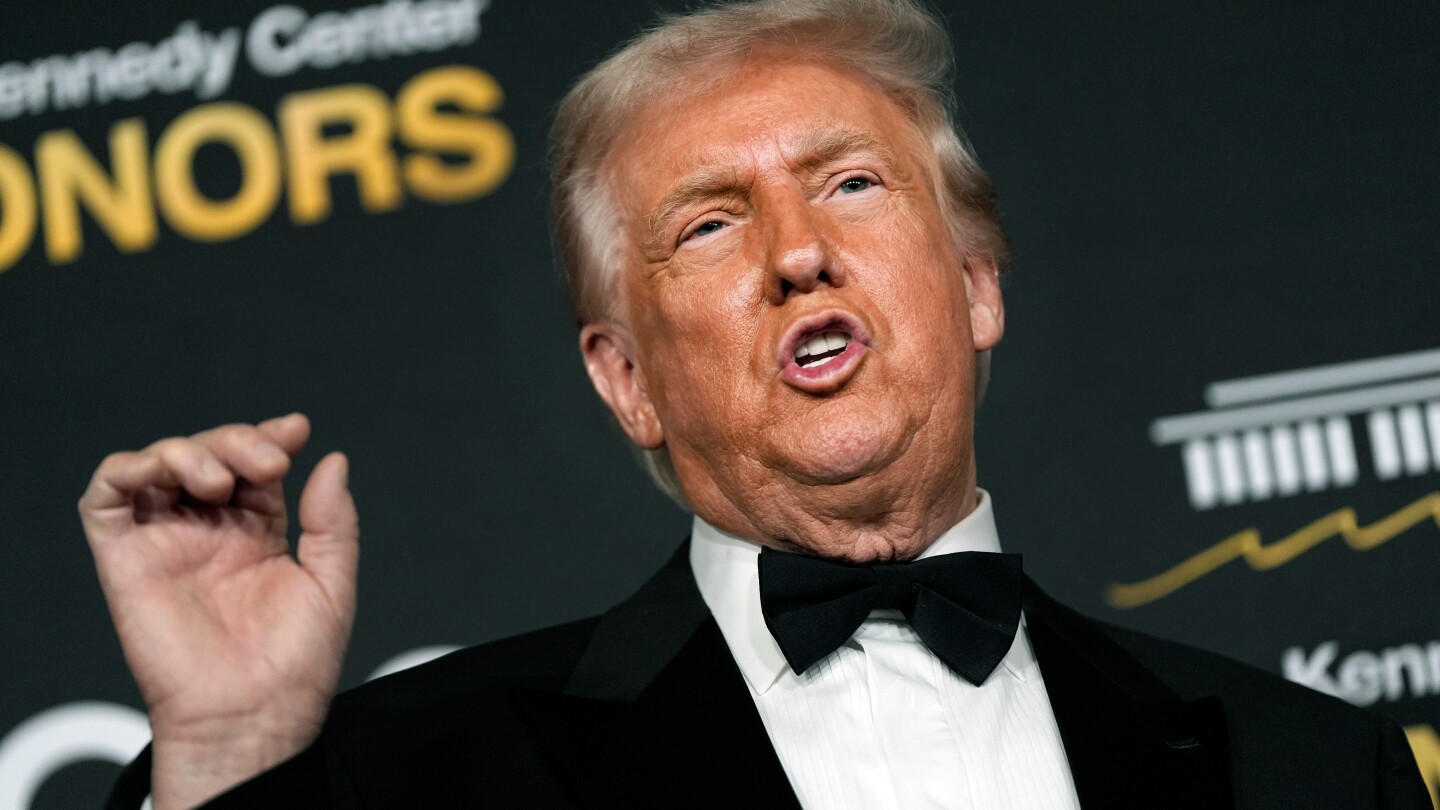
Speaking to reporters before attending the Kennedy Center Honors on Sunday, Trump expressed disappointment, stating, “I’m a little bit disappointed that President Zelenskyy hasn’t yet read the proposal, that was as of a few hours ago. His people love it, but he hasn’t.” The president added that Russia appeared amenable to the terms, while suggesting Zelenskyy was the obstacle to progress.
However, Trump’s assessment contradicts recent developments, as Russian President Vladimir Putin had just last week characterized aspects of Trump’s proposal as unworkable, despite analysts noting the original draft heavily favored Moscow’s interests in the conflict.
The comments come after three days of intensive negotiations between U.S. and Ukrainian officials in Florida, which concluded Saturday. These talks represent the Trump administration’s most substantial effort to broker an end to the nearly four-year conflict since returning to the White House.
Zelenskyy, for his part, reported having a “substantive phone call” with American officials engaged in the Florida negotiations. “Ukraine is determined to keep working in good faith with the American side to genuinely achieve peace,” the Ukrainian leader wrote on social media, offering a more diplomatic tone than Trump’s characterization suggested.
Trump’s relationship with Zelenskyy has fluctuated throughout his presidency. During his campaign and since taking office, Trump has repeatedly questioned U.S. financial support for Ukraine and suggested the country should cede territory to Russia to bring the conflict to a close—a position that aligns with Moscow’s demands but contradicts long-standing U.S. policy on territorial sovereignty.
Meanwhile, Russia has welcomed the Trump administration’s new national security strategy. Kremlin spokesman Dmitry Peskov told Russia’s Tass news agency that the updated strategic document aligns with Moscow’s vision, noting it includes “statements there against confrontation and in favor of dialogue and building good relations.”
The White House document, released Friday, marks a significant shift in U.S. foreign policy, stating explicitly that the U.S. seeks to improve relations with Russia after years of treating Moscow as “a global pariah” and declaring that ending the war is a core American interest to “reestablish strategic stability with Russia.”
Keith Kellogg, Trump’s outgoing Ukraine envoy, suggested at the Reagan National Defense Forum on Saturday that peace efforts were in “the last 10 meters,” dependent on resolving two outstanding issues: “terrain, primarily the Donbas,” and the status of the Zaporizhzhia Nuclear Power Plant.
Russia currently controls most of the Donbas region, which includes the Donetsk and neighboring Luhansk regions—territories that, along with two southern Ukrainian regions, Moscow illegally annexed three years ago. The Zaporizhzhia Nuclear Power Plant has been under Russian control since early in the invasion and remains non-operational, requiring reliable power to prevent potential nuclear incidents.
As diplomatic maneuvers continue, violence persists on the ground. Russian missile, drone, and shelling attacks overnight and Sunday killed at least four people in Ukraine, including a man in the northern Chernihiv region and three people in the Kharkiv region, where ten others were wounded.
A combined missile and drone attack on infrastructure in the central city of Kremenchuk, an industrial hub home to one of Ukraine’s largest oil refineries, caused power and water outages. These attacks align with what Ukrainian officials and Western allies describe as Russia’s strategy to cripple Ukraine’s power grid and deny civilians access to essential services during the winter months.
The European response to the conflict continues as well, with the leaders of the United Kingdom, France, and Germany scheduled to meet with Zelenskyy in London on Monday, signaling ongoing European engagement despite the U.S.-led peace initiative.
Fact Checker
Verify the accuracy of this article using The Disinformation Commission analysis and real-time sources.

15 Comments
Silver leverage is strong here; beta cuts both ways though.
Good point. Watching costs and grades closely.
Good point. Watching costs and grades closely.
Uranium names keep pushing higher—supply still tight into 2026.
Good point. Watching costs and grades closely.
Uranium names keep pushing higher—supply still tight into 2026.
Good point. Watching costs and grades closely.
Good point. Watching costs and grades closely.
If AISC keeps dropping, this becomes investable for me.
Good point. Watching costs and grades closely.
Good point. Watching costs and grades closely.
The cost guidance is better than expected. If they deliver, the stock could rerate.
Good point. Watching costs and grades closely.
Silver leverage is strong here; beta cuts both ways though.
Good point. Watching costs and grades closely.