


Listen to the article
Iran Seeks Talks with U.S. as Race to Replace Khamenei Begins
The White House confirmed Sunday that Iranian leadership has reached out to the United States requesting diplomatic talks following the death of Supreme Leader Ayatollah Ali Khamenei, who was killed Saturday in an Israeli airstrike.
The killing marks a pivotal moment for Iran, as the Islamic Republic prepares for only its second leadership transition since its founding in 1979 under the fiery anti-American Ayatollah Ruhollah Khomeini.
A list of potential successors has emerged, comprised mainly of hardline anti-Western figures who share Khamenei’s vision of destroying Israel and expanding Iran’s revolutionary ideology across the region.
The Assembly of Experts, an elected body of 88 senior clerics, is formally responsible for selecting the next supreme leader. However, reports from Iran International suggest the Islamic Revolutionary Guard Corps (IRGC) is pushing for a rapid replacement process to maintain stability.
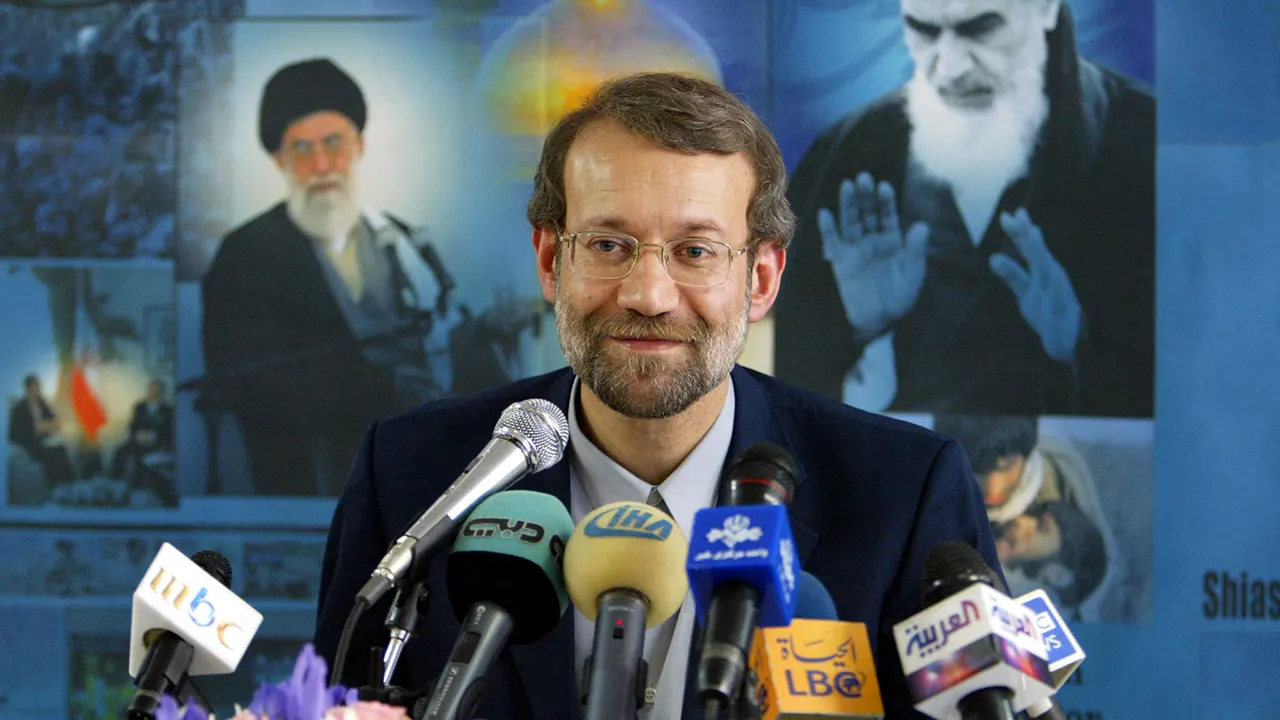
Among the leading candidates is Ali Larijani, the secretary of the Supreme National Security Council. Larijani, a regime loyalist who reportedly implemented Khamenei’s plan to suppress protests that led to over 30,000 Iranian deaths in January, was sanctioned by the U.S. Treasury Department as one of “the architects of the Iranian regime’s brutal crackdown on peaceful demonstrators.”
Following Saturday’s strike, Larijani posted a threat on social media platform X: “We will make the Zionist criminals and the vile Americans regret it. The brave soldiers and the great nation of Iran will deliver an unforgettable lesson to the hell-bound oppressors of the international order.”
Larijani previously served as president of Iran’s parliament and has commanded forces in the IRGC, which is designated as a terrorist organization by both the United States and European Union. He has also engaged in Holocaust denial, following in Khamenei’s footsteps.
However, Beni Sabti, an Iran expert at the Institute of National Security Studies in Israel, questions reports positioning Larijani as the frontrunner. “Larijani is not a cleric, but he can help some of the candidates who are clerics behind the curtains, such as his brother, Mohammad-Javad Larijani, who was head of the judiciary,” Sabti told Fox News Digital.
Mohammad-Javad Larijani has called for Israel’s destruction, denied the Holocaust, and defended practices like stoning for adultery as protecting “family values” under Islamic law.
Another prominent candidate is Mojtaba Khamenei, the deceased supreme leader’s second son, who works closely with the IRGC. Sanctioned by the Trump administration in 2019, the Treasury Department noted that “The Supreme Leader has delegated a part of his leadership responsibilities to Mojataba Khamenei,” who collaborated with IRGC forces to advance his father’s regional ambitions.
Alireza Arafi, a 67-year-old cleric and jurist who currently sits on the three-person temporary leadership council running Iran, is also a potential successor. According to the U.S. organization United Against a Nuclear Iran, Arafi once threatened protesters who knocked off clerics’ turbans, saying: “Those who attack the turbans of the clergy should know that the turban will become their shroud.”
Other contenders include the extremist Ayatollah Mohammad-Mehdi Mirbagheri, who advocates for fighting “infidels” and has quoted Iran’s first Supreme Leader about embracing “hardship, martyrdom and hunger” to establish “a new culture based on Islam in the world.”
Hassan Khomeini, the 53-year-old grandson of Ayatollah Ruhollah Khomeini and custodian of the Khomeini mausoleum, represents a relatively younger option among potential leaders. Ayatollah Seyyed Hashem Hosseini Bushehri, born in 1956, is considered a second-tier candidate by United Against a Nuclear Iran.
Sabti, who was born in Tehran, argues that Israel and the U.S. should prevent Iran from selecting a new leader. “I don’t think that Israel and the U.S. should allow them to choose the next leader,” he said, comparing the system to Hamas, where eliminated terrorist leaders are quickly replaced.
“There is a need to break the system to prevent the continuation of terrorism,” Sabti added, warning that regional stability would suffer if Iran’s regime remains intact. He suggested that dissolving the current system and supporting the Iranian people in creating “a new system” through “a good revolution” would be the preferable outcome.
Fact Checker
Verify the accuracy of this article using The Disinformation Commission analysis and real-time sources.

16 Comments
The race to replace Khamenei as Iran’s supreme leader will be a significant event, with implications for the country’s domestic and foreign policies. It will be interesting to see how the IRGC’s influence plays out.
Iran’s willingness to engage in talks with the U.S. is a notable development, but the hardline leanings of the potential successors could complicate any diplomatic progress.
The transition of power in Iran is always a delicate and closely watched process. With the IRGC’s influence, it will be crucial to see if the Assembly of Experts can maintain its independence.
Iran’s outreach to the U.S. for talks is intriguing, but the hardline candidates mentioned may make it challenging to find common ground on key issues.
The race to replace Khamenei as Iran’s supreme leader will be a closely watched event, with implications for the country’s domestic and foreign policies. The IRGC’s influence and the hardline leanings of the potential candidates will be crucial factors to consider.
Iran’s willingness to engage in talks with the U.S. is an interesting development, but the challenges presented by the hardline views of the potential successors may make progress on key issues difficult.
Iran’s outreach to the U.S. for talks is intriguing, especially given the historical tensions. This could be an opportunity for diplomatic engagement, but it remains to be seen how it will play out.
The potential candidates to succeed Khamenei seem to share his hardline, anti-Western views. This could make negotiations with the U.S. and the West particularly challenging.
The death of Ayatollah Khamenei marks a pivotal moment for Iran’s leadership transition. The IRGC’s push for a rapid replacement process is worth watching, as it could impact the Assembly of Experts’ decision-making.
Iran’s outreach to the U.S. for talks is intriguing, but the hardline views of the potential successors may make it difficult to find common ground on key issues.
The death of Khamenei marks a pivotal moment for Iran’s leadership transition. It will be interesting to see how the hardline candidates fare against the IRGC’s push for a rapid replacement process.
The Assembly of Experts will play a key role in selecting the next supreme leader. Their decision could have major implications for Iran’s foreign policy and regional influence.
It’s interesting that Iran has reached out to the U.S. for talks following Khamenei’s death. This could be a sign of potential shifts in Iran’s foreign policy, depending on who emerges as the next supreme leader.
The candidates mentioned seem to lean heavily towards Khamenei’s hardline, anti-Western positions. This could make any potential dialogue with the U.S. quite difficult.
The race to replace Khamenei is going to be closely watched. Iran’s next supreme leader will have a significant influence on the country’s direction, both domestically and internationally.
With the IRGC pushing for a rapid succession, it will be important to see if the Assembly of Experts can maintain its independence in the selection process.