


Listen to the article
Macron Calls for De-escalation as Middle East Crisis Deepens
French President Emmanuel Macron has urged an immediate halt to strikes on civilian infrastructure in the Middle East as regional tensions escalate following U.S. and Israeli military actions against Iran and its proxies.
“France calls for the immediate implementation of a moratorium on strikes targeting civilian infrastructure, whether related to water or to energy,” Macron wrote on social media platform X on Thursday. “Freedom and security of navigation must be restored.”
His call for restraint highlights growing divisions between European and American approaches to the widening Middle Eastern conflict, with France emphasizing diplomatic solutions while the United States and Israel pursue military pressure against Iran’s regional network.
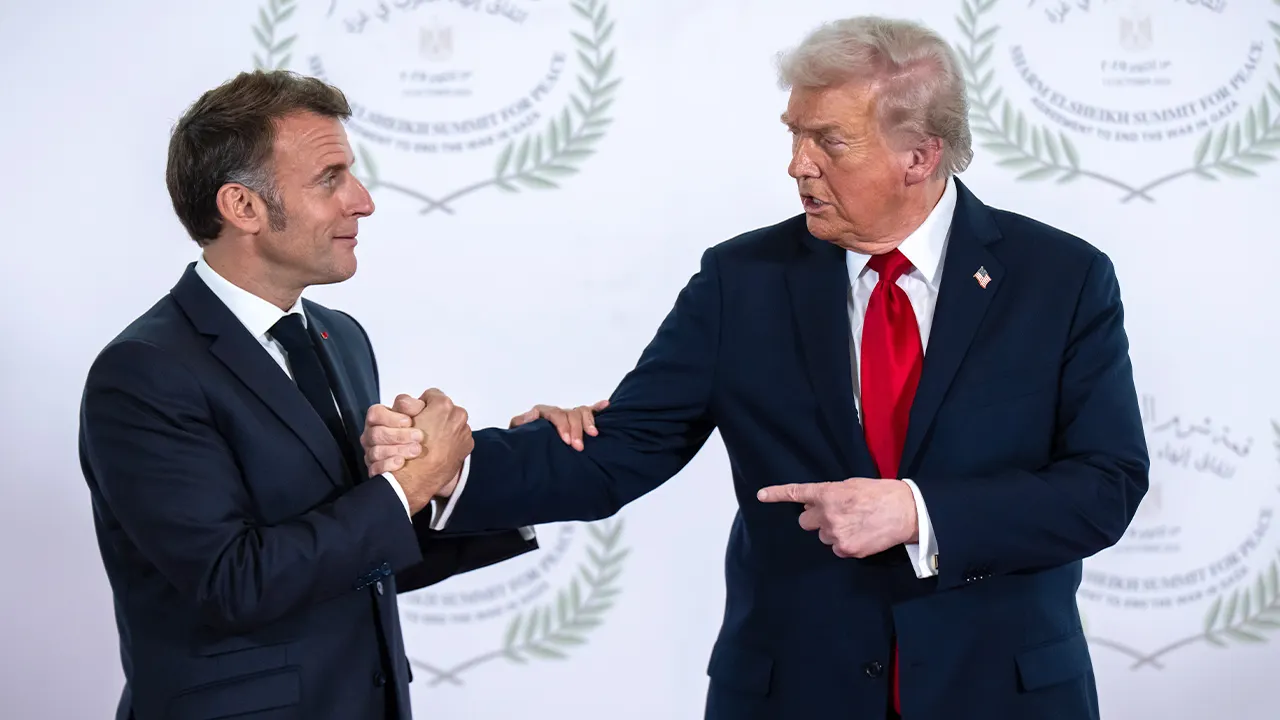
The disagreement became more pronounced after President Donald Trump discussed France’s potential role in securing the Strait of Hormuz, a critical global shipping chokepoint through which approximately one-fifth of the world’s oil passes daily. Trump characterized Macron’s position as “an eight” on a scale of ten, adding, “Not perfect, but it’s France.”
While expressing cautious optimism about French support, Trump suggested the U.S. was testing its allies’ commitments. “I don’t do a hard sell on them, because my attitude is we don’t need anybody. We’re the strongest nation in the world,” Trump said at a White House press briefing. He added a warning about future crises: “I’ve been saying for years that if we ever did need them, they won’t be there. Not all of them, but they won’t be there.”
The Strait of Hormuz has become a focal point of the conflict after Iran disrupted maritime traffic with drone, missile, and naval threats in recent weeks. These actions have slowed commercial shipping and introduced uncertainty into global energy markets, raising concerns about potential economic shocks.
France has taken a clear position of non-intervention in the current crisis, with Macron stating France “will never take part in operations to open or free” the waterway “in the current context.” Paris has instead proposed escorting commercial vessels only after hostilities subside, working in coordination with regional actors.
Despite this stance, European allies aren’t completely disengaging from efforts to secure the strait. Leaders from the United Kingdom, France, Germany, Italy, the Netherlands, and Japan released a joint statement Thursday expressing their “readiness to contribute to appropriate efforts” to ensure safe passage through the Strait of Hormuz, while calling on Iran to “cease immediately its threats” against commercial shipping.
According to a European diplomat, the United Kingdom is spearheading diplomatic efforts to build support among European and Gulf partners for a coordinated response. However, European officials remain divided over timing, with concerns that launching such an initiative during active hostilities could introduce new high-value targets into the conflict.
Lebanon has emerged as a second front in the expanding regional war after Hezbollah, the Iran-backed militant group, began launching rockets and drones against Israel following U.S. and Israeli strikes on Iran in late February. The Israeli Foreign Ministry reports that since March 2, Israel has been attacked from Lebanese territory more than 2,000 times with missiles and drones.
France has intensified its diplomatic efforts in Lebanon, urging direct negotiations between Israel and Beirut following signals from Lebanese President Joseph Aoun that he is open to talks. French officials see this as a “window of opportunity” to stabilize the border and prevent further escalation.
Israeli officials, however, have pushed back against diplomatic initiatives, arguing that negotiations cannot succeed while Hezbollah remains armed and active. Israeli Foreign Minister Gideon Sa’ar made this position clear, stating that while Israel is open to normalization with Lebanon, “The obstacle to this is Hezbollah.” He insisted that Beirut must take “meaningful action” against the group’s weapons, funding, and leadership.
David Schenker, former U.S. assistant secretary of state for Near Eastern Affairs, expressed skepticism about France’s approach. “The French are specializing in carrots,” he said, arguing that Paris has been reluctant to use pressure despite its influence in Lebanon. However, he acknowledged that the transatlantic divide isn’t entirely one-sided, noting that “this is a war that was launched by Israel and the United States, and they disagreed with it.”
The crisis has had devastating humanitarian impacts. According to Bassel Doueik, a researcher at the Armed Conflict Location & Event Data (ACLED), there has been a “400% increase in violence events in Lebanon,” with Israeli strikes and Hezbollah clashes displacing at least one million people.
As the conflict intensifies, the fundamental question remains whether diplomacy can contain Iran’s regional network or whether military force is necessary to dismantle it—a debate that continues to divide Western allies as the Middle East faces its most serious crisis in years.
Fact Checker
Verify the accuracy of this article using The Disinformation Commission analysis and real-time sources.

16 Comments
The Middle East conflict has become increasingly complex, and it’s understandable that close allies like the US and France would have differing views on the best approach. Maintaining open communication and compromise will be key to navigating these sensitive geopolitical waters.
Agreed. Restoring stability in the region requires a coordinated, multilateral effort. Hopefully the US and Europe can find a way to reconcile their differences and present a united front.
The US-France divide on the Middle East strategy is a tricky situation. While the US favors a more aggressive military approach, France’s emphasis on diplomacy and de-escalation is also understandable. Striking the right balance will be crucial to maintaining stability in the region.
Absolutely. Diplomatic solutions may be more sustainable in the long run, but the immediate security concerns cannot be ignored. Finding a middle ground that satisfies all parties will require skilled negotiation.
Interesting to see the growing divide between the US and France on the Middle East strategy. While the US pursues military pressure, France seems to favor a more diplomatic approach to de-escalate tensions. It’ll be important to see how this plays out on the global stage.
I agree, the differences in approach could lead to further challenges in coordinating a cohesive response in the region. Navigating these geopolitical complexities will require careful diplomacy.
The US-France divide on Middle East strategy is a complex issue, with valid arguments on both sides. While the US emphasizes military pressure, France’s diplomatic approach may be more effective in the long run. Striking a balance between these two perspectives will be crucial for regional stability.
I agree, the nuances of this situation require a delicate balance. Maintaining open communication and finding common ground will be essential for the US and France to present a cohesive response that addresses the needs of all stakeholders.
This dispute between the US and France over Middle East strategy is concerning, but not entirely unexpected. Geopolitical tensions and national interests often lead to divergent approaches, even among close allies. The challenge will be finding a way to bridge the gap and work towards a shared solution.
Well said. Compromise and diplomacy will be essential to navigating this complex situation. The stakes are high, and the international community needs to come together to de-escalate the crisis.
The US-France rift on Middle East policy is concerning. Maintaining stability and security in the region should be a top priority, but the divergent strategies risk escalating the situation. Hopefully cooler heads can prevail and find a diplomatic solution.
Absolutely, de-escalation and restoring freedom of navigation are critical. Macron’s call for a moratorium on strikes targeting civilian infrastructure is a measured and prudent step.
Trump’s characterization of Macron’s position as ‘an 8’ on a scale of 10 suggests he sees the French approach as somewhat lacking. However, Europe’s emphasis on diplomacy over military pressure may be a more sustainable long-term strategy in the region.
You make a fair point. While the US and France may disagree on tactics, finding common ground through diplomatic channels could yield more durable results in the Middle East.
This dispute between the US and France highlights the challenges of coordinating a cohesive international response to the Middle East crisis. Tensions are high, and it’s concerning to see close allies diverging on such a critical issue. Hopefully, they can find a way to reconcile their differences and present a united front.
You’re right, the lack of a unified approach is worrying. The Middle East situation requires a collaborative effort, with all key players working together to find a peaceful resolution. Macron’s call for a moratorium on strikes is a step in the right direction.