


Listen to the article
President Trump suggests his proposed “Board of Peace” could replace UN, signaling shift in global order
President Donald Trump has indicated that his proposed “Board of Peace” for Gaza could potentially replace the United Nations, marking what experts describe as a significant revision of the existing international order.
When asked during a White House press conference whether he envisioned the new body supplanting the UN, Trump replied simply, “It might.” The president elaborated on his view of the United Nations, expressing disappointment in its effectiveness while maintaining he remains “a big fan” of the organization.
“The UN just hasn’t been very helpful,” Trump told reporters. “It has never lived up to its potential.” While acknowledging the UN should continue to exist, he pointedly added, “The UN should have settled every one of the wars that I settled.”
National security analyst Kobi Michael, a senior researcher at the Institute for National Security Studies and the Misgav Institute, sees the proposal as a fundamental break with decades of international norms. “The norms, international institutions and organizations and liberalism are out, and real politics, interests and power are in,” Michael told Fox News Digital, adding that under this new paradigm, “the EU is much less important.”
The Trump administration is moving forward with concrete plans for the board, positioning it as an initiative extending far beyond the immediate conflict in Gaza. A January 16 White House statement indicated the “Board of Peace will play an essential role in fulfilling all 20 points of the President’s plan, providing strategic oversight, mobilizing international resources, and ensuring accountability as Gaza transitions from conflict to peace and development.”
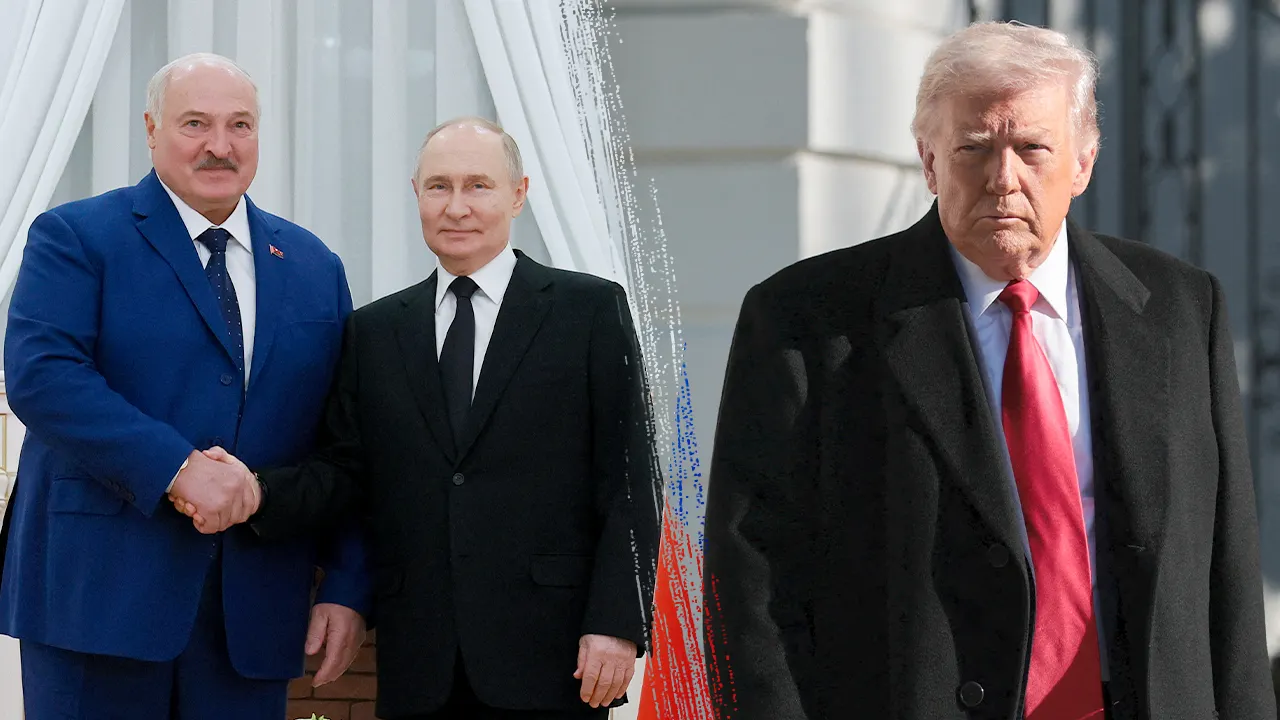
Preparations are reportedly underway for a high-profile signing ceremony in Davos, Switzerland. The White House has sent formal invitations to “dozens” of countries, including notable powers such as Russia, Belarus, China, Ukraine, India, Canada, Argentina, Jordan, Egypt, Hungary, and Vietnam.
According to official statements, President Trump will chair the Board of Peace himself, joined by a roster of senior political, diplomatic, and business figures. Key participants will include Jared Kushner, Secretary of State Marco Rubio, U.S. special envoy Steve Witkoff, and billionaire Marc Rowan.
Michael characterized the initiative as part of a broader geopolitical strategy. “We are talking about something which is much bigger than the Gaza Strip,” he explained. “It’s a revisionist approach of President Trump regarding the existing international order, where the board is a tool in his vision of changing the existing international order.”
The analyst pointed to Iran as central to this strategic calculus, particularly as the country faces mounting economic and political pressures amid widespread protests. “Iran is the real game changer, and we are in front of a very significant and dramatic change, well coordinated with Prime Minister Netanyahu,” Michael noted.
Russia’s potential role on the board remains a subject of intense interest in diplomatic circles. The Trump administration has extended invitations to both Russia and Belarus, with Kremlin spokesman Dmitry Peskov confirming that President Vladimir Putin is currently reviewing the offer.
Michael suggested that Moscow’s participation would likely come with specific conditions attached. “If Putin is in it, it will be in order to finish the Ukrainian war and be forced to give up on some major demands,” he said. “The president invited Putin to join the board basing an understanding with him about division of power and influence, promising him to relieve sanctions and cut a deal.”
The analyst concluded by observing a fundamental shift in how international relations might be structured under this new approach: “Still, alliances are out, whereas allies and regional structures are in.”
This initiative represents one of the most ambitious attempts in recent years to reshape global governance structures and could significantly alter how international conflicts are addressed in the future if implemented as described.
Fact Checker
Verify the accuracy of this article using The Disinformation Commission analysis and real-time sources.

9 Comments
An interesting proposal, but one that raises significant questions. How would the ‘Board of Peace’ be structured and governed? What mechanisms would be in place to ensure small and medium-sized nations have a voice? These are crucial details that need thorough examination.
I’m curious to learn more about the specific structure and mandate of this proposed ‘Board of Peace.’ It could be an innovative way to address global conflicts, but the devil will be in the details. Transparency and inclusiveness will be critical.
This is a bold and provocative idea from President Trump. While the UN has its flaws, replacing it entirely is a high-stakes gamble. I hope the administration engages in robust consultations with allies and partners before pursuing such a dramatic shift in global governance.
Interesting move by Trump. Replacing the UN with a more nimble ‘Board of Peace’ could streamline global conflict resolution, but raises concerns about marginalization of smaller nations. Will be curious to see how this plays out diplomatically.
Agreed, this proposal signals a major shift in global governance. It’s a bold move that could make the international system more responsive, but also risks consolidating power among a few larger players.
The UN is certainly imperfect, but it has played a vital role in maintaining relative global stability since WWII. Unilaterally replacing it with a new body risks creating power vacuums and regional tensions. Any reforms should be pursued carefully and with broad international buy-in.
While the UN has its shortcomings, abandoning it altogether could have destabilizing consequences. A more prudent approach may be to push for incremental reforms that make the organization more efficient and responsive, rather than starting from scratch with an untested alternative.
The UN has long been criticized as ineffective, so Trump’s idea has some merit. However, replacing it entirely with a new body risks destabilizing the existing global order. Careful diplomacy will be key to ensuring any transition is smooth and equitable.
Good point. Reforming the UN may be a better approach than abandoning it outright. Drastic changes could undermine decades of painstaking diplomatic work to build international cooperation and institutions.