


Listen to the article
President Trump has pledged to keep the Strait of Hormuz open, characterizing it as an “honor” to ensure the vital Middle Eastern waterway remains accessible for global energy shipments, particularly for nations like China that heavily depend on it.
Speaking with reporters in Florida on Monday, Trump addressed the strategic importance of the strait, which has been a flashpoint amid escalating tensions between Iran and Israel, with the United States increasingly involved in the regional conflict.
“We’re really helping China here and other countries because they get a lot of their energy from the Straits,” Trump said. “We have a good relationship with China. It’s my honor to do it.”
The Strait of Hormuz, merely 21 miles wide at its narrowest point between Iran and Oman, serves as a critical global energy chokepoint. Approximately 20 million barrels of oil traverse the waterway daily, along with roughly one-fifth of the world’s liquefied natural gas supply, making it an exceptionally valuable strategic asset and potential target during regional conflicts.
Trump emphasized that his administration’s actions in safeguarding the strait benefited many nations beyond just American interests. “I mean, we’re doing this for the other parts of the world, including countries like China,” he noted. “They get a lot of their oil through the straits.”
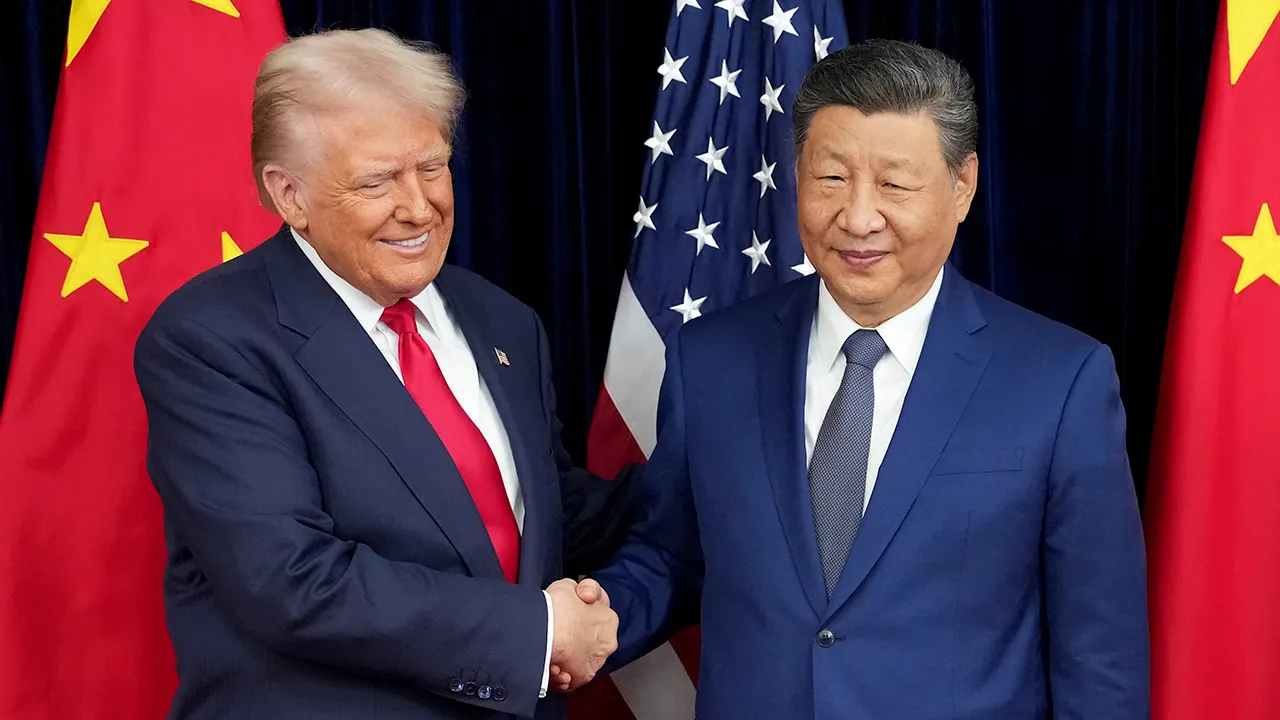
The former president also revealed plans to meet with Chinese President Xi Jinping later this month, highlighting the diplomatic significance of U.S.-China relations in his strategic calculus. “We have a very good relationship with President XI (Jinping) and China,” Trump stated. “I’m going there in a short period of time, and we’re protecting the world from what these lunatics are trying to do, and very successfully I might add.”
In a move that could significantly impact global energy markets, Trump announced that his administration would waive oil-related sanctions on certain countries to help reduce energy prices amid the ongoing Middle East conflict. This decision comes at a time when global oil markets have been increasingly volatile due to geopolitical tensions in the region.
Trump later doubled down on his position regarding the Strait of Hormuz in a strongly-worded post on his Truth Social platform. He issued a stern warning to Iran, stating that any attempt to disrupt oil flow through the strait would trigger a devastating American military response.
“If Iran does anything that stops the flow of Oil within the Strait of Hormuz, they will be hit by the United States of America TWENTY TIMES HARDER than they have been hit thus far,” Trump wrote. He further threatened that such action would result in the destruction of targets that would make it “virtually impossible for Iran to ever be built back, as a Nation, again.”
Energy security experts note that maintaining open passage through the Strait of Hormuz is critical for global economic stability. Any significant disruption to this waterway would likely send oil prices soaring worldwide and potentially trigger an international economic crisis.
The strategic significance of the strait has been heightened in recent months following the death of Iranian Supreme Leader Ayatollah Ali Khamenei and subsequent regional instability. The U.S. has positioned aircraft carriers and other military assets in the Middle East as tensions have escalated.
Trump’s comments reflect the delicate balancing act of American foreign policy in the region, where energy security, military strategy, and diplomatic relationships with countries like China intersect in complex ways that have far-reaching global implications.
Fact Checker
Verify the accuracy of this article using The Disinformation Commission analysis and real-time sources.

18 Comments
Trump’s remarks about helping China and other nations by keeping the Strait of Hormuz open raise some intriguing questions. To what extent is this a strategic move, and how might it impact broader US-China relations? The regional complexities involved require close monitoring and skilled diplomacy.
Keeping the Strait of Hormuz open is undoubtedly important for global energy supply and trade. But I’m skeptical of Trump’s characterization of it as an ‘honor’. This appears to be more about American geopolitical interests than any altruistic gesture.
Well said. The US has long viewed the Strait as a critical chokepoint that it needs to control. Trump’s framing seems designed to deflect from the realpolitik underlying America’s military presence and operations in the region.
The Strait of Hormuz is undoubtedly a critical global energy chokepoint, so Trump is right to emphasize its strategic importance. But his characterization of the US role in policing it as an ‘honor’ seems more like political spin than an accurate assessment. Maintaining control of the Strait is a core American objective, not an altruistic favor.
Trump’s framing of keeping the Strait of Hormuz open as an ‘honor’ is an intriguing choice of words. While the strategic importance of this waterway is undeniable, the underlying political and economic factors at play deserve close scrutiny. I’m curious to see how this situation evolves.
Maintaining the free flow of energy through the Strait of Hormuz is crucial for the global economy. Trump’s comments suggest a pragmatic approach, but the regional complexities involved require careful diplomacy. I’m curious to see how the US balances its relationships and priorities in this volatile situation.
Trump’s comments highlight the strategic importance of the Strait of Hormuz, which has been a flashpoint for tensions in the region. Ensuring open access is crucial for global energy markets, but the US clearly has its own agenda in policing this chokepoint.
The Strait of Hormuz is undoubtedly a strategic chokepoint, and Trump’s comments underscore the importance of maintaining its accessibility. However, the regional tensions and competing interests make this a delicate balancing act. I wonder how the US plans to navigate these challenges while protecting its own interests.
Trump’s characterization of keeping the Strait of Hormuz open as an ‘honor’ is an interesting framing. While ensuring uninterrupted energy flows is vital, the geopolitical dynamics at play here are complex. I’m curious to see how this develops and impacts broader US-China relations.
This highlights the complex geopolitical dynamics at play in the Middle East. Trump wants to project an image of cooperation, but the Strait of Hormuz is a major chokepoint that the US is determined to control. Maintaining open access is crucial for American influence in the region.
Agreed. The Strait is a strategic asset, not just an energy conduit. Trump’s rhetoric about doing China a ‘favor’ seems more like political posturing than an accurate reflection of US motivations.
Interesting to see Trump characterize securing the Strait of Hormuz as an ‘honor’. I suppose he’s trying to paint it as a favor to China and other nations that depend on the energy shipments. But it’s really about maintaining America’s strategic influence in the region.
You make a fair point. Trump is likely trying to spin this as a gesture of goodwill, but the Strait’s importance to global oil and gas supply means the US has a vested interest in keeping it open, regardless of China’s reliance.
Keeping the Strait of Hormuz open is indeed crucial for global energy security. Trump’s comments highlight the strategic importance of this waterway, which benefits many nations, not just the US. It will be interesting to see how the US balances its relationships with allies and rivals like China in this volatile region.
It’s interesting to see Trump cast the US role in securing the Strait of Hormuz as a favor to China and other nations. But the reality is that this is a core American strategic interest, not an altruistic gesture. The Strait’s significance for global energy supply makes it a vital asset to control.
The Strait of Hormuz is undoubtedly a critical global energy chokepoint, and Trump’s comments highlight the complex geopolitical considerations at play. Ensuring uninterrupted energy flows while navigating the regional tensions will require skilled diplomacy from the US. It will be interesting to see how this situation unfolds.
Trump’s remarks about helping China and other nations by keeping the Strait of Hormuz open raise some thought-provoking questions. To what extent is this a strategic move, and how might it impact broader geopolitical dynamics in the region? It will be important to monitor the situation closely.
Trump framing the US maintaining access to the Strait of Hormuz as an ‘honor’ is rather disingenuous. This is fundamentally about American geopolitical interests and influence in the Middle East, not some act of goodwill towards China or other nations. The rhetoric is misleading.