


Listen to the article
Trump’s Iran Ultimatum: 15 Days to Negotiate or Face Consequences
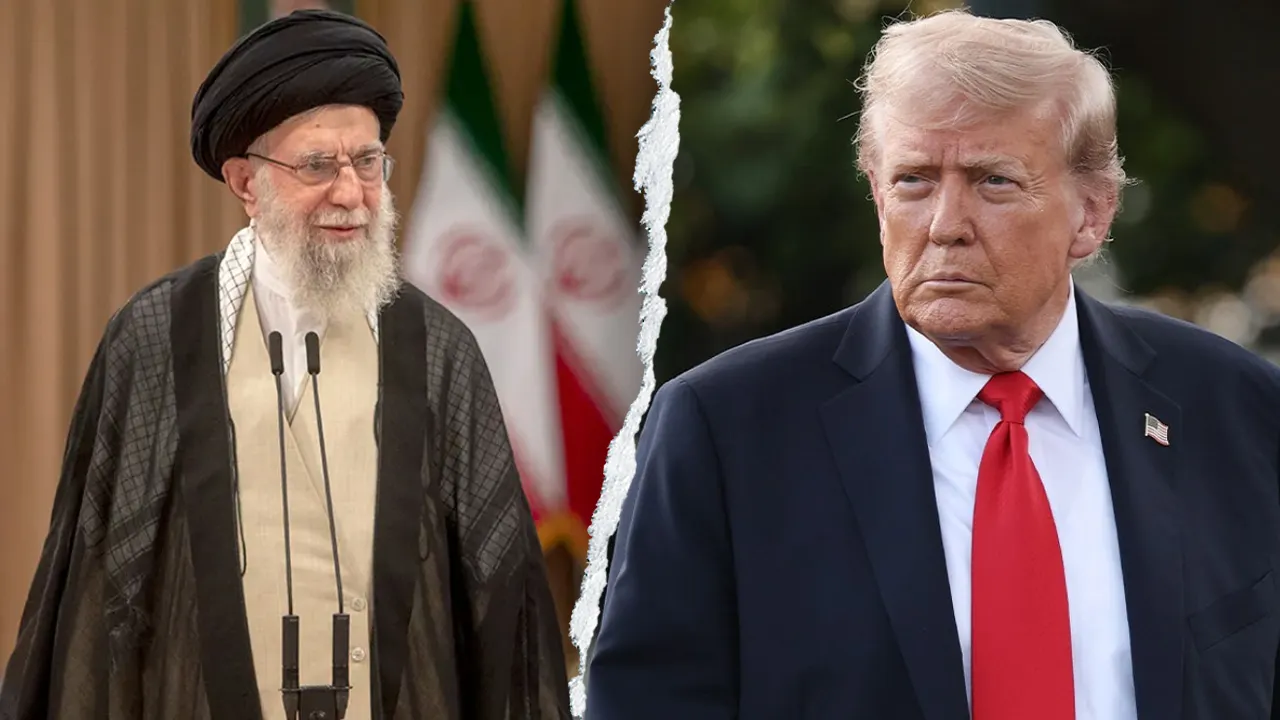
President Trump has issued a new ultimatum to Iran, giving the Islamic Republic 10 to 15 days to return to the negotiating table or face potential military action. This deadline comes just months after Trump made a similar time-sensitive threat in June, when he said he would decide “within two weeks” whether to strike Iran—a decision he reportedly made just two days later.
The compressed timeline now stands at the center of a high-stakes diplomatic showdown, with military assets being positioned throughout the Middle East as a clear signal of American resolve.
“The Iranian regime has been operating under a grand delusion that they can turn President Trump into President Obama, and President Trump has made it clear that’s not happening,” said Jason Brodsky, policy director at United Against Nuclear Iran, in an interview with Fox News Digital.
Behind the scenes, there appears to be significant skepticism within the Trump administration that negotiations will yield meaningful results. According to Brodsky, the diplomatic process may serve a dual purpose: “They’re using the diplomatic process to sharpen the choices of the Iranian leadership and to buy time to make sure that we have the appropriate military assets in the region.”
A Middle Eastern source with knowledge of the negotiations indicated that Tehran understands the gravity of the situation and is unlikely to deliberately provoke Trump. However, the source revealed that Iran has drawn a firm red line regarding its short-range missile program—a boundary reportedly set by Supreme Leader Ali Khamenei himself. Iranian negotiators are not authorized to cross this threshold, and any concession on missiles would be viewed internally as equivalent to surrendering in war.
The source suggested there might be more flexibility around uranium enrichment parameters if sanctions relief is included in any potential agreement.
Brodsky noted that Iran’s fundamental positions remain unchanged despite the mounting pressure. “They’re trying to engage in a lot of distraction… shiny objects, to distract from the fact that they’re not prepared to make the concessions that President Trump is requiring of them,” he said. “They refuse to accept President Trump’s position on zero enrichment. They refuse to dismantle their nuclear infrastructure. They refuse limitations on Iran’s missile program, and they refuse to end support for terror groups.”
Behnam Taleblu, senior fellow at the Foundation for Defense of Democracies, warned that Tehran might be preparing a different kind of proposal altogether—one that simply formalizes the current situation without requiring Iran to make significant concessions.
“The first kind of deal that we have to be worried about… they may pitch an agreement that is based more on transposing the current reality onto paper,” Taleblu explained. “You take the present reality, and you transpose that onto paper, and then you make the U.S. pay for something it already achieved.”
According to Taleblu, Iran’s strategic objectives in these negotiations are threefold: “The first is they want to deter and prevent a strike. The second is that they are actually using negotiations to take the wind out of the wings of Iranian dissidents. And then the third is they actually do want some kind of foreign financial stabilization and sanctions relief.”
Meanwhile, the Trump administration’s exact intentions remain deliberately ambiguous. “It’s hard to read the tea leaves of the administration here,” Taleblu said. “Obviously, they don’t want a nuclear Iran, but also obviously they don’t want a long war in the Middle East.”
The substantial military buildup in the region, including the deployment of the USS Gerald R. Ford carrier strike group, suggests the U.S. is prepared for military action if diplomacy fails. The critical unanswered question, according to analysts, is what the political objective of any strikes would be.
Jacob Olidort, Chief Research Officer at the America First Policy Institute, noted that “what is rightfully unpredictable is the specific objective and scope of military action the President may take.” He suggested military action could either serve as “a new layer of diplomatic pressure” or be intended to “simply achieve the intended objectives that diplomacy could not.”
Public sentiment inside Iran reportedly remains deeply divided. Many Iranians view foreign military intervention as unacceptable, while anger over the government’s crackdown on protesters continues to fuel domestic tensions and uncertainty.
As the 10-15 day window ticks down, Trump’s deadline appears to function less as a rigid calendar marker and more as strategic leverage in what has become an increasingly complex geopolitical standoff.
Fact Checker
Verify the accuracy of this article using The Disinformation Commission analysis and real-time sources.

20 Comments
I’m concerned that the administration’s skepticism about negotiations could lead to a spiral of escalation that risks a wider conflict. Diplomacy should be given every chance to succeed.
Agreed, a diplomatic resolution would be the best outcome here. Rushing into military action without exhausting all negotiation options could have grave consequences.
This situation highlights the delicate balance of power in the Middle East. I hope both sides can find a way to engage constructively and avoid a conflict that would have far-reaching implications.
The positioning of military assets is a concerning development. I wonder if this is meant to pressure Iran or if the administration is genuinely preparing for potential military strikes.
That’s a good point. The compressed timeline and military mobilization suggest the administration may be serious about the threat of force if diplomacy fails.
The administration’s skepticism about the diplomatic process is worrying. I hope they reconsider and give negotiations a genuine chance to succeed before resorting to military action.
Absolutely, diplomacy should always be the first and best option. Rushing into military confrontation without exhausting all other avenues could have disastrous consequences.
This situation highlights the fragility of the geopolitical landscape. I hope cooler heads prevail and both sides demonstrate restraint and a commitment to finding a peaceful solution.
It’s troubling to see the potential for military conflict escalating so quickly. I hope both sides can find a way to de-escalate tensions and pursue meaningful negotiations.
This situation underscores the need for prudent and nuanced diplomacy. I hope the administration will reconsider its hardline approach and give negotiations a genuine chance to succeed.
The administration’s tough rhetoric and ultimatum seem to indicate a hardline approach. I’m concerned this could backfire and lead to further destabilization in the region.
Agreed, a more nuanced and patient diplomatic approach would likely yield better results. Rushing into military action could have severe unintended consequences.
This is certainly a high-stakes diplomatic showdown. I wonder if Trump’s ultimatum is a negotiating tactic or a genuine precursor to potential military strikes.
That’s a good question. The positioning of military assets in the region suggests the administration may be preparing for potential action if diplomacy fails.
Interesting developments around Iran and the potential for military action. I’m curious to see if diplomacy can prevail or if tensions continue to escalate.
Agreed, the situation seems quite delicate. Diplomatic solutions would be preferable to further escalation, but the Trump administration appears to have a different calculus.
The administration’s aggressive posturing and ultimatum seem to indicate a desire for confrontation. I hope cooler heads can prevail and diplomacy can be given a real chance to succeed.
Agreed, the hawkish rhetoric and military mobilization are concerning. Diplomacy should be the priority, as the consequences of military action could be severe.
The 10-day ultimatum seems quite aggressive and could backfire if Iran refuses to be coerced. Careful diplomacy and de-escalation would be the wiser path forward.
This is a complex and delicate situation that requires careful navigation. I hope both sides can find a way to de-escalate tensions and work towards a peaceful resolution.